As the matriarch of her family, Phyliss Davis has always taken care of everyone before herself. Between a busy schedule and devoting time to her granddaughter Wynter, Phyliss made a habit of putting her own health on the back-burner.
Hoping to check another job off her to-do list, she finally squeezed a routine wellness appointment onto her calendar. But when Phyliss’ medical chart showed no recent mammogram, her primary care physician grew concerned.
"When my doctor asked how long it had been since my last mammogram, I didn’t want to admit that I hadn’t had one in years," Phyliss said, remembering how the medical professional urged her to get a breast exam as soon as possible. "Because I didn’t have a family history of breast cancer, I thought I didn’t have to worry."
Luckily, Phyliss came in at just the right time. Her mammogram caught a concerning lump that couldn’t be seen with the naked eye. Following a biopsy, she was diagnosed with breast cancer.
Throughout her cancer journey, the grandmother would learn the importance of taking care of her own health and body. And soon, she would truly understand the words her mother told her as a child: "An ounce of prevention is worth a pound of cure."
Wellstar PeopleCare | Phyliss' Early Breast Cancer Care Journey
Published on October 14, 2020
Last updated 11:02 AM August 28, 2023

From the very beginning, Phyliss had a fighting spirit. She was determined to beat breast cancer and be there for her family for years to come.
For each patient, I present the information in an easy-to-understand way. I make sure to discuss treatment options without overwhelming them. I always allow ample time for people to ask questions to allay their anxiety.
- Dr. Sheree Brown
Wellstar Radiation Oncology
Listen to Phyliss' story
Wellstar offered support to Phyliss every step of her breast cancer journey.
Passing the baton
From the very beginning, Phyliss had a fighting spirit. She was determined to beat breast cancer and be there for her family for years to come. There was also no question about who would be on her healthcare team.
"As soon as I was diagnosed, I knew to go to Wellstar. There was a team of people supporting me there, and it was so close to home," Phyliss shared. "Wellstar made me feel like I wasn’t on this journey alone."
Wellstar quickly formed Phyliss’ care team of health experts and advocates, referring her to breast cancer specialists within the robust cancer network.
The health system’s digital patient portal, MyChart, also helped her appointments run smoothly so Phyliss could focus on her care without any added stress. In her MyChart account, all of her medical records were already together in one digital space.
"It was like passing the baton," Phyliss explained the seamless specialty care process. "With MyChart, all my health information was organized and easily accessible. I didn’t have to worry about gathering information or having a copy of my medical chart with me. It was all ready to go as soon as I came to the next appointment."
Between her devoted care team and expert treatment, Phyliss felt as though she was part of a close-knit healthcare family.
"The doctors took the time to answer my questions and told me to call if I thought of anything else when I got home. They said, ‘I don’t want you to be worried about something if I could answer your questions and ease your fears.'"
Wellstar Radiation Oncologist Dr. Sheree Brown became a key player in Phyliss’ cancer treatment. The specialist shared how Wellstar cares for each and every patient throughout the diagnosis and treatment process.
"For each patient, I present the information in an easy-to-understand way. I make sure to discuss treatment options without overwhelming them," Dr. Brown said of her approach to care. "I always allow ample time for people to ask questions to allay their anxiety."
Wellstar’s compassionate care made all the difference. Phyliss left her cancer treatment consultation with peace of mind and a concrete treatment plan in place.
Beating breast cancer
Phyliss’ cancer was caught at an early stage. But even so, her care team didn’t waste any time and sprang into action so Phyliss would have the best possible outcome. The medical experts quickly created a customized cancer treatment plan, which included surgery to remove the tumor and radiation to prevent the disease from returning.
Following Phyliss’ successful lumpectomy, she received daily rounds of radiation at Wellstar Kennestone Regional Medical Center. Dr. Brown led the treatment, using her knowledge and expertise to treat Phyliss’ cancer effectively.
"In Phyliss’ case, external beam radiation was delivered using the prone technique. That meant she received treatment lying face down instead of sitting up," Dr. Brown explained. "This particular process allows the breasts to hang away from the body, minimizing radiation exposure to the lungs."
Using this specialized method, Dr. Brown could target the cancer without endangering healthy tissues. For cancer patients, access to innovative treatments and technology is critical to improving their outcomes.
"Wellstar has state-of-the-art equipment available, which allows us to offer many cutting-edge cancer treatments," Dr. Brown said. "We also have multidisciplinary tumor boards to help provide comprehensive treatment plans for our patients."
The radiation sessions were a success. Now after finishing treatment and becoming a breast cancer survivor, Phyliss can focus on being there for her entire family.
Phyliss encourages women who may be putting off preventative health screenings to take the ultimate step towards practicing self-care.
"Women are the heart of the family. We make sure our loved ones are taken care of, but we need to see ourselves as important too," she said. "Don’t neglect your health. Take the time to go for your yearly physical and mammogram. It’s the cornerstone of your health."
Have you had a mammogram?
Screening for breast cancer at regular intervals can help catch breast cancer earlier — before symptoms appear — for better outcomes. Learn more about mammograms and find a location near you. Or call (678) 581-5900 to schedule your mammogram now.
Read related articles

Highlights
Q&A: Breast Cancer Specialist Answers Mammograms and Self Breast Exams Questions
According to the American Cancer Society, 1 in 8 women will get breast cancer in their lifetime. Breast cancer is the second leading cause of cancer death for women. However, when found in its earliest stages, breast cancer can be stopped from spreading, is more treatable and nearly 100% curable. Screening is the best way to find breast cancer early. Let’s talk about mammograms as well as the right way to perform a self breast exam.
Mammograms
When should I start getting mammograms?
Unless you have a new breast problem or need to start screenings earlier because of risk, most guidelines recommend starting screening mammography at age 40.
How often should I get a mammogram?
Guidelines differ somewhat but are consistent that if you are of average risk, you should have them at least every other year. If you are at increased risk, including having dense breast tissue or a family history of breast cancer, it is recommended that you get an annual mammography screening and possibly enhanced screenings with MRI, ultrasound or contrast enhanced mammography.
Is getting a mammogram dangerous to my health?
While there is a small radiation exposure with every mammogram, the benefit of early detection of small, curable cancers almost always outweighs that risk of exposure.
Does it hurt to get a mammogram?
Some women do find mammograms uncomfortable. This is more common when having imaging just before your menstrual period when breast tissue can be swollen and more sensitive. If you do have extra sensitivity, scheduling the exam after your cycle starts or taking an over-the-counter NSAID pain reliever* a few hours before the exam may minimize the discomfort. Because positioning of the breast and taking each mammogram image is typically less than 30 seconds, the extent of discomfort during the exam is short-lived.
*NSAIDs are nonsteroidal anti-inflammatory drugs, like ibuprofen (Advil, Motrin), naproxen sodium (Aleve) and aspirin.
Breast self-exam options
Any pattern for feeling all of your breast tissue is acceptable. The goal is to make sure you are feeling with varying pressure from your collar bone to cleavage, to the bottom of the breast out to past where your breast meets your chest wall, including your armpit.
How often should I do a breast self-exam?
Self-exams should not be done too often because it can make it difficult to tell if a lump is evolving over time. Think of how hard it is to tell if your appearance changes gradually as you get older because you see yourself every day, compared to more easily seeing changes in someone’s appearance after not seeing them for a long time. Typically, once a month is enough.
Is there a best time to do a breast self-exam?
It is important to do your breast self-exam in approximately the same time in your cycle rather than a specific interval—especially since not all menstrual cycles are exactly 28 days apart. Doing the exam at the same place in your cycle will give you consistency in how the tissue should feel in terms of lumpiness, texture and density.
I encourage my patients to do their exam the day after their cycle starts as a consistent point in their hormonal cycle fluctuations.
What am I actually looking for during a breast self-exam?
Your breast self-exam should be a tool to familiarize yourself with the general “normal texture” of the tissue in each of your breasts so if you detect something that is different, you will be able to identify it as new or changed.
Can a breast self-exam replace a mammogram?
Self-breast exams cannot replace mammograms because mammograms can detect subtle changes like densities or calcifications that are too small to feel. The goal with screening mammograms is to detect breast cancer before you can feel it because early detection leads to better overall outcomes.
Learn more about breast cancer screening and treatment at Wellstar.
PeopleCare
Wellstar PeopleCare | Reaching New Heights After Head & Neck Cancer
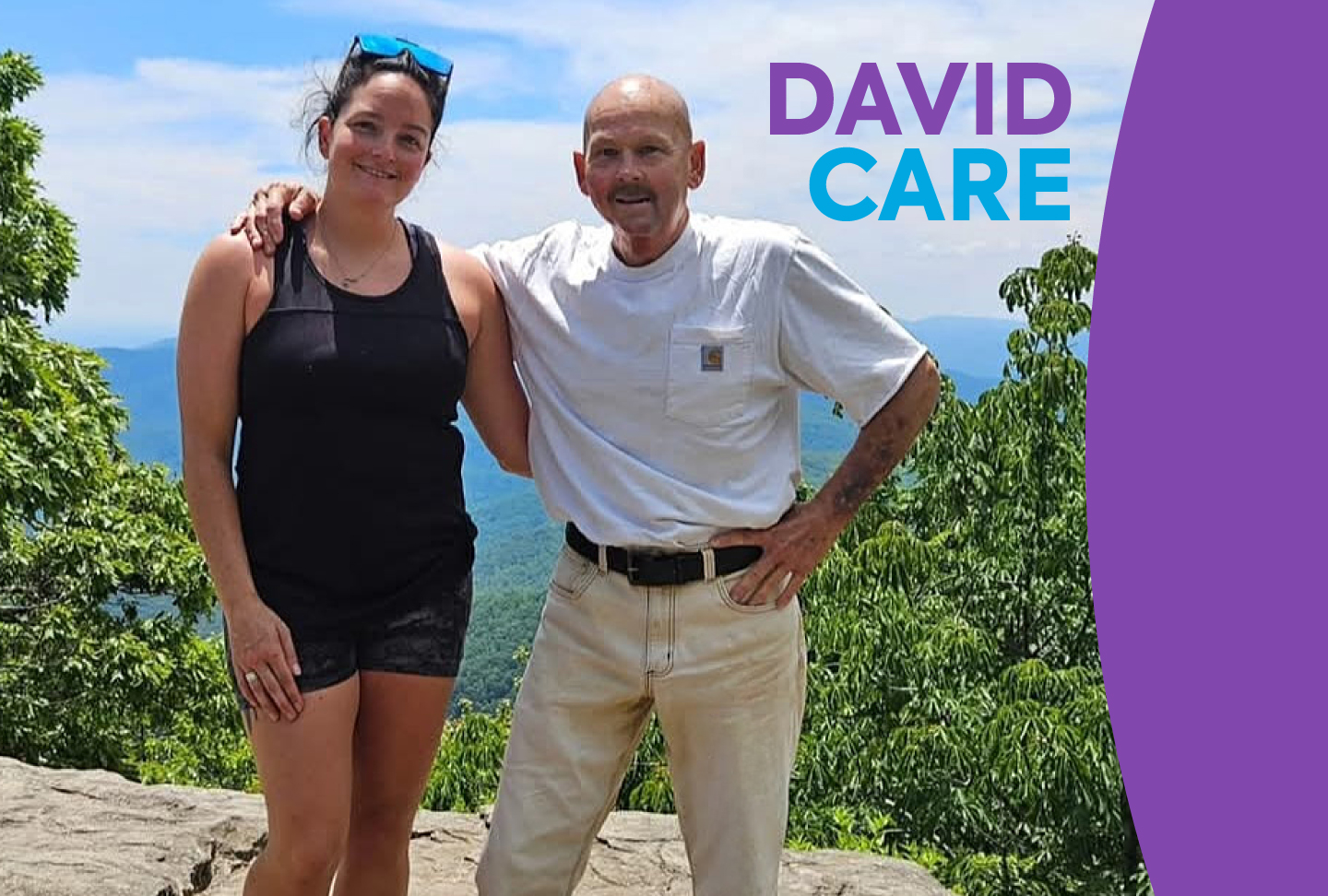
David Butler's cancer journey took him through a rare jaw reconstruction, multiple rounds of radiation treatment, chemotherapy, intense rehabilitation and coordinated care from specialists across Wellstar.
From survival to summit
After David did the hard work of fighting cancer twice and feeling like recovery was truly sailing along, he set a new goal. David and one of his daughters, Madeline Hawkins, completed a hiking and camping trip that included summiting Blood Mountain in North Georgia. They covered 14 miles, camping overnight and making friends along the trail.
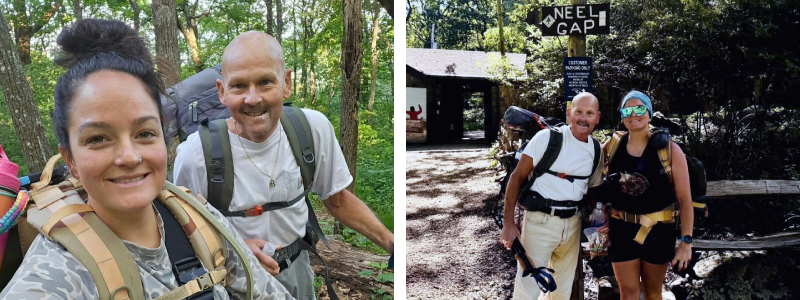
The hike wasn't easy.
“I forgot you have to be half mountain goat!” he quipped.
David moved at his own pace and pushed through lingering fatigue. Reaching the summit’s stunning vista at Preacher’s Rock was a reminder of how far he had come since his cancer diagnosis.

PeopleCare
Wellstar PeopleCare | Beating Cancer Twice with Coordinated Care
David Butler’s cancer journey began when he underwent treatment for an aggressive head and neck cancer. Supported by his family, faith and a team of head and neck cancer specialists, he had part of his jaw removed and went through radiation therapy and intense rehabilitation.
A major setback
The same year of his jaw surgery and initial radiation course, David’s recovery was beginning to feel like “smooth sailing.” Just as life started to feel manageable again, he faced an unexpected challenge.
David and his wife, Jill, got devastating news: routine follow-up imaging revealed three new tumors on the other side of his neck and tongue. Dr. Fiyin Sokoya, David’s cancer surgeon, removed lymph nodes from David’s neck, had them biopsied and confirmed that it was an aggressive cancer.
At first, David felt so discouraged that he didn’t want to move forward with treatment.
However, seeing that a group of experts were working together to give him the best, evidence-based treatment path for his unique circumstance gave him confidence to renew his fight against cancer.