
SKIP NAVIGATION
MyChart Search
Wellstar Go Back
MyChart
  • Find a Doctor
  • Locations
  • Medical Services
    Popular Services
    • Emergency Care
    • Urgent Care
    • Virtual Care
    • Primary Care
    • Women's Health
    • Pediatric Care
    • Cancer Care
    • Heart Care
    • Neuro Care
    • Orthopedics
    • View All Medical Services
    Expanded Services
    • Lab Services
    • Imaging
    • ENT
    • Pulmonary
    • Gastroenterology
    • Urology
    • Physical Therapy
    • Behavioral Health
    • Pharmacies
    • View All Medical Services
    For Providers
    • Refer a Patient
    • Transfer a Patient
    • Physician Relations
    • Wellstar Clinical Partners
    • Provider Resources
  • Patient Resources
    Patient Portal
    • MyChart Login
    • Sign-Up for MyChart
    • Get Medical Records
    Visiting
    • Visitation Guidelines
    • Patient Guides
    • Find My Way
    Billing & Insurance
    • Accepted Insurance
    • Pay Your Bill
    • Financial Assistance
  • Wellstar for You
    Community
    • Classes and Events
    • Center for Health Equity
    • Support Groups
    • Community Outreach
    • Wellstar Find Help
    • Translation Services
    • Volunteer Opportunities
    Health Content
    • Articles
    • PeopleCare
  • Find a Doctor
  • Locations
  • Medical Services
  • Patient Resources
  • Wellstar for You

Popular Services

Emergency Care Urgent Care Virtual Care Primary Care Women's Health
Pediatric Care Cancer Care Heart Care Neuro Care Orthopedics

Expanded Services

Lab Services Imaging ENT Pulmonary Gastroenterology
Urology Physical Therapy Behavioral Health Pharmacies View All Medical Services

For Providers

Refer a Patient Transfer a Patient Physician Relations Wellstar Clinical Partners Provider Resources

Patient Portal

MyChart Login Sign-Up for MyChart Get Medical Records

Visiting

Visitation Guidelines Patient Guides Find My Way

Billing & Insurance

Accepted Insurance Pay Your Bill Financial Assistance

Community

Classes and Events Center for Health Equity Support Groups Community Outreach
Wellstar Find Help Translation Services Volunteer Opportunities

Health Content

Articles PeopleCare
  • Home
  • Articles
  • Make Colon Health Your Habit
Article Category: Highlights

Make Colon Health Your Habit

Published on February 27, 2026

Last updated 02:56 PM February 27, 2026

Group of people eating

For many people, talking about colon health can be a little uncomfortable. However, medical issues don’t just go away if you ignore them.

Being proactive about your well-being with preventative care can help catch colorectal cancer or another serious condition early, often before it becomes a bigger problem.

Wellstar is committed to keeping your colon healthy with preventative screenings and expert care, so you can continue to live well.

Catch colon cancer early

Early detection is the best prevention, especially when it comes to colon cancer. If caught early, colorectal cancer has a survival rate of 91%.

“Colon cancer is the second most common cause of cancer death in the United States, so it’s very important that everyone gets screened,” said Wellstar Gastroenterologist Dr. Cameron Body. “For an average risk person, screenings should begin at age 45.”

Those with a higher risk or a family history of colorectal cancer may need to start screening sooner. Partner with your provider to create a personalized screening plan—and stick with it to stay ahead of the disease.

“Recently, colon cancer has been a major trending topic in public discourse, and it has been impacting younger individuals each year. It is important to start colon cancer screening at the age of 45 or sooner if you have a family history of colon cancer,” said Wellstar Gastroenterologist Dr. Shani Clay. “This is a preventable disease, so please speak with your primary care clinician or gastroenterologist to help get you screened. Colonoscopies can help prevent colon cancer, diagnose and help direct early treatment if you are diagnosed.”

The death rate for colon cancer in older adults has been decreasing for the past several decades due to screenings, according to the American Cancer Society. Screenings can identify polyps before they become cancerous and can catch cancer earlier when it is more easily treatable. However, in people under 55, death rates from colon cancer have been increasing by about 1% per year since the mid-2000s.

Why colonoscopies work

During a colonoscopy, a Wellstar gastroenterologist will view the inside of your colon and look for polyps or any other abnormal tissue that could be cancerous. This preventative testing is key to catching colorectal issues at the start.

“A colonoscopy is the gold standard when screening for colon cancer. The procedure itself is not painful, and we make sure you’re comfortable throughout the process,” Dr. Body said. “The goal is to do a high-quality exam with a good prep to find polyps when they’re small and get them removed to minimize the risk of them subsequently developing into cancer.”

Polyps take about five to 15 years to evolve into an invasive cancer, according to Dr. Carmen Klass, oncologist and hematologist with Northwest Georgia Oncology Centers, a care partner of Wellstar.

“If you have a colonoscopy every five to 10 years, they can remove the polyp and it will never be declared an invasive cancer,” Dr. Klass said. “In fact, if all Americans did their screening colonoscopies every five to 10 years, the death rate for colorectal cancer would drop by 50%.”

See how colorectal cancer screening saves lives.

Signs of colorectal cancer

  • Colon cancer is typically discovered when a patient has a colonoscopy, but it’s important to watch for these warning signs:
  • A change in your bowel habits, such as persistent diarrhea or constipation
  • Bloody stools or rectal bleeding
  • Abdominal discomfort, such as cramps, gas and pain
  • Feeling like you are unable to empty your bowels completely
  • Weakness or fatigue
  • Unexplained weight loss

If you experience any of these symptoms, contact your care team right away.

Colorectal cancer care at Wellstar

If you have been diagnosed with colorectal cancer, count on Wellstar for comprehensive, personalized care. Our specialists will work together with you to form a tailored treatment plan and offer support every step of the way.

“When a patient is diagnosed with cancer, we walk with them and guide them on this difficult journey,” Dr. Klass said, sharing how Wellstar provides compassionate care.

Wellstar offers medical expertise close to home, clinical trials and state-of-the-art surgical procedures to treat colorectal cancer. We also have a multidisciplinary gastrointestinal (GI) tumor board that diagnoses and creates treatment plans collaboratively.

Along with cancer surgeons, medical oncologists and other experts, our care team also includes nurse navigators, dietitians, social workers, psychologists, psychiatrists and counselors to provide complete care and support.

Learn how Wellstar cares for colorectal cancer.

Get answers with genetic testing

Whether you have been diagnosed with colorectal cancer or are concerned about the chance of developing it, genetic testing can help you understand your risk of getting the disease.

If your parent, sibling or child has had colorectal cancer, you are two to three times more likely to develop the condition compared with someone with no family history. Our genetic counselors can help determine how genetic testing could benefit you and your family.

“Wellstar offers support from genetic counselors to help keep other family members safe in the future,” Dr. Klass said.

Find out if genetic testing is right for you.

Tags

Carmen Manuela Klass Shani Woolard Clay Cancer Care
Digestive Care
Related Articles
Woman talks with her healthcare provider

Highlights

Q&A: Breast Cancer Specialist Answers Mammograms and Self Breast Exams Questions

According to the American Cancer Society, 1 in 8 women will get breast cancer in their lifetime. Breast cancer is the second leading cause of cancer death for women. However, when found in its earliest stages, breast cancer can be stopped from spreading, is more treatable and nearly 100% curable. Screening is the best way to find breast cancer early. Let’s talk about mammograms as well as the right way to perform a self breast exam.

Mammograms

When should I start getting mammograms?

Unless you have a new breast problem or need to start screenings earlier because of risk, most guidelines recommend starting screening mammography at age 40.
How often should I get a mammogram?

Guidelines differ somewhat but are consistent that if you are of average risk, you should have them at least every other year.  If you are at increased risk, including having dense breast tissue or a family history of breast cancer,  it is recommended that you get an annual mammography screening and possibly enhanced screenings with MRI, ultrasound or contrast enhanced mammography.

Is getting a mammogram dangerous to my health?

While there is a small radiation exposure with every mammogram, the benefit of early detection of small, curable cancers almost always outweighs that risk of exposure.

Does it hurt to get a mammogram?

Some women do find mammograms uncomfortable.  This is more common when having imaging just before your menstrual period when breast tissue can be swollen and more sensitive.  If you do have extra sensitivity, scheduling the exam after your cycle starts or taking an over-the-counter NSAID pain reliever* a few hours before the exam may minimize the discomfort.  Because positioning of the breast and taking each mammogram image is typically less than 30 seconds, the extent of discomfort during the exam is short-lived.

*NSAIDs are nonsteroidal anti-inflammatory drugs, like ibuprofen (Advil, Motrin), naproxen sodium (Aleve) and aspirin.

Breast self-exam options

What is the correct technique for a breast self-exam?

Any pattern for feeling all of your breast tissue is acceptable. The goal is to make sure you are feeling with varying pressure from your collar bone to cleavage, to the bottom of the breast out to past where your breast meets your chest wall, including your armpit.

How often should I do a breast self-exam?

Self-exams should not be done too often because it can make it difficult to tell if a lump is evolving over time. Think of how hard it is to tell if your appearance changes gradually as you get older because you see yourself every day, compared to more easily seeing changes in someone’s appearance after not seeing them for a long time. Typically, once a month is enough.

Is there a best time to do a breast self-exam?

 It is important to do your breast self-exam in approximately the same time in your cycle rather than a specific interval—especially since not all menstrual cycles are exactly 28 days apart.  Doing the exam at the same place in your cycle will give you consistency in how the tissue should feel in terms of lumpiness, texture and density. 
I encourage my patients to do their exam the day after their cycle starts as a consistent point in their hormonal cycle fluctuations.

What am I actually looking for during a breast self-exam?

Your breast self-exam should be a tool to familiarize yourself with the general “normal texture” of the tissue in each of your breasts so if you detect something that is different, you will be able to identify it as new or changed. 

Can a breast self-exam replace a mammogram?

Self-breast exams cannot replace mammograms because mammograms can detect subtle changes like densities or calcifications that are too small to feel. The goal with screening mammograms is to detect breast cancer before you can feel it because early detection leads to better overall outcomes.
Learn more about breast cancer screening and treatment at Wellstar. 

Keep reading
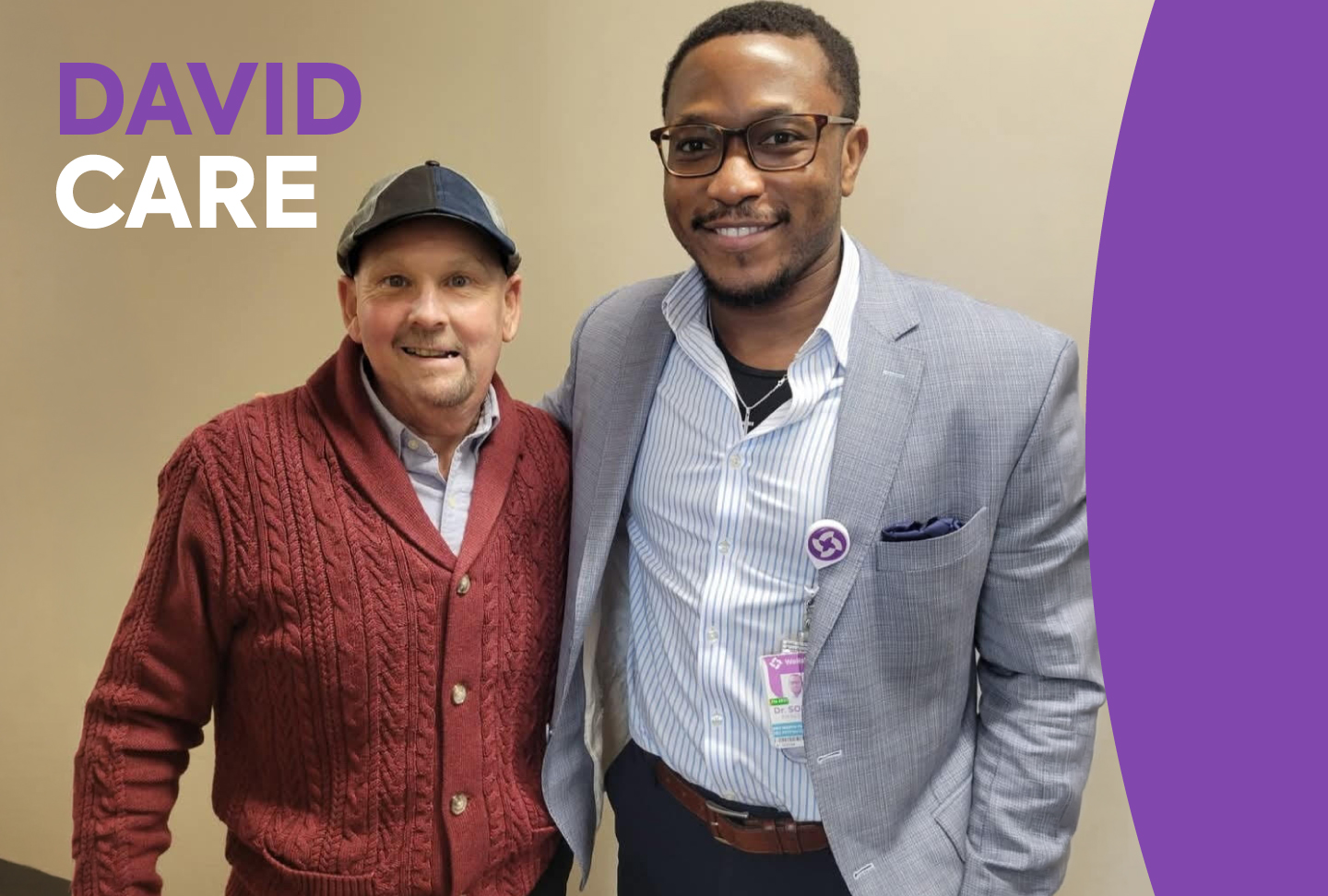
David Butler stands, smiling, with Dr. Fiyin Sokoya, a dual board-certified head and neck cancer specialist and facial plastic surgeon at Wellstar.

PeopleCare

Wellstar PeopleCare | Moving Fast, Working Together: Advanced Head & Neck Cancer Surgery Keeps David Smiling

David Butler's cancer journey took him through a rare jaw reconstruction, radiation and coordinated care from specialists across Wellstar. His care team collaborated to provide what he needed as quickly and efficiently as possible.

A bothersome mouth sore

Lean and energetic, David is quick with a joke and even quicker with a smile. A neatly trimmed mustache frames a grin that lights up his blue eyes, illuminating his trademark optimism and humor. They’re qualities he kept intact throughout cancer treatment and draws on today, when he encourages people who are newly diagnosed with cancer.

It started with a sore on his gum in the fall of 2023. He assumed it would heal on its own. Instead, it got worse. When he could hardly swallow a few months later, his dentist referred him to an oral surgeon for a biopsy. That’s when he got the life-changing news: it was cancer.

“You hear the big C and it scares you to death,” David said. “But there's light at the end of the tunnel. There's always hope.”

What followed was cancer treatment involving surgery, radiation, chemotherapy and support from a whole team of cancer specialists. Along the way, David said he leaned on his faith, the support of his wife, Jill, who he credits as his biggest advocate—and the expertise of Wellstar caregivers.


David Butler grins standing next to his wife Jill, who he credits as his biggest advocate throughout treatment.
Keep reading
Illustration of saddle. Text reads "Saddle up for survivorship"

Highlights

Commemorate Cancer Survivors Day with Wellstar

Wellstar supports people with cancer throughout their journeys, from early screenings to diagnosis to treatment. But our encouragement and dedication to delivering world-class, compassionate care doesn’t end in remission.

Across our system, Wellstar honors the bravery and strength of survivors every day, rejoicing in each milestone. This National Cancer Survivors Day, we are proud to pay tribute to the people who have conquered cancer and offer hope to those still fighting. This year’s Cancer Survivors Day theme—Saddle Up for Survivorship—exemplifies our commitment to being a steadfast source of encouragement for cancer survivors and fighters across Georgia. 

Several Wellstar facilities will host events—and you can be a part of the celebration!

Northwest Georgia Oncology Centers in Cartersville
June 5
1 PM to 3 PM
65 Cloverleaf Drive, Cartersville
Contact Mary Ellen Smither at [email protected] or (678) 858-1146.

Wellstar Cobb Medical Center
June 5
12 to 2 PM     
4040 Hospital West Drive, Austell
The event will be held in the parking lot across from Tranquility Hospice located at 4040 Hospital West Drive.
Contact Ashley Dapremont at [email protected] or (470) 732-4523.

Wellstar Douglas Medical Center
June 6
11 AM to 1 PM
6167 Prestley Mill Road, Douglasville 
Douglasville First United Methodist Church 
Contact Diane Harris at [email protected] or (470) 644-5411.

Wellstar Kennestone Regional Medical Center
June 5
11:30 AM to 2:30 PM
320 Kennestone Hospital Blvd., Marietta
Cancer Center
Contact Leena Augustine at [email protected]. 

Wellstar North Fulton Medical Center
June 6
2 to 4 PM
3000 Hospital Blvd., Roswell
Main lobby in hospital
Contact Sarah Bentley at [email protected] or (770) 751-2556.

Wellstar Paulding Medical Center
June 7
2 to 4 PM
144 Bill Carruth Parkway, Hiram
Atrium
Contact Kellie Mitchell at [email protected] or (470) 644-8106.

Wellstar Spalding Medical Center
June 5
12 PM to 2 PM
608 South 8th St., Griffin
Cancer Center
Contact Sherry Connell at [email protected] or (470) 935-5526.

Wellstar West Georgia Medical Center
June 5
10 AM to 12 PM
111 Medical Drive, LaGrange
Enoch Callaway Cancer Center
Contact Stephanie Hand at [email protected].

Learn more about cancer care at Wellstar.

Keep reading

COMMUNITY CARE

Community Care
In the Community Health Highlights Events & Classes
For Business
Corporate Purchasing Community Health Needs Assesment
Give
Wellstar Foundation Donate Ways to Give Volunteer

ABOUT US

About Wellstar Diversity Equity Inclusion & Belonging Leadership Wellstar Board of Trustees Healthcare Innovation Safety First Commitment Wellstar Research Institute Latest News

CAREERS & EDUCATION

Careers at Wellstar Graduate Medical Education Pharmacy Residency

PATIENT RESOURCES

Pay Your Bill Accepted Insurance

HELP

Contact Us Hospital Transparency Information Price Transparency Policy and Privacy Information

MEDIA

Media Room

Copyright © 2026 Wellstar Health System. All Rights Reserved.

Wellstar does not discriminate on, exclude people or treat them differently on the basis of race, color, national origin, age, disability, sex, gender identity or expression or any other type of discrimination prohibited by law.

  • Internet Privacy Policy
Cookie Preferences

We use cookies for booking and general analytics. Learn more about or internet privacy policy.