Skip Navigation
Book Now! Find care near you Find care near you Find care near you
wellstar-logo
Wellstar Go Back
Go to MyChart

Questions? We can help!

Call (770) 956-STAR (7827)

Monday - Friday, 7 AM - 4:30 PM

Contact Us
For Patients & Families For the Community For Providers About Us Careers
  • Start Your Care

  • Find a Doctor
  • Find a Location
  • Our Services
  • Virtual Visits
  • Planning

  • Accepted Insurance
  • Hospital Payment Planning
  • Financial Assistance
  • Pricing Information
  • Before Your Visit

  • Sign Up for MyChart
  • Visitation Guidelines
  • While You're Here

  • Support & Entertainment
  • Join an Event
  • After Your Visit

  • Pay Your Bill
  • Get Medical Records
  • Contact us
  • COVID-19 Support

  • COVID-19 Information
  • Vaccines
  • Testing Information
  • Foundation Relief
  • Community Care

  • In the Community
  • Health Highlights
  • Community Health Needs Assessment
  • Latest News
  • Center for Health Equity
  • Wellstar Find Help
  • Events & Programs

  • Events Calendar
  • On-Demand Classes
  • Support Groups
  • Give

  • Wellstar Foundation
  • Donate
  • Ways to Give
  • Thank a Caregiver
  • West Georgia
    Health Foundation
  • Volunteer

  • PeopleCare Advisory Council
  • For Adults
  • Care

  • Transfer a Patient
  • Cures Act
  • Refer a Patient
  • Lab Test Directory
  • Request to Conduct Research
  • Connect

  • Physician Relations
  • Request Imaging Services
  • Wellstar Clinical Partners
  • Wellstar Medical Group
  • Mayo Clinic Care Network
  • Medical Staff Services
  • Provider Recruitment
  • Log In

  • EpicCare Link
  • Lawson Connect
  • MyID Password Reset
  • Citrix Access
  • Leadership

  • Authority Board
  • Board Of Trustees
  • Foundation Board
  • Regional Health Boards
  • Executive Leadership
  • Awards, Recognition & Safety

  • Accreditation & Certifications
  • Awards & Recognition
  • Safety First Program
  • Nursing
  • Careers at Wellstar

  • Apply now
  • Upcoming virtual events
  • Why Wellstar?
  • Nursing Careers

  • Nursing (Direct Care)
  • Nursing Leadership
  • Nursing (Non-bedside)
  • Nursing Support
  • Physician, APP & Clinical Careers

  • Advanced Practice Providers (APPs)
  • Allied Health Professionals
  • Homecare & Hospice
  • Physicians
  • Support Team Careers

  • Administrative & Clerical
  • Coding, Compliance & HIM Systems
  • Facility, Environmental & Nutrition/Food Services
  • Information Technology & Systems
  • For Patients & Families
  • For the Community
  • For Providers
  • About Us
  • Careers
  • Search Search Search
  • MyChart MyChart MyChart

Start Your Care

Find a DoctorFind a LocationOur ServicesVirtual Visits

Planning

Accepted InsuranceHospital Payment PlanningFinancial AssistancePricing Information

Before Your Visit

Sign Up for MyChartVisitation Guidelines

While You're Here

Support & EntertainmentJoin an Event

After Your Visit

Pay Your BillGet Medical RecordsContact us

COVID-19 Support

COVID-19 InformationVaccinesTesting InformationFoundation Relief

Community Care

In the CommunityHealth HighlightsCommunity Health Needs AssessmentLatest NewsCenter for Health EquityWellstar Find Help

Events & Programs

Events CalendarOn-Demand ClassesSupport Groups

Give

Wellstar FoundationDonateWays to GiveThank a CaregiverWest Georgia
Health Foundation

Volunteer

PeopleCare Advisory CouncilFor Adults

Care

Transfer a PatientCures ActRefer a PatientLab Test DirectoryRequest to Conduct Research

Connect

Physician RelationsRequest Imaging ServicesWellstar Clinical PartnersWellstar Medical GroupMayo Clinic Care NetworkMedical Staff ServicesProvider Recruitment

Log In

EpicCare LinkLawson ConnectMyID Password ResetCitrix Access
About Wellstar

Our patients are the center of everything we do. We're nationally ranked and locally recognized for our high-quality care, inclusive culture, exceptional doctors and caregivers, and one of the largest and most integrated healthcare systems in Georgia.

About Us

Leadership

Authority BoardBoard Of TrusteesFoundation BoardRegional Health BoardsExecutive Leadership

Awards, Recognition & Safety

Accreditation & CertificationsAwards & RecognitionSafety First ProgramNursing

Careers at Wellstar

Apply nowUpcoming virtual eventsWhy Wellstar?

Nursing Careers

Nursing (Direct Care)Nursing LeadershipNursing (Non-bedside)Nursing Support

Physician, APP & Clinical Careers

Advanced Practice Providers (APPs)Allied Health ProfessionalsHomecare & HospicePhysicians

Support Team Careers

Administrative & ClericalCoding, Compliance & HIM SystemsFacility, Environmental & Nutrition/Food ServicesInformation Technology & Systems
Questions? We can help!

Call (770) 956-STAR (7827)

Monday - Friday, 7 AM - 4:30 PM

Contact Us
Close
  • Schedule With This Provider
  • Schedule At This Location
  • Schedule With This Provider
  • Schedule At This Location
  • Urgent Care
  • Primary Care
  • Virtual Care
  • Emergency Care
Close Close Close Book Now Menu
  • Schedule With This Provider
  • Schedule At This Location
  • Schedule With This Provider
  • Schedule At This Location
  • Urgent Care
  • Primary Care
  • Virtual Care
  • Emergency Care

Introducing

Wellstar Virtual Care

Access Wellstar healthcare providers
wherever you are.

Get started

Warning Warning Our "Book Now" feature should not be used for life threatening conditions such as heart attack, severe injury, poisoning, chest pain, or stroke. If you are experiencing such conditions, STOP and CALL 911 IMMEDIATELY or visit your nearest Emergency Department.

I Understand
  • Home
  • Articles
  • Make Digestive Health Your Habit
Article Category: Highlights

Make Digestive Health Your Habit

Published on March 29, 2024

Last updated 12:07 PM April 16, 2025

People at table outside serving food

Your digestive system works hard to keep you healthy—be proactive about protecting it! 

Your digestive system plays an essential role in your well-being, helping your body absorb nutrients and provide energy and fuel for your favorite activities. That’s why it’s so important to do your part to protect your gut health.

Wellstar helps your digestive system stay on track, so you can feel your best and keep doing the things you enjoy most.

Care from top to bottom

Your digestive system is made of an entire team of organs: the esophagus, stomach, intestines (small and large), pancreas, liver, gallbladder, rectum and anus.

“With so many parts working together, your digestive system requires expert care to stay well,” said Wellstar Gastroenterologist Dr. Inder Tandon. “Regular check-ups with your Wellstar provider can help identify potential digestive issues early.”

At a routine exam, your primary care team can screen for serious diseases like colorectal cancer and help identify chronic and common digestive conditions.

“If specialized care is needed, your primary care physician can refer you to our expert team of gastroenterologists right away,” Dr. Tandon shared.

Stay on track with Wellstar gastroenterologists

Wellstar gastroenterologists offer a full range of services to diagnose, treat and manage both common and complex disorders, including constipation, diarrhea, irritable bowel syndrome (IBS), Crohn’s disease and gastroesophageal reflux disease (GERD).

At Wellstar, we understand digestive issues can disrupt your everyday life—and talking about them can be tough.

Wellstar Gastroenterologist Dr. Cameron Body addressed this issue, encouraging patients to be honest about their health.

“Many people may feel uncomfortable discussing digestive issues, but it’s important to speak up and have an open dialogue with your provider,” Dr. Body said. “Wellstar has a team of specialists to help treat your symptoms and keep you feeling well.”

See how our gastroenterologists care for you.

Catch colorectal cancer early

Inside the digestive system, most colorectal cancer starts as a growth, or polyp, in the colon or rectum. Because polyps develop slowly over time, you may experience few warning signs and not know you have a medical issue for months or even years.

That’s why it’s so important to get a colonoscopy—it could save your life. When caught early before it spreads, colorectal cancer has a 91% five-year relative survival rate, according to the American Cancer Society. The relative survival rate compares people with the same type and stage of cancer to the general population.

People with average risk should have a colonoscopy starting at age 45. Those at high risk or with a family history of colon cancer may start screenings even sooner. Talk to your provider about your screening plan.


Learn more about colorectal cancer screening.

Many people may feel uncomfortable discussing digestive issues, but it’s important to speak up and have an open dialogue with your provider.

- Dr. Cameron Body

Wellstar gastroenterologist

Tips for good gut health

Be proactive about protecting your digestive system and follow these easy steps to stay well between regular visits with your Wellstar primary care clinician or gastroenterologist.

  • Stay hydrated. Drinking water helps break down food, making it easier for your body to absorb nutrients. Water also keeps things moving in your system and helps prevent constipation.
  • Take it slow. Don’t gulp or swallow food too quickly. When chewing, your mouth produces enzymes that are key for the digestive process. Chewing slowly may also help you feel full faster and more satisfied after a meal.
  • Focus on fiber. Eating a high-fiber diet keeps your bowel movements regular and can help to decrease the chance of constipation. Boost your fiber intake by eating whole grains, fruits, vegetables and beans.
  • Be in tune with your emotions. Have you ever been so anxious that you felt sick to your stomach? That’s because your brain and gut are closely connected. Lowering your stress level may help with your mental and digestive health too.
  • Eat food with probiotics. Probiotics are good bacteria that help your gut stay healthy. Common foods with probiotics include yogurt, sourdough bread, sauerkraut and pickles.
  • Get moving. Exercise helps food move through your digestive system. Low-intensity activity after a meal, such as walking, can also aid in digestion.
  • Cut smoking and alcohol. Smoking cigarettes and excessive drinking can cause heartburn, acid reflux and even stomach ulcers. Drop these unhealthy habits to reduce your risk of these digestive issues.

By following these tips, you can take control of your digestive health. Looking for more ways to stay well? Learn about preventative screenings to protect your well-being.

Tags

Inder Sumrat Tandon Cameron Bilbro Body Digestive Care
Related Articles
Photo of inflatable colon

Highlights

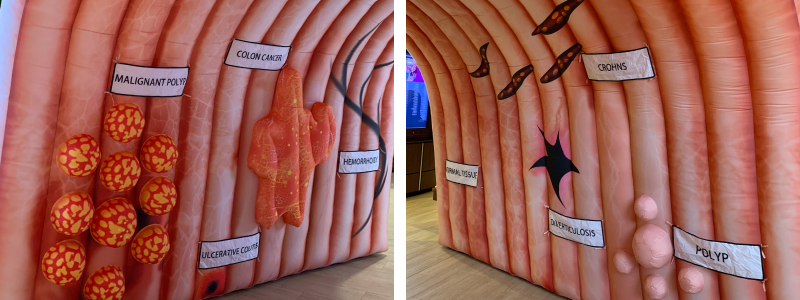
Walk Through a 7-Foot Colon Model and Learn About Screenings at Wellstar Events

Early detection is the best prevention, especially when it comes to colon cancer. If caught early, colorectal cancer has a 91% survival rate.

For someone at average risk, screenings should begin at age 45. Those with a higher risk or a family history of colorectal cancer may need to start screening sooner. Talk to your care team to create a personalized screening plan.

To raise awareness of the importance of colon cancer screenings, Wellstar’s surgery, gastroenterology, cancer care and community health teams will host informational events throughout March. Visitors can walk through a large inflatable colon model, learn about the importance of screening and early detection, and at some events, nurses will be available to help patients schedule a colonoscopy.

  • March 6, 8 AM - 4 PM, Wellstar MCG Health Medical Center B Entrance 
  • March 6, 11 AM - 1 PM, Wellstar Kennestone Cancer Center
  • March 11, 10 AM - 2 PM, Wellstar Sylvan Grove Medical Center
  • March 12, 8 AM - 4 PM, Wellstar Spalding Medical Center
  • March 16, 8 AM - 4 PM, Wellstar Douglas Medical Center Main Lobby
  • March 17, 8 AM - 4 PM, Wellstar Paulding Medical Center Main Lobby (upstairs)
  • March 18, 10 AM - 2 PM, Wellstar Windy Hill Main Lobby
  • March 20, 8 AM - 4 PM, Wellstar West Georgia Medical Center Main Lobby
  • March 23, 8 AM - 4 PM, Wellstar East Cobb Health Park
  • March 24, 8 AM - 4 PM, Wellstar Avalon Health Park Lower Level Lobby
  • March 25, 8 AM - 4 PM, Wellstar Vinings Health Park
  • March 26, 8 AM - 4 PM, Wellstar Acworth Health Park
  • March 27, 8 AM - 4 PM, Wellstar Cherokee Health Park
  • March 31, 8 AM - 4 PM, Wellstar Cobb Medical Center

Call our colorectal cancer screening hotline at (470) 793-4032.

Photo of inflatable colon

Keep reading
Group of people eating

Highlights

Make Colon Health Your Habit

For many people, talking about colon health can be a little uncomfortable. However, medical issues don’t just go away if you ignore them.

Being proactive about your well-being with preventative care can help catch colorectal cancer or another serious condition early, often before it becomes a bigger problem.

Wellstar is committed to keeping your colon healthy with preventative screenings and expert care, so you can continue to live well.

Catch colon cancer early

Early detection is the best prevention, especially when it comes to colon cancer. If caught early, colorectal cancer has a survival rate of 91%.

“Colon cancer is the second most common cause of cancer death in the United States, so it’s very important that everyone gets screened,” said Wellstar Gastroenterologist Dr. Cameron Body. “For an average risk person, screenings should begin at age 45.”

Those with a higher risk or a family history of colorectal cancer may need to start screening sooner. Partner with your provider to create a personalized screening plan—and stick with it to stay ahead of the disease.

“Recently, colon cancer has been a major trending topic in public discourse, and it has been impacting younger individuals each year. It is important to start colon cancer screening at the age of 45 or sooner if you have a family history of colon cancer,” said Wellstar Gastroenterologist Dr. Shani Clay. “This is a preventable disease, so please speak with your primary care clinician or gastroenterologist to help get you screened. Colonoscopies can help prevent colon cancer, diagnose and help direct early treatment if you are diagnosed.”

The death rate for colon cancer in older adults has been decreasing for the past several decades due to screenings, according to the American Cancer Society. Screenings can identify polyps before they become cancerous and can catch cancer earlier when it is more easily treatable. However, in people under 55, death rates from colon cancer have been increasing by about 1% per year since the mid-2000s.

Why colonoscopies work

During a colonoscopy, a Wellstar gastroenterologist will view the inside of your colon and look for polyps or any other abnormal tissue that could be cancerous. This preventative testing is key to catching colorectal issues at the start.

“A colonoscopy is the gold standard when screening for colon cancer. The procedure itself is not painful, and we make sure you’re comfortable throughout the process,” Dr. Body said. “The goal is to do a high-quality exam with a good prep to find polyps when they’re small and get them removed to minimize the risk of them subsequently developing into cancer.”

Polyps take about five to 15 years to evolve into an invasive cancer, according to Dr. Carmen Klass, oncologist and hematologist with Northwest Georgia Oncology Centers, a care partner of Wellstar.

“If you have a colonoscopy every five to 10 years, they can remove the polyp and it will never be declared an invasive cancer,” Dr. Klass said. “In fact, if all Americans did their screening colonoscopies every five to 10 years, the death rate for colorectal cancer would drop by 50%.”

See how colorectal cancer screening saves lives.

Signs of colorectal cancer

  • Colon cancer is typically discovered when a patient has a colonoscopy, but it’s important to watch for these warning signs:
  • A change in your bowel habits, such as persistent diarrhea or constipation
  • Bloody stools or rectal bleeding
  • Abdominal discomfort, such as cramps, gas and pain
  • Feeling like you are unable to empty your bowels completely
  • Weakness or fatigue
  • Unexplained weight loss

If you experience any of these symptoms, contact your care team right away.

Colorectal cancer care at Wellstar

If you have been diagnosed with colorectal cancer, count on Wellstar for comprehensive, personalized care. Our specialists will work together with you to form a tailored treatment plan and offer support every step of the way.

“When a patient is diagnosed with cancer, we walk with them and guide them on this difficult journey,” Dr. Klass said, sharing how Wellstar provides compassionate care.

Wellstar offers medical expertise close to home, clinical trials and state-of-the-art surgical procedures to treat colorectal cancer. We also have a multidisciplinary gastrointestinal (GI) tumor board that diagnoses and creates treatment plans collaboratively.

Along with cancer surgeons, medical oncologists and other experts, our care team also includes nurse navigators, dietitians, social workers, psychologists, psychiatrists and counselors to provide complete care and support.

Learn how Wellstar cares for colorectal cancer.

Get answers with genetic testing

Whether you have been diagnosed with colorectal cancer or are concerned about the chance of developing it, genetic testing can help you understand your risk of getting the disease.

If your parent, sibling or child has had colorectal cancer, you are two to three times more likely to develop the condition compared with someone with no family history. Our genetic counselors can help determine how genetic testing could benefit you and your family.

“Wellstar offers support from genetic counselors to help keep other family members safe in the future,” Dr. Klass said.

Find out if genetic testing is right for you.

Keep reading
A smiling woman enjoys a healthy meal

Highlights

Turn Down the Heat: How Food Can Help With Hot Flashes

Hot flashes and night sweats are common during perimenopause and menopause. They can show up without warning—sudden waves of heat, flushing or sweating that can disrupt your day and leave you feeling uncomfortable.

Symptoms can vary widely in frequency and intensity. “The severity of menopausal symptoms varies among women due to a combination of lifestyle, genetic, psychological and socioeconomic factors,” said Wellstar Women’s Health Nurse Practitioner Karin Hulon.

Among those factors, nutrition plays a key role—and certain foods can influence how often symptoms happen. “Some foods trigger hot flashes,” Hulon said. “Pay attention to your body to see if you can make a connection.”

Helpful foods

A balanced, plant-rich plate can support your body’s natural regulation and may ease symptoms. “Soy is a phytoestrogen that mimics estrogen in our bodies and helps to reduce hot flashes,” Hulon said. “Foods high in antioxidants and omega-3 fatty acids, such as seafood and green leafy vegetables, are also beneficial.”

Options include:

  • Mediterranean-style eating: plant-based foods, healthy fats
  • Soy-based foods: tofu, edamame, soy milk, tempeh
  • Phytoestrogen-rich foods: whole grains, seeds, legumes, berries
  • Omega-3: salmon, chia seeds, avocados, flaxseeds
  • Naturally cooling foods: apples, bananas, carrots, cucumbers, watermelon, pears, romaine lettuce

Mediterranean-style eating can be a practical place to start. “It encompasses plant-based foods and good fats such as avocado and olives, nuts, seeds, beans, legumes, tofu, fruits and fish,” Hulon said. “Even if you do not fully adopt this approach, making some substitutions and adjustments can be helpful.”

Foods to limit or avoid

Certain foods and drinks can trigger or worsen hot flashes, including:

  • Caffeine: coffee, energy drinks
  • Ultra-processed foods: baked goods, sugary drinks, fast food, fried foods
  • Alcohol: wine (especially red wine), beer, liquor
  • Spicy foods: hot peppers, jalapeños, cayenne pepper, hot sauces
  • Nicotine: cigarettes, vaping, smokeless tobacco

“Women should avoid inflammatory foods—processed foods, fried foods, sugar, processed meats, canned foods and restaurant foods,” Hulon said. “Spicy foods, caffeine and alcohol also trigger hot flashes, so limit that intake as well.”

Supporting your well-being

Choosing nourishing foods, staying hydrated and noticing your personal triggers can help your body feel more balanced and comfortable.

Nutrition matters, but it is only one part of your overall health. “Lifestyle changes include smoking cessation, decreased alcohol consumption, exercise, dietary changes and weight loss,” Hulon said. “Decrease inflammation by eating a rainbow of fruits and vegetables, increasing sleep to seven to nine hours per night and reducing stress. Despite good lifestyle modifications, many women may still need menopause hormone therapy support.”

Wellstar offers resources to guide women through this transition. “At Wellstar, refer to the Center for Best Health, where practitioners are trained in helping patients achieve healthy goals and offer behavioral, exercise and nutrition counseling,” Hulon advised. “Additionally, a certified menopause practitioner can help patients navigate menopause hormone therapy.”

Our women’s health experts are here to support you with guidance, compassion and whole-person care. To learn more about menopause care at Wellstar, visit wellstar.org/menopause.

Keep reading
Back to Top
Branding illustration
Wellstar Logo
More than healthcare. PeopleCare.
Branding illustration
For Job Seekers & Team
Careers Diversity Equity Inclusion and Belonging Onboarding
For Students
Students Portal
Graduate Medical Education
Medical Residency Pharmacy Residency
For Business
Corporate Purchasing
For the Media
Media Room Community Health Needs Assessment
Help
Contact Us Pay Your Bill Policy & Privacy Information Hospital Transparency Information Price Transparency
For Job Seekers & Team
Careers Diversity Equity Inclusion and Belonging Onboarding
For Students
Students Portal

Graduate Medical Education
Medical Residency Pharmacy Residency
For Business
Corporate Purchasing
For the Media
Media Room Community Health Needs Assessment
Help
Contact Us Pay Your Bill Policy & Privacy Information Hospital Transparency Information Price Transparency

Copyright © 2026 Wellstar Health System. All Rights Reserved.

Wellstar does not discriminate on, exclude people or treat them differently on the basis of race, color, national origin, age, disability, sex, gender identity or expression or any other type of discrimination prohibited by law.

Cookie Preferences

We use cookies for booking and general analytics. Learn more about or internet privacy policy.