SKIP NAVIGATION
MyChart Search
Wellstar Go Back
MyChart
  • Find a Doctor
  • Locations
  • Medical Services
    Popular Services
    • Emergency Care
    • Urgent Care
    • Virtual Care
    • Primary Care
    • Women's Health
    • Pediatric Care
    • Cancer Care
    • Heart Care
    • Neuro Care
    • Orthopedics
    • View All Medical Services
    Expanded Services
    • Lab Services
    • Imaging
    • ENT
    • Pulmonary
    • Gastroenterology
    • Urology
    • Physical Therapy
    • Behavioral Health
    • Pharmacies
    • View All Medical Services
    For Providers
    • Refer a Patient
    • Transfer a Patient
    • Physician Relations
    • Wellstar Clinical Partners
    • Provider Resources
  • Patient Resources
    Patient Portal
    • MyChart Login
    • Sign-Up for MyChart
    • Get Medical Records
    Visiting
    • Visitation Guidelines
    • Patient Guides
    • Find My Way
    Billing & Insurance
    • Accepted Insurance
    • Pay Your Bill
    • Financial Assistance
  • Wellstar for You
    Community
    • Classes and Events
    • Center for Health Equity
    • Support Groups
    • Community Outreach
    • Wellstar Find Help
    • Translation Services
    • Volunteer Opportunities
    Health Content
    • Articles
    • PeopleCare
  • Find a Doctor
  • Locations
  • Medical Services
  • Patient Resources
  • Wellstar for You

Popular Services

Emergency Care Urgent Care Virtual Care Primary Care Women's Health
Pediatric Care Cancer Care Heart Care Neuro Care Orthopedics

Expanded Services

Lab Services Imaging ENT Pulmonary Gastroenterology
Urology Physical Therapy Behavioral Health Pharmacies View All Medical Services

For Providers

Refer a Patient Transfer a Patient Physician Relations Wellstar Clinical Partners Provider Resources

Patient Portal

MyChart Login Sign-Up for MyChart Get Medical Records

Visiting

Visitation Guidelines Patient Guides Find My Way

Billing & Insurance

Accepted Insurance Pay Your Bill Financial Assistance

Community

Classes and Events Center for Health Equity Support Groups Community Outreach
Wellstar Find Help Translation Services Volunteer Opportunities

Health Content

Articles PeopleCare
  • Home
  • Articles
  • Lung Biopsy Technology at Wellstar Reduces Complications, Speeds Up Treatment
Article Category: Highlights

Lung Biopsy Technology at Wellstar Reduces Complications, Speeds Up Treatment

Published on October 29, 2024

Last updated 01:23 PM May 13, 2025

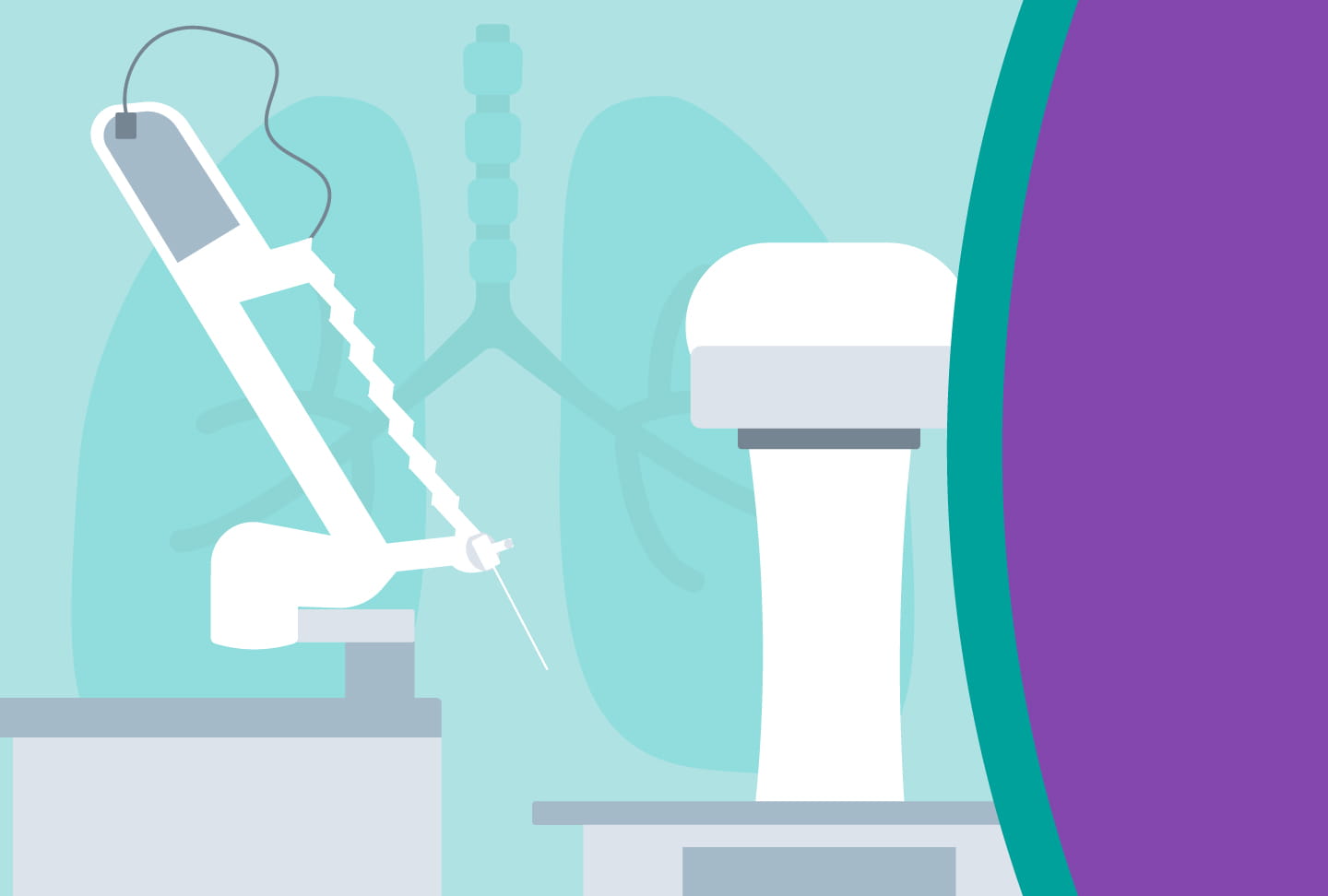
Illustration of Ion system

Innovative technology at Wellstar is offering patients a minimally invasive option for lung biopsies, reducing complications and helping expedite lung cancer treatment.

The Ion system is a robotic-assisted platform for performing lung biopsies. If a lung cancer screening or any other CT scan shows a suspicious nodule, providers will need to perform a biopsy to determine if the patient has lung cancer and how to proceed with care.

“Those nodules may not be cancer, but in certain situations we still need to know what it is,” said Wellstar Pulmonologist Dr. Timothy Udoji. “The Ion technology helps us biopsy those nodules to get an answer so that additional workup can be done immediately. If it is cancer, we want to catch it at an early stage.”

The system uses a three-dimensional spatial recognition technology that helps guide a catheter down the airway, deep into the lung, all the way to small nodules where biopsies can be performed. The robotic catheter maintains its shape and stability throughout the biopsy process significantly improving diagnostic yield compared to other modalities.

“The better the image and the more certainty we have of the spatial location of the catheter, the better we can avoid complications by making sure we are not too close to a blood vessel or the edge of the lung,” said Wellstar Thoracic Surgeon Dr. Daniel Fortes.

During the biopsy, providers can also use the Ion system to mark an area in the lung, making it easier to find later during surgery.

“If something is very small and hard to find in surgery, Ion can be used to mark that area with dye, or contrast, that allows us to find it in surgery,” Dr. Fortes said. “With this technology added to the surgical robotic system in the operating room, we can better identify those lesions and remove smaller portions of lung, also called segments.”

Technology to help provide peace of mind

The Ion system also has further reach than previous technologies and is able to more easily biopsy nodules in the peripheral areas of the lung. For many cancer patients, this will allow them to initiate care earlier and improve their outcomes, as well as give them peace of mind during the treatment process.

“Mental health impacts physical health. We are able to confidently biopsy and identify these nodules and that means a lot for our patients,” Dr. Udoji said. “Now, with this new technology we are able to get a biopsy done much earlier which has huge outcome implications for malignant nodules.”
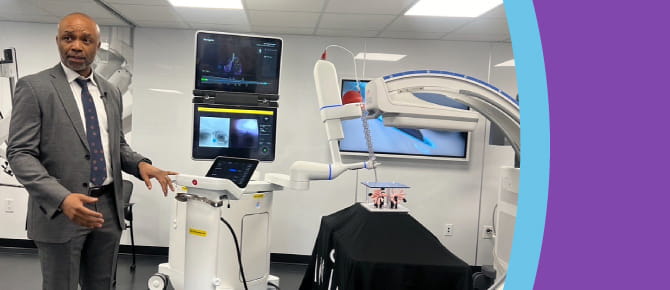
 

ION Robot surgery


At Wellstar, cancer care is tailored for each patient. In the Wellstar STAT Clinic for Lung Cancer, patients meet with multiple specialists at once to discuss their care options and create a personalized treatment plan. Specialists in the STAT Clinics, which are located at Wellstar Cobb, Douglas, Kennestone Regional, North Fulton, Paulding and West Georgia medical centers, as well as Cherokee Health Park, work with patients to determine the optimal course of treatment and will talk with patients and families about biopsy options, including the Ion system. The STAT Clinics give patients the opportunity to have their diagnoses managed right away, and literature shows that the clinics’ diagnostic and treatment model improves outcomes for patients.
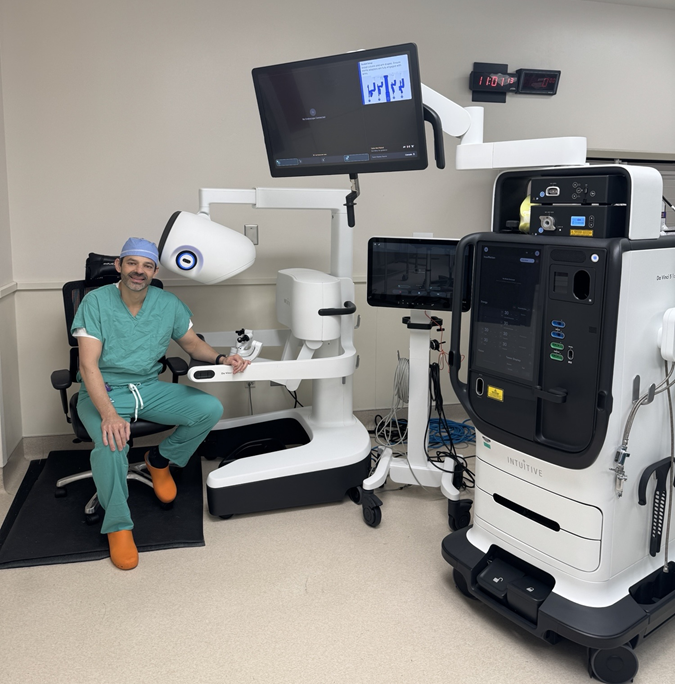

Photo of healthcare provider with ION system


The Ion system is in use at Wellstar Kennestone Regional Medical Center, where the team has completed more than 500 procedures. This system is also now available at Wellstar West Georgia Medical Center and Wellstar Douglas Medical Center. Learn more about lung cancer care at wellstar.org/lungcancer and ask your primary care provider or pulmonologist if you have questions or are seeking care for lung health. Learn more about pulmonary care at wellstar.org/pulmonary.


Tags

Kennestone Regional Medical Center Timothy Nnaemeka Udoji Daniel Leite Cardoso Fortes
STAT Clinic for Lung Cancer Cancer Care Pulmonary Care
Related Articles
Woman talks with her healthcare provider

Highlights

Q&A: Breast Cancer Specialist Answers Mammograms and Self Breast Exams Questions

According to the American Cancer Society, 1 in 8 women will get breast cancer in their lifetime. Breast cancer is the second leading cause of cancer death for women. However, when found in its earliest stages, breast cancer can be stopped from spreading, is more treatable and nearly 100% curable. Screening is the best way to find breast cancer early. Let’s talk about mammograms as well as the right way to perform a self breast exam.

Mammograms

When should I start getting mammograms?

Unless you have a new breast problem or need to start screenings earlier because of risk, most guidelines recommend starting screening mammography at age 40.
How often should I get a mammogram?

Guidelines differ somewhat but are consistent that if you are of average risk, you should have them at least every other year.  If you are at increased risk, including having dense breast tissue or a family history of breast cancer,  it is recommended that you get an annual mammography screening and possibly enhanced screenings with MRI, ultrasound or contrast enhanced mammography.

Is getting a mammogram dangerous to my health?

While there is a small radiation exposure with every mammogram, the benefit of early detection of small, curable cancers almost always outweighs that risk of exposure.

Does it hurt to get a mammogram?

Some women do find mammograms uncomfortable.  This is more common when having imaging just before your menstrual period when breast tissue can be swollen and more sensitive.  If you do have extra sensitivity, scheduling the exam after your cycle starts or taking an over-the-counter NSAID pain reliever* a few hours before the exam may minimize the discomfort.  Because positioning of the breast and taking each mammogram image is typically less than 30 seconds, the extent of discomfort during the exam is short-lived.

*NSAIDs are nonsteroidal anti-inflammatory drugs, like ibuprofen (Advil, Motrin), naproxen sodium (Aleve) and aspirin.

Breast self-exam options

What is the correct technique for a breast self-exam?

Any pattern for feeling all of your breast tissue is acceptable. The goal is to make sure you are feeling with varying pressure from your collar bone to cleavage, to the bottom of the breast out to past where your breast meets your chest wall, including your armpit.

How often should I do a breast self-exam?

Self-exams should not be done too often because it can make it difficult to tell if a lump is evolving over time. Think of how hard it is to tell if your appearance changes gradually as you get older because you see yourself every day, compared to more easily seeing changes in someone’s appearance after not seeing them for a long time. Typically, once a month is enough.

Is there a best time to do a breast self-exam?

 It is important to do your breast self-exam in approximately the same time in your cycle rather than a specific interval—especially since not all menstrual cycles are exactly 28 days apart.  Doing the exam at the same place in your cycle will give you consistency in how the tissue should feel in terms of lumpiness, texture and density. 
I encourage my patients to do their exam the day after their cycle starts as a consistent point in their hormonal cycle fluctuations.

What am I actually looking for during a breast self-exam?

Your breast self-exam should be a tool to familiarize yourself with the general “normal texture” of the tissue in each of your breasts so if you detect something that is different, you will be able to identify it as new or changed. 

Can a breast self-exam replace a mammogram?

Self-breast exams cannot replace mammograms because mammograms can detect subtle changes like densities or calcifications that are too small to feel. The goal with screening mammograms is to detect breast cancer before you can feel it because early detection leads to better overall outcomes.
Learn more about breast cancer screening and treatment at Wellstar. 

Keep reading
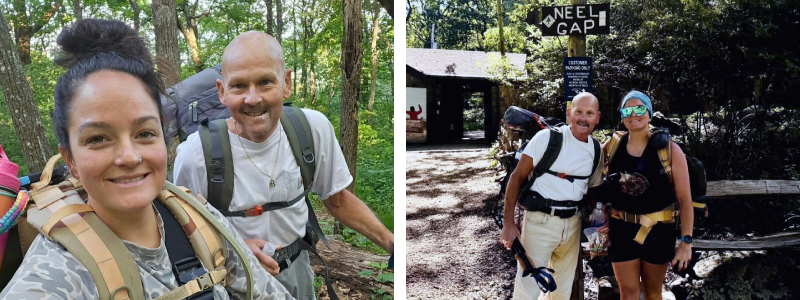
David Butler and his daughter stand triumphantly at Preacher's Rock, the summit of Blood Mountain in North Georgia. The vista of the Blue Ridge Mountains spans the horizon behind them.

PeopleCare

Wellstar PeopleCare | Reaching New Heights After Head & Neck Cancer

David Butler's cancer journey took him through a rare jaw reconstruction, multiple rounds of radiation treatment, chemotherapy, intense rehabilitation and coordinated care from specialists across Wellstar.

From survival to summit

After David did the hard work of fighting cancer twice and feeling like recovery was truly sailing along, he set a new goal. David and one of his daughters, Madeline Hawkins, completed a hiking and camping trip that included summiting Blood Mountain in North Georgia. They covered 14 miles, camping overnight and making friends along the trail.

Fully loaded with walking sticks, packs on their backs and huge smiles, David and his daughter head out for a multiple day hiking excursion.

The hike wasn't easy.

“I forgot you have to be half mountain goat!” he quipped.

David moved at his own pace and pushed through lingering fatigue. Reaching the summit’s stunning vista at Preacher’s Rock was a reminder of how far he had come since his cancer diagnosis.

Keep reading
Male and female head and neck cancer specialists stand together looking at a chart and discussing the best treatment for a complex case of head and neck cancer.

PeopleCare

Wellstar PeopleCare | Beating Cancer Twice with Coordinated Care

David Butler’s cancer journey began when he underwent treatment for an aggressive head and neck cancer. Supported by his family, faith and a team of head and neck cancer specialists, he had part of his jaw removed and went through radiation therapy and intense rehabilitation.

A major setback

The same year of his jaw surgery and initial radiation course, David’s recovery was beginning to feel like “smooth sailing.” Just as life started to feel manageable again, he faced an unexpected challenge.

David and his wife, Jill, got devastating news: routine follow-up imaging revealed three new tumors on the other side of his neck and tongue. Dr. Fiyin Sokoya, David’s cancer surgeon, removed lymph nodes from David’s neck, had them biopsied and confirmed that it was an aggressive cancer.

At first, David felt so discouraged that he didn’t want to move forward with treatment.

However, seeing that a group of experts were working together to give him the best, evidence-based treatment path for his unique circumstance gave him confidence to renew his fight against cancer.

Keep reading

COMMUNITY CARE

Community Care
In the Community Health Highlights Events & Classes
For Business
Corporate Purchasing Community Health Needs Assesment
Give
Wellstar Foundation Donate Ways to Give Volunteer

ABOUT US

About Wellstar Diversity Equity Inclusion & Belonging Leadership Wellstar Board of Trustees Healthcare Innovation Safety First Commitment Wellstar Research Institute Latest News

CAREERS & EDUCATION

Careers at Wellstar Graduate Medical Education Pharmacy Residency

PATIENT RESOURCES

Pay Your Bill Accepted Insurance

HELP

Contact Us Hospital Transparency Information Price Transparency Policy and Privacy Information

MEDIA

Media Room

Copyright © 2026 Wellstar Health System. All Rights Reserved.

Wellstar does not discriminate on, exclude people or treat them differently on the basis of race, color, national origin, age, disability, sex, gender identity or expression or any other type of discrimination prohibited by law.

  • Internet Privacy Policy
Cookie Preferences

We use cookies for booking and general analytics. Learn more about or internet privacy policy.