The power of multidisciplinary care
David's case was reviewed in the Wellstar STAT Clinic for Head & Neck Cancer, where specialists collaborate to evaluate complex cases and develop treatment plans.
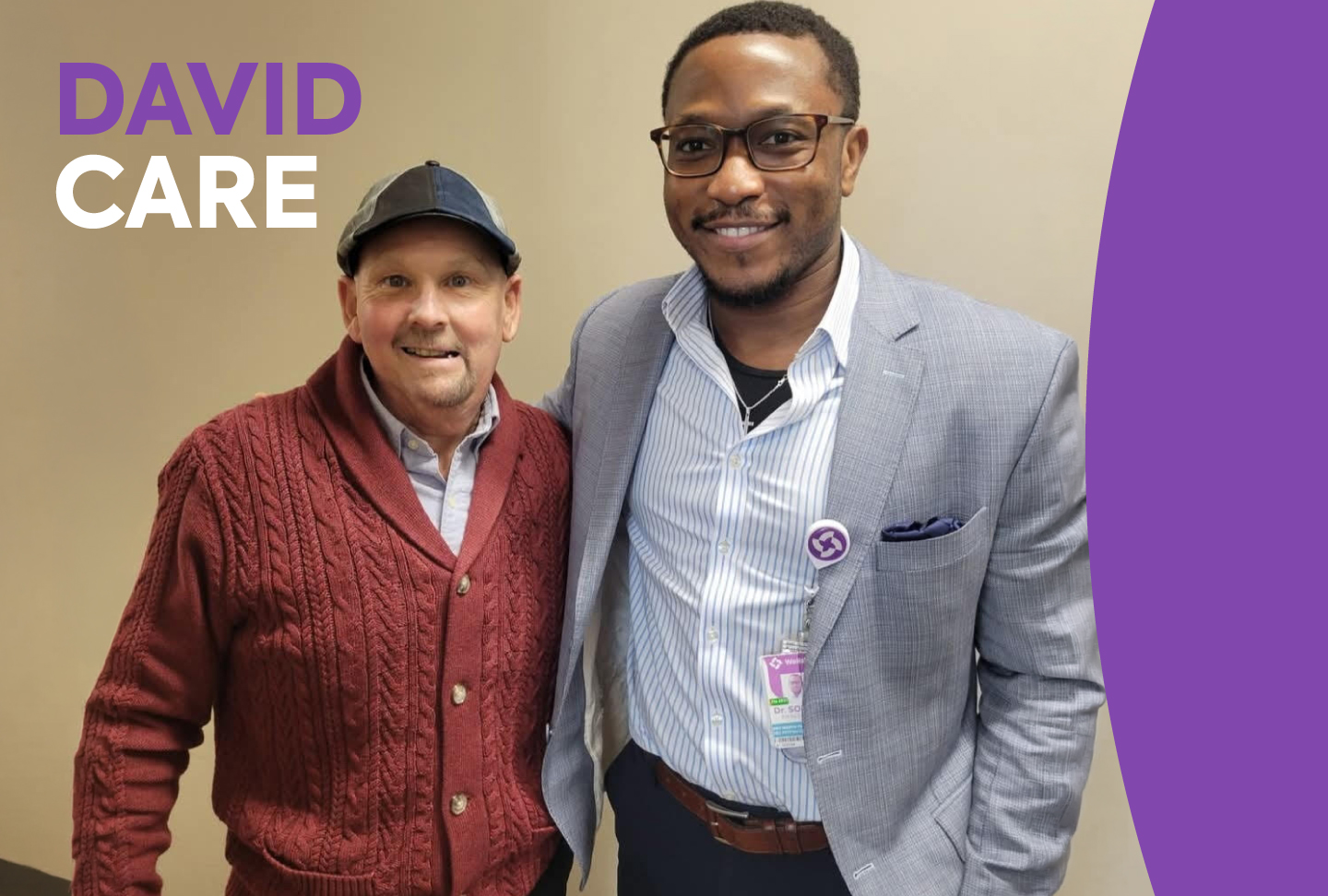
“The patient gets the luxury of multiple experts operating in alignment with national cancer care guidelines and the standards of care,” Dr. Sokoya said. “It’s a very beneficial model of care for these patients because they can come to STAT Clinic and see these specialists in one day, cutting down on travel, expense and logistics. We work very closely together to make sure the patient receives the best care possible.”
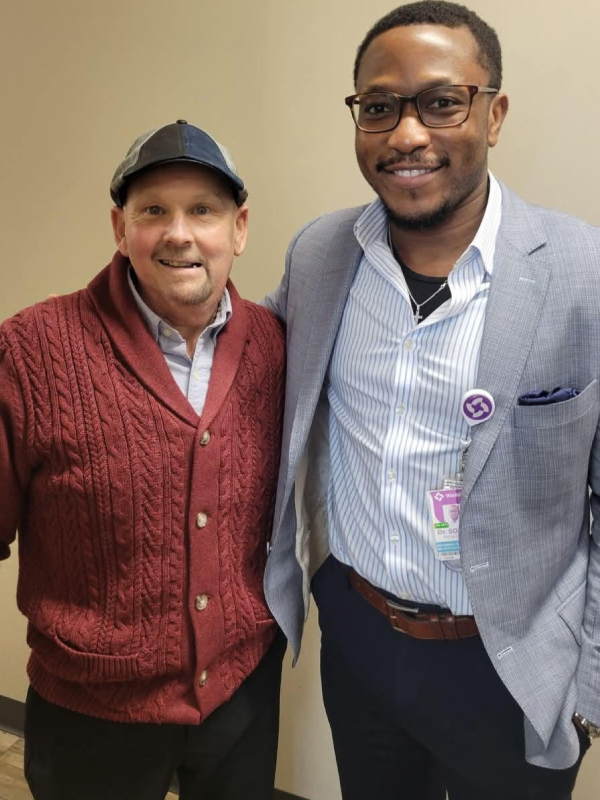
There, David met Radiation Oncologist Dr. Mark McLaughlin, Dr. Sokoya and other members of the head and neck cancer team. They recommended six rounds of chemotherapy over six weeks with Medical Oncologist Dr. Ghada Kunter at Wellstar Cherokee Health Park in Holly Springs and a seven-week course of 35 more rounds of radiation with Dr. Olusola Obayomi-Davies, a radiation oncologist at Wellstar Kennestone Regional Medical Center in Marietta.
Going through treatment this time was more challenging than the first.
“David has a good sense of humor and a strong faith,” Dr. Kunter said. “It eased his difficult time and made him more resilient and positive.”
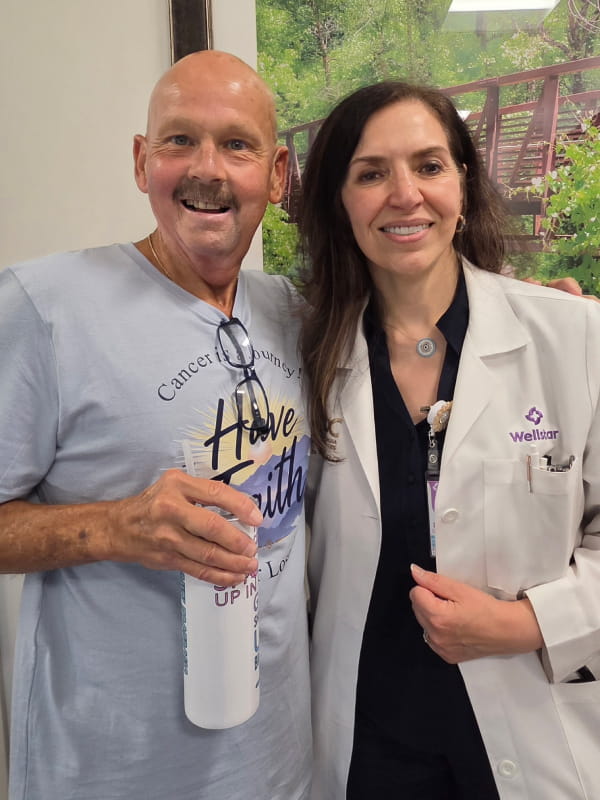
Because his care team was closely aligned, they were able to schedule treatments back-to-back so David could start his radiation in Marietta in the morning and then have chemotherapy immediately after in Holly Springs, closer to where he lives.
“The cancer treatment that we provide is top of the line—we are always providing newer therapy,” Dr. Kunter said. “We have an excellent relationship with the physicians in different subspecialties at Wellstar and at the university.”
Treatment the second time around
“I showed up every day for radiation,” David said. “I joked around, always smiling.”
He was determined to keep his sense of humor intact, but treatment was not easy. It was hard to eat, speak and maintain energy.
“One of the biggest challenges when you’re treating someone’s throat is that it hurts,” Dr. Davies said. “We do a lot to control pain and keep the patients swallowing so when the pain is gone, they don’t lose the ability to swallow and require feeding tubes.”
During a follow-up visit, Dr. Davies remembers David saying he was able to eat solid food again, not just high calorie shakes.
“That was a sign that he was living his life!” Dr. Davies smiled.
New teeth—and better blood flow
“David is so full of life that he wants to get back to life as normal as possible,” Dr. Sokoya added. “Sometimes it can take years to get to the new normal. My surprise with him was how quickly he bounced back.”
A year after his jaw surgery, David’s jaw bone graft was ready to support prosthetic teeth. David was thrilled. He worked with a dentist and an oral surgeon to create a prosthetic dental overlay.
But then another routine follow-up PET scan revealed something unexpected again. This time, it was a serious coronary artery blockage that could lead to a life-threatening heart attack. David saw cardiologist Dr. Ernesto Hernandez and underwent interventional cardiology treatment with Dr. Scott McKee soon afterward.
“Cancer saved my life because I would have died of a heart attack!” David said.
What's next for David
David’s story isn’t over yet. Read how David reaches new heights after fighting cancer twice—and how he’s inspiring others.