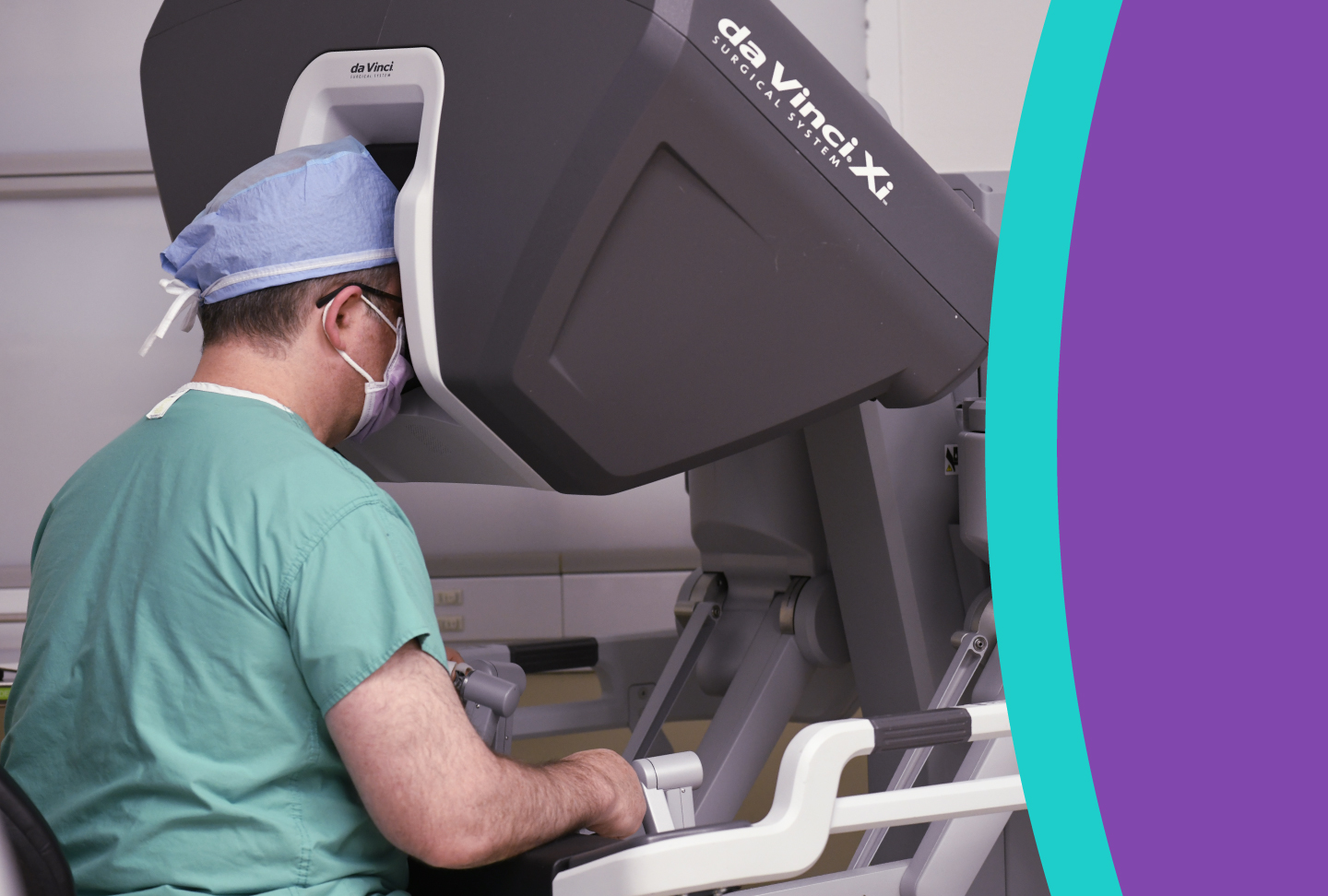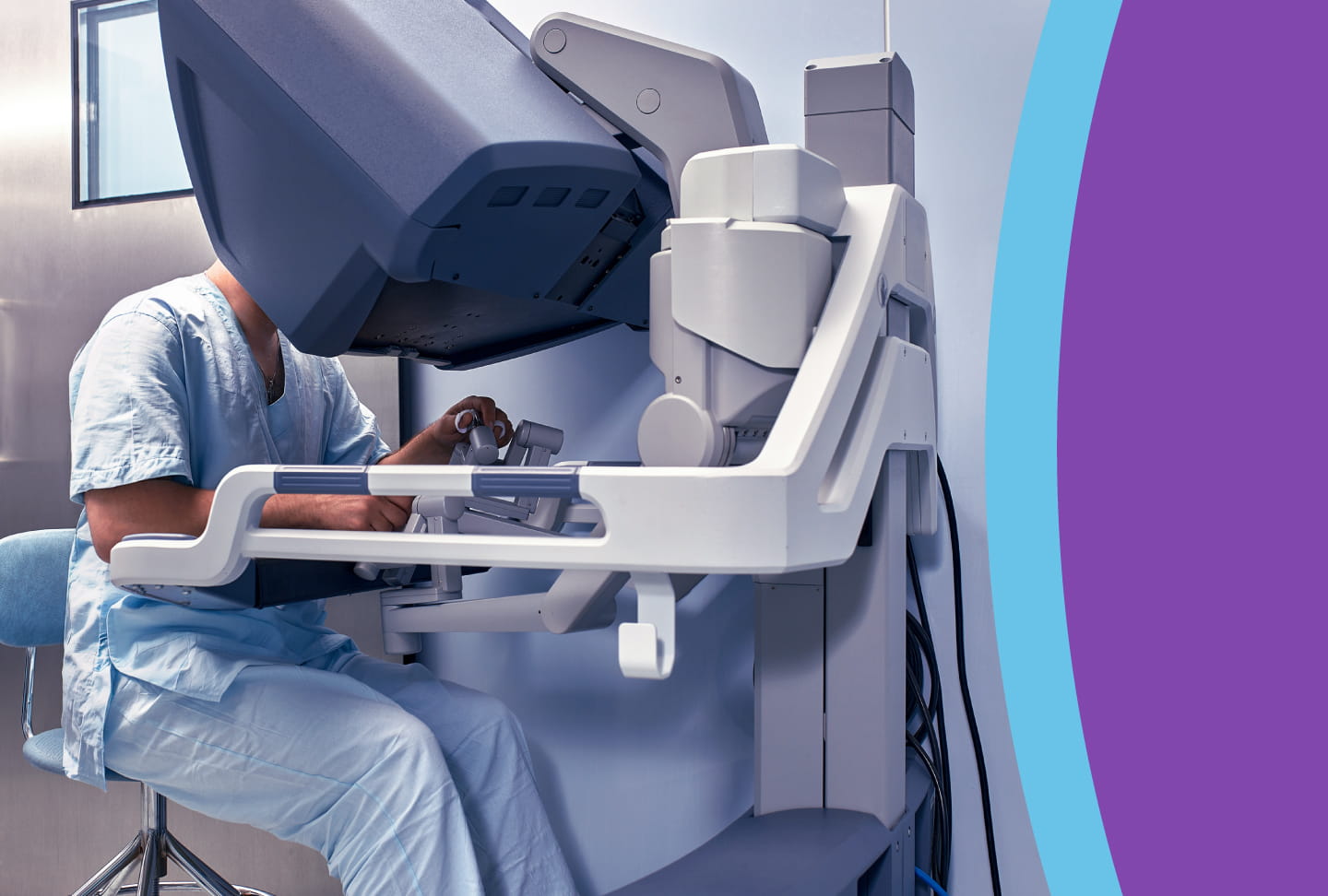
Robotic surgery has transformed how surgeons care for patients with new innovations yet again. At Wellstar, continued investment in advanced technology is helping elevate surgical care across specialties—giving patients the option to have more precise and less invasive procedures that are easier to recover from.
“Technology continues to advance to provide newer and safer alternatives to treat our patients,” said Dr. Aaron Bolduc, a general surgeon at Wellstar MCG Health Medical Center. “As we adopt this new technology, we are able to lead the way in patient care with excellent outcomes.
Wellstar has expanded its robotic surgery program with the addition of the Da Vinci 5 robotic surgical system—also known as the DV5—at most locations, along with new applications for single-port surgery. These innovations build on years of robotic experience while helping clinicians deliver world-class care and train the physicians of the future.
Fast recoveries
The latest technologies continue to redefine what’s possible in surgery, including even shorter hospital stays and faster recovery timelines.
Dr. Jay Singh, Wellstar chief surgical officer and a colon and rectal surgeon, said significantly smaller incisions make a big impact: “That is potentially huge from the standpoint of patient satisfaction, decreased pain, quicker recovery time, a decrease in narcotics used and a quicker return to work.”
The impact is so great that some robotic procedures that previously required a few nights in the hospital are now being done as outpatient procedures, allowing patients to recover in the comfort of their homes.
DV5: A new level of precision
The DV5 represents a significant step forward in robotic surgery—notably for surgeon awareness and control. One of its most notable advancements is force feedback: “The ability to sense hard and soft tissue during robotic surgeries is a game changer,” said Dr. Julie Chang, an obstetrics and gynecology specialist. She was the first surgeon to use the DV5 system at Wellstar Cobb Medical Center.
“Surgeries will be even more precise and efficient with this tool, which will further reduce post-operative pain and make recovery time faster,” said Dr. Chang.
The machine’s sensory feedback means surgeons can apply the exact amount of pressure needed.
“The DV5 allows the surgeon to sense how much push-or-pull force they apply to delicate structures in the body,” said Dr. Fritz Jean-Pierre, a bariatric surgeon at Wellstar Kennestone Regional Medical Center. “Less strain means less trauma and potential injury, leading to faster patient recovery.”
Wellstar’s robotic program is grounded in decades of experience, combined with a commitment to adopt best‑in‑class technology.
“Having performed robotic surgery for well over 20 years, I started with the very first Da Vinci surgical robot,” said Dr. Scott Miller, Wellstar director of robotic surgical services and a urologist at Wellstar North Fulton Medical Center. “I was amazed when that came around, but I never cease to be amazed by every advancement. Now we have introduced the DV5 model to most Wellstar locations with 10,000 times processing power.”
With that comes enhanced visualization, instrument responsiveness and precision across a wide range of procedures.
“The DV5 is ideal for many urologic procedures, such as prostate and kidney removal, bladder surgery and urinary tract reconstruction,” Dr. Miller said. “The improved range-of-motion and visualization features help us protect healthy tissues and nerves.”