SKIP NAVIGATION
MyChart Search
Wellstar Go Back
MyChart
  • Find a Doctor
  • Locations
  • Medical Services
    Popular Services
    • Emergency Care
    • Urgent Care
    • Virtual Care
    • Primary Care
    • Women's Health
    • Pediatric Care
    • Cancer Care
    • Heart Care
    • Neuro Care
    • Orthopedics
    • View All Medical Services
    Expanded Services
    • Lab Services
    • Imaging
    • ENT
    • Pulmonary
    • Gastroenterology
    • Urology
    • Physical Therapy
    • Behavioral Health
    • Pharmacies
    • View All Medical Services
    For Providers
    • Refer a Patient
    • Transfer a Patient
    • Physician Relations
    • Wellstar Clinical Partners
    • Provider Resources
  • Patient Resources
    Patient Portal
    • MyChart Login
    • Sign-Up for MyChart
    • Get Medical Records
    Visiting
    • Visitation Guidelines
    • Patient Guides
    • Find My Way
    Billing & Insurance
    • Accepted Insurance
    • Pay Your Bill
    • Financial Assistance
  • Wellstar for You
    Community
    • Classes and Events
    • Center for Health Equity
    • Support Groups
    • Community Outreach
    • Wellstar Find Help
    • Translation Services
    • Volunteer Opportunities
    Health Content
    • Articles
    • PeopleCare
  • Find a Doctor
  • Locations
  • Medical Services
  • Patient Resources
  • Wellstar for You

Popular Services

Emergency Care Urgent Care Virtual Care Primary Care Women's Health
Pediatric Care Cancer Care Heart Care Neuro Care Orthopedics

Expanded Services

Lab Services Imaging ENT Pulmonary Gastroenterology
Urology Physical Therapy Behavioral Health Pharmacies View All Medical Services

For Providers

Refer a Patient Transfer a Patient Physician Relations Wellstar Clinical Partners Provider Resources

Patient Portal

MyChart Login Sign-Up for MyChart Get Medical Records

Visiting

Visitation Guidelines Patient Guides Find My Way

Billing & Insurance

Accepted Insurance Pay Your Bill Financial Assistance

Community

Classes and Events Center for Health Equity Support Groups Community Outreach
Wellstar Find Help Translation Services Volunteer Opportunities

Health Content

Articles PeopleCare
  • Home
  • Articles
  • Well Starts with Digestive Health
Article Category: Highlights

Well Starts with Digestive Health

Published on March 01, 2022

Last updated 08:23 AM November 03, 2023

Well starts with digestive health

After taking a bite of food, you may not think about its journey through your body. From beginning to end, your digestive system is working hard to keep you healthy.

“Your digestive system plays an essential role in your well-being, helping your body to absorb nutrients, provide energy and fuel for your favorite activities,” explained Wellstar Gastroenterologist Dr. Arif Aziz.

That’s why it’s so important to do your part to protect your gut health.

Wellstar helps your digestive system stay on track, so you can feel your best and keep doing the things you enjoy most.

Care from top to bottom

Your digestive system is made of an entire team of organs: the esophagus, stomach, intestines (small and large), pancreas, liver, gallbladder, rectum and anus.

“With so many parts working together, your digestive system requires expert care to stay well,” said Wellstar Gastroenterologist Dr. Inder Tandon. “Regular check-ups with your Wellstar provider can help identify potential digestive issues early.”

At a routine exam, your provider can screen serious diseases like colorectal cancer and help identify chronic and common digestive conditions.

“If specialized care is needed, your primary care physician can refer you to our expert team of gastroenterologists right away,” Dr. Tandon shared.

Find a Wellstar provider near you and schedule a check-up today.

Catch colorectal cancer early

Most colorectal cancer starts as a growth, or polyp, in the colon or rectum. Because polyps develop slowly over time, you may experience few warning signs and not know you have a medical issue for months, or even years.

That’s why it’s so important to get a colonoscopy—it could save your life. When caught early, colorectal cancer has a 91% survival rate.

People with average risk should have a colonoscopy starting at age 45. Those at high risk or with a family history of colon cancer may start screenings even sooner.

Learn more about colorectal cancer screening.

With so many parts working together, your digestive system requires expert care to stay well. Regular check-ups with your Wellstar provider can help identify potential digestive issues early.

- Dr. Inder Tandon

Wellstar Gastroenterologist

Staying on track

When irregular bowel issues—like constipation, diarrhea, stomach pain or cramps—become a constant concern, your provider can help diagnose and treat the problem.

Your persistent symptoms may be more than an upset stomach. You could have a chronic digestive condition, such as gastroesophageal reflux disease (GERD), irritable bowel syndrome (IBS) or Crohn’s disease.

Even common concerns, such as constipation, heartburn and diarrhea, should be addressed with your provider if they happen often.

At Wellstar, we understand digestive issues can disrupt your everyday life—and talking about them can be tough.

Wellstar Gastroenterologist Dr. Cameron Body addressed this issue, encouraging patients to be honest about their health.

“Many people may feel uncomfortable discussing digestive issues, but it’s important to speak up and have an open dialogue with your provider,” Dr. Body said. “Wellstar has a team of specialists to help treat your symptoms and keep you feeling well.”

See how our gastroenterologists care for you.

Tips for good gut health

Be proactive about protecting your digestive system, and follow these easy steps to stay well between regular visits with your Wellstar provider.

  • Stay hydrated. Drinking water helps break down food, making it easier for your body to absorb nutrients. Water also keeps things moving in your system and helps prevent constipation.

  • Take it slow. Don’t gulp or swallow foods too quickly. When chewing, your mouth produces enzymes that are key for the digestive process. Chewing slowly may also help you feel full faster and more satisfied after a meal.

  • Focus on fiber. Eating a high-fiber diet keeps your bowel movements regular and can help to decrease the chance of constipation. Boost your fiber intake by eating whole grains, fruits, vegetables and beans.

  • Be in-tune with your emotions. Have you ever been so anxious that you felt sick to your stomach? That’s because your brain and gut are closely connected. Lowering your stress level may help with your mental and digestive health, too.

  • Eat food with probiotics. Probiotics are good bacteria that help your gut stay healthy. Common foods with probiotics include yogurt, sourdough bread, sauerkraut and pickles.

  • Get moving. Exercise helps food move through your digestive system. Low-intensity activity after a meal, such as walking, can also help aid in digestion.

  • Cut smoking & alcohol. Smoking cigarettes and excessive drinking can cause heartburn, acid reflux and even stomach ulcers. Drop these unhealthy habits to reduce your risk of these digestive issues.

By following these tips, you can take control of your digestive health. Looking for more ways to stay well? Learn about preventative screenings to protect your well-being.

Tags

Inder Sumrat Tandon Digestive Care
Related Articles
Patient receiving test kit

Highlights

Helping Patients Screen for Colon Cancer Through ColoCare Connect

When caught early, colorectal cancer is much more treatable, yet many people face barriers that prevent them from getting screened. Through the ColoCare Connect Program, Wellstar is working to make preventive care more accessible for communities who need it most.

In 2024, Cobb & Douglas Public Health, with support from the Wellstar Foundation, provided funding to expand colon cancer screening across Cobb and Douglas counties with the launch of ColoCare Connect. The community-based program, led by Wellstar Center for Health Equity and the Community Health team, focuses on education, resources and supplying at-home screening tests with the help of trusted local clinics.

Meeting patients where they are

Instead of patients having to navigate additional appointments, ColoCare Connect partnered with community clinics that were already providing care. These included BWell Medical & Wellness Center, Someone Cares, Bethesda Community Clinic and The Rouse Foundation.

Our partners provided patients with fecal immunochemical tests (FIT kits) that allowed them to complete colorectal cancer screening at home. During the grant period alone, the program distributed 435 FIT kits.

A strong community partner: BWell Medical & Wellness Center

One example of ColoCareConnect’s impact is BWell Medical & Wellness Center, which distributed more than 100 FIT kits and continues to collaborate with Wellstar to help people get screened.

The clinic serves a diverse population that includes working families, the elderly, underserved residents and people living in assisted living or personal care homes.

“Our focus is on accessible, patient-centered care that emphasizes prevention and early intervention,” said Vivian Adu-Aboagye, director of BWell Medical & Wellness Center. “Many of our patients face barriers such as transportation challenges, time constraints or limited access to preventive services.”

The partnership stood out because it offered a practical and patient-friendly solution.

“Many patients delay colon cancer screening due to fear, cost concerns or scheduling challenges related to their colonoscopy,” she added. “The FIT kits provide a convenient option that fits naturally into routine primary care visits.”

Making screening part of everyday care

At BWell, team members speak with patients during their visits to determine if they need colorectal cancer screening. They provide education and distribute kits during appointments, then follow up about returning the kit.

Patients have said they appreciate the privacy and convenience of the kits. Many of them had previously avoided screening due to concerns about invasive procedures or difficulty taking time off work. By removing common barriers, like transportation challenges, scheduling conflicts and fear, patients who may have otherwise skipped their colon cancer screenings were able to get checked.

Building toward healthier communities

ColoCare Connect demonstrates the power of community partnerships in advancing health equity. By equipping trusted local clinics with resources and support, the program expanded access to life-saving screening.

As the program continues, partnerships like these help ensure that more individuals have the opportunity to participate in early detection and receive follow-up care when needed. This ultimately improves outcomes and strengthens community health across the region.

Connecting patients to ongoing support

Screening is an important first step, but access to information and support beyond the clinic is also critical. Community members can use Wellstar Find Help to locate colorectal cancer screening programs, patient navigation services and financial assistance resources available in their ZIP code. 

If your screening has an abnormal result, care teams can help coordinate next steps, answer questions about a colonoscopy and identify financial assistance options when needed. By pairing clinic-based screening with community-based support resources, Wellstar and its partners are working to ensure patients do not have to navigate the process alone.

Keep reading
Photo of inflatable colon

Highlights

Walk Through a 7-Foot Colon Model and Learn About Screenings at Wellstar Events

Early detection is the best prevention, especially when it comes to colon cancer. If caught early, colorectal cancer has a 91% survival rate.

For someone at average risk, screenings should begin at age 45. Those with a higher risk or a family history of colorectal cancer may need to start screening sooner. Talk to your care team to create a personalized screening plan.

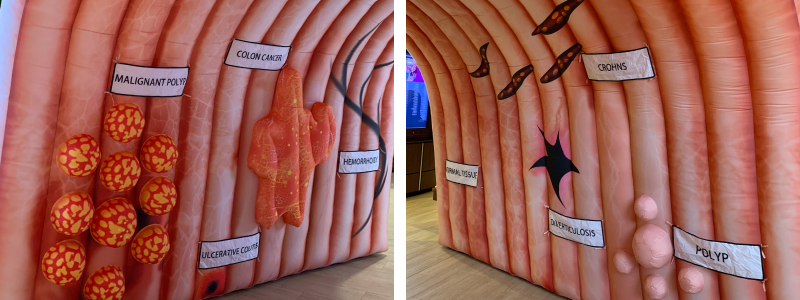
To raise awareness of the importance of colon cancer screenings, Wellstar’s surgery, gastroenterology, cancer care and community health teams will host informational events throughout March. Visitors can walk through a large inflatable colon model, learn about the importance of screening and early detection, and at some events, nurses will be available to help patients schedule a colonoscopy.

  • March 6, 8 AM - 4 PM, Wellstar MCG Health Medical Center B Entrance 
  • March 6, 11 AM - 1 PM, Wellstar Kennestone Cancer Center
  • March 11, 10 AM - 2 PM, Wellstar Sylvan Grove Medical Center
  • March 12, 8 AM - 4 PM, Wellstar Spalding Medical Center
  • March 16, 8 AM - 4 PM, Wellstar Douglas Medical Center Main Lobby
  • March 17, 8 AM - 4 PM, Wellstar Paulding Medical Center Main Lobby (upstairs)
  • March 18, 10 AM - 2 PM, Wellstar Windy Hill Main Lobby
  • March 20, 8 AM - 4 PM, Wellstar West Georgia Medical Center Main Lobby
  • March 23, 8 AM - 4 PM, Wellstar East Cobb Health Park
  • March 24, 8 AM - 4 PM, Wellstar Avalon Health Park Lower Level Lobby
  • March 25, 8 AM - 4 PM, Wellstar Vinings Health Park
  • March 26, 8 AM - 4 PM, Wellstar Acworth Health Park
  • March 27, 8 AM - 4 PM, Wellstar Cherokee Health Park
  • March 31, 8 AM - 4 PM, Wellstar Cobb Medical Center

Call our colorectal cancer screening hotline at (470) 793-4032.

Photo of inflatable colon

Keep reading
Group of people eating

Highlights

Make Colon Health Your Habit

For many people, talking about colon health can be a little uncomfortable. However, medical issues don’t just go away if you ignore them.

Being proactive about your well-being with preventative care can help catch colorectal cancer or another serious condition early, often before it becomes a bigger problem.

Wellstar is committed to keeping your colon healthy with preventative screenings and expert care, so you can continue to live well.

Catch colon cancer early

Early detection is the best prevention, especially when it comes to colon cancer. If caught early, colorectal cancer has a survival rate of 91%.

“Colon cancer is the second most common cause of cancer death in the United States, so it’s very important that everyone gets screened,” said Wellstar Gastroenterologist Dr. Cameron Body. “For an average risk person, screenings should begin at age 45.”

Those with a higher risk or a family history of colorectal cancer may need to start screening sooner. Partner with your provider to create a personalized screening plan—and stick with it to stay ahead of the disease.

“Recently, colon cancer has been a major trending topic in public discourse, and it has been impacting younger individuals each year. It is important to start colon cancer screening at the age of 45 or sooner if you have a family history of colon cancer,” said Wellstar Gastroenterologist Dr. Shani Clay. “This is a preventable disease, so please speak with your primary care clinician or gastroenterologist to help get you screened. Colonoscopies can help prevent colon cancer, diagnose and help direct early treatment if you are diagnosed.”

The death rate for colon cancer in older adults has been decreasing for the past several decades due to screenings, according to the American Cancer Society. Screenings can identify polyps before they become cancerous and can catch cancer earlier when it is more easily treatable. However, in people under 55, death rates from colon cancer have been increasing by about 1% per year since the mid-2000s.

Why colonoscopies work

During a colonoscopy, a Wellstar gastroenterologist will view the inside of your colon and look for polyps or any other abnormal tissue that could be cancerous. This preventative testing is key to catching colorectal issues at the start.

“A colonoscopy is the gold standard when screening for colon cancer. The procedure itself is not painful, and we make sure you’re comfortable throughout the process,” Dr. Body said. “The goal is to do a high-quality exam with a good prep to find polyps when they’re small and get them removed to minimize the risk of them subsequently developing into cancer.”

Polyps take about five to 15 years to evolve into an invasive cancer, according to Dr. Carmen Klass, oncologist and hematologist with Northwest Georgia Oncology Centers, a care partner of Wellstar.

“If you have a colonoscopy every five to 10 years, they can remove the polyp and it will never be declared an invasive cancer,” Dr. Klass said. “In fact, if all Americans did their screening colonoscopies every five to 10 years, the death rate for colorectal cancer would drop by 50%.”

See how colorectal cancer screening saves lives.

Signs of colorectal cancer

  • Colon cancer is typically discovered when a patient has a colonoscopy, but it’s important to watch for these warning signs:
  • A change in your bowel habits, such as persistent diarrhea or constipation
  • Bloody stools or rectal bleeding
  • Abdominal discomfort, such as cramps, gas and pain
  • Feeling like you are unable to empty your bowels completely
  • Weakness or fatigue
  • Unexplained weight loss

If you experience any of these symptoms, contact your care team right away.

Colorectal cancer care at Wellstar

If you have been diagnosed with colorectal cancer, count on Wellstar for comprehensive, personalized care. Our specialists will work together with you to form a tailored treatment plan and offer support every step of the way.

“When a patient is diagnosed with cancer, we walk with them and guide them on this difficult journey,” Dr. Klass said, sharing how Wellstar provides compassionate care.

Wellstar offers medical expertise close to home, clinical trials and state-of-the-art surgical procedures to treat colorectal cancer. We also have a multidisciplinary gastrointestinal (GI) tumor board that diagnoses and creates treatment plans collaboratively.

Along with cancer surgeons, medical oncologists and other experts, our care team also includes nurse navigators, dietitians, social workers, psychologists, psychiatrists and counselors to provide complete care and support.

Learn how Wellstar cares for colorectal cancer.

Get answers with genetic testing

Whether you have been diagnosed with colorectal cancer or are concerned about the chance of developing it, genetic testing can help you understand your risk of getting the disease.

If your parent, sibling or child has had colorectal cancer, you are two to three times more likely to develop the condition compared with someone with no family history. Our genetic counselors can help determine how genetic testing could benefit you and your family.

“Wellstar offers support from genetic counselors to help keep other family members safe in the future,” Dr. Klass said.

Find out if genetic testing is right for you.

Keep reading

COMMUNITY CARE

Community Care
In the Community Health Highlights Events & Classes
For Business
Corporate Purchasing Community Health Needs Assesment
Give
Wellstar Foundation Donate Ways to Give Volunteer

ABOUT US

About Wellstar Diversity Equity Inclusion & Belonging Leadership Wellstar Board of Trustees Healthcare Innovation Safety First Commitment Wellstar Research Institute Latest News

CAREERS & EDUCATION

Careers at Wellstar Graduate Medical Education Pharmacy Residency

PATIENT RESOURCES

Pay Your Bill Accepted Insurance

HELP

Contact Us Hospital Transparency Information Price Transparency Policy and Privacy Information

MEDIA

Media Room

COMMUNITY CARE

Community Care
In the Community Health Highlights Events & Classes
For Business
Corporate Purchasing Community Health Needs Assesment
Give
Wellstar Foundation Donate Ways to Give Volunteer

ABOUT US

About Wellstar Diversity Equity Inclusion & Belonging Leadership Wellstar Board of Trustees Healthcare Innovation Safety First Commitment Wellstar Research Institute Latest News

CAREERS & EDUCATION

Careers at Wellstar Graduate Medical Education Pharmacy Residency

PATIENT RESOURCES

Pay Your Bill Accepted Insurance

HELP

Contact Us Hospital Transparency Information Price Transparency Policy and Privacy Information

MEDIA

Media Room

COMMUNITY CARE

Community Care
In the Community Health Highlights Events & Classes
For Business
Corporate Purchasing Community Health Needs Assesment
Give
Wellstar Foundation Donate Ways to Give Volunteer

ABOUT US

About Wellstar Diversity Equity Inclusion & Belonging Leadership Wellstar Board of Trustees Healthcare Innovation Safety First Commitment Wellstar Research Institute Latest News

CAREERS & EDUCATION

Careers at Wellstar Graduate Medical Education Pharmacy Residency

PATIENT RESOURCES

Pay Your Bill Accepted Insurance

HELP

Contact Us Hospital Transparency Information Price Transparency Policy and Privacy Information

MEDIA

Media Room

Copyright © 2026 Wellstar Health System. All Rights Reserved.

Wellstar does not discriminate on, exclude people or treat them differently on the basis of race, color, national origin, age, disability, sex, gender identity or expression or any other type of discrimination prohibited by law.

  • Internet Privacy Policy
Cookie Preferences

We use cookies for booking and general analytics. Learn more about or internet privacy policy.