Skip Navigation
Book Now! Find care near you Find care near you Find care near you
wellstar-logo
Wellstar Go Back
Go to MyChart

Questions? We can help!

Call (770) 956-STAR (7827)

Monday - Friday, 7 AM - 4:30 PM

Contact Us
For Patients & Families For the Community For Providers About Us Careers
  • Start Your Care

  • Find a Doctor
  • Find a Location
  • Our Services
  • Virtual Visits
  • Planning

  • Accepted Insurance
  • Hospital Payment Planning
  • Financial Assistance
  • Pricing Information
  • Before Your Visit

  • Sign Up for MyChart
  • Visitation Guidelines
  • While You're Here

  • Support & Entertainment
  • Join an Event
  • After Your Visit

  • Pay Your Bill
  • Get Medical Records
  • Contact us
  • COVID-19 Support

  • COVID-19 Information
  • Vaccines
  • Testing Information
  • Foundation Relief
  • Community Care

  • In the Community
  • Health Highlights
  • Community Health Needs Assessment
  • Latest News
  • Center for Health Equity
  • Wellstar Find Help
  • Events & Programs

  • Events Calendar
  • On-Demand Classes
  • Support Groups
  • Give

  • Wellstar Foundation
  • Donate
  • Ways to Give
  • Thank a Caregiver
  • West Georgia
    Health Foundation
  • Volunteer

  • PeopleCare Advisory Council
  • For Adults
  • Care

  • Transfer a Patient
  • Cures Act
  • Refer a Patient
  • Lab Test Directory
  • Request to Conduct Research
  • Connect

  • Physician Relations
  • Request Imaging Services
  • Wellstar Clinical Partners
  • Wellstar Medical Group
  • Mayo Clinic Care Network
  • Medical Staff Services
  • Provider Recruitment
  • Log In

  • EpicCare Link
  • Lawson Connect
  • MyID Password Reset
  • Citrix Access
  • Leadership

  • Authority Board
  • Board Of Trustees
  • Foundation Board
  • Regional Health Boards
  • Executive Leadership
  • Awards, Recognition & Safety

  • Accreditation & Certifications
  • Awards & Recognition
  • Safety First Program
  • Nursing
  • Careers at Wellstar

  • Apply now
  • Upcoming virtual events
  • Why Wellstar?
  • Nursing Careers

  • Nursing (Direct Care)
  • Nursing Leadership
  • Nursing (Non-bedside)
  • Nursing Support
  • Physician, APP & Clinical Careers

  • Advanced Practice Providers (APPs)
  • Allied Health Professionals
  • Homecare & Hospice
  • Physicians
  • Support Team Careers

  • Administrative & Clerical
  • Coding, Compliance & HIM Systems
  • Facility, Environmental & Nutrition/Food Services
  • Information Technology & Systems
  • For Patients & Families
  • For the Community
  • For Providers
  • About Us
  • Careers
  • Search Search Search
  • MyChart MyChart MyChart

Start Your Care

Find a DoctorFind a LocationOur ServicesVirtual Visits

Planning

Accepted InsuranceHospital Payment PlanningFinancial AssistancePricing Information

Before Your Visit

Sign Up for MyChartVisitation Guidelines

While You're Here

Support & EntertainmentJoin an Event

After Your Visit

Pay Your BillGet Medical RecordsContact us

COVID-19 Support

COVID-19 InformationVaccinesTesting InformationFoundation Relief

Community Care

In the CommunityHealth HighlightsCommunity Health Needs AssessmentLatest NewsCenter for Health EquityWellstar Find Help

Events & Programs

Events CalendarOn-Demand ClassesSupport Groups

Give

Wellstar FoundationDonateWays to GiveThank a CaregiverWest Georgia
Health Foundation

Volunteer

PeopleCare Advisory CouncilFor Adults

Care

Transfer a PatientCures ActRefer a PatientLab Test DirectoryRequest to Conduct Research

Connect

Physician RelationsRequest Imaging ServicesWellstar Clinical PartnersWellstar Medical GroupMayo Clinic Care NetworkMedical Staff ServicesProvider Recruitment

Log In

EpicCare LinkLawson ConnectMyID Password ResetCitrix Access
About Wellstar

Our patients are the center of everything we do. We're nationally ranked and locally recognized for our high-quality care, inclusive culture, exceptional doctors and caregivers, and one of the largest and most integrated healthcare systems in Georgia.

About Us

Leadership

Authority BoardBoard Of TrusteesFoundation BoardRegional Health BoardsExecutive Leadership

Awards, Recognition & Safety

Accreditation & CertificationsAwards & RecognitionSafety First ProgramNursing

Careers at Wellstar

Apply nowUpcoming virtual eventsWhy Wellstar?

Nursing Careers

Nursing (Direct Care)Nursing LeadershipNursing (Non-bedside)Nursing Support

Physician, APP & Clinical Careers

Advanced Practice Providers (APPs)Allied Health ProfessionalsHomecare & HospicePhysicians

Support Team Careers

Administrative & ClericalCoding, Compliance & HIM SystemsFacility, Environmental & Nutrition/Food ServicesInformation Technology & Systems
Questions? We can help!

Call (770) 956-STAR (7827)

Monday - Friday, 7 AM - 4:30 PM

Contact Us
Close
  • Schedule With This Provider
  • Schedule At This Location
  • Schedule With This Provider
  • Schedule At This Location
  • Urgent Care
  • Primary Care
  • Virtual Care
  • Emergency Care
Close Close Close Book Now Menu
  • Schedule With This Provider
  • Schedule At This Location
  • Schedule With This Provider
  • Schedule At This Location
  • Urgent Care
  • Primary Care
  • Virtual Care
  • Emergency Care

Introducing

Wellstar Virtual Care

Access Wellstar healthcare providers
wherever you are.

Get started

Warning Warning Our "Book Now" feature should not be used for life threatening conditions such as heart attack, severe injury, poisoning, chest pain, or stroke. If you are experiencing such conditions, STOP and CALL 911 IMMEDIATELY or visit your nearest Emergency Department.

I Understand
  • Home
  • Articles
  • Limb Lengthening and Deformity Correction
Article Category: Highlights

Limb Lengthening and Deformity Correction

Mending the bent and broken

Dr. Stephen Becher, Wellstar orthopedic surgeon

Published on February 19, 2025

Last updated 04:24 PM February 19, 2025

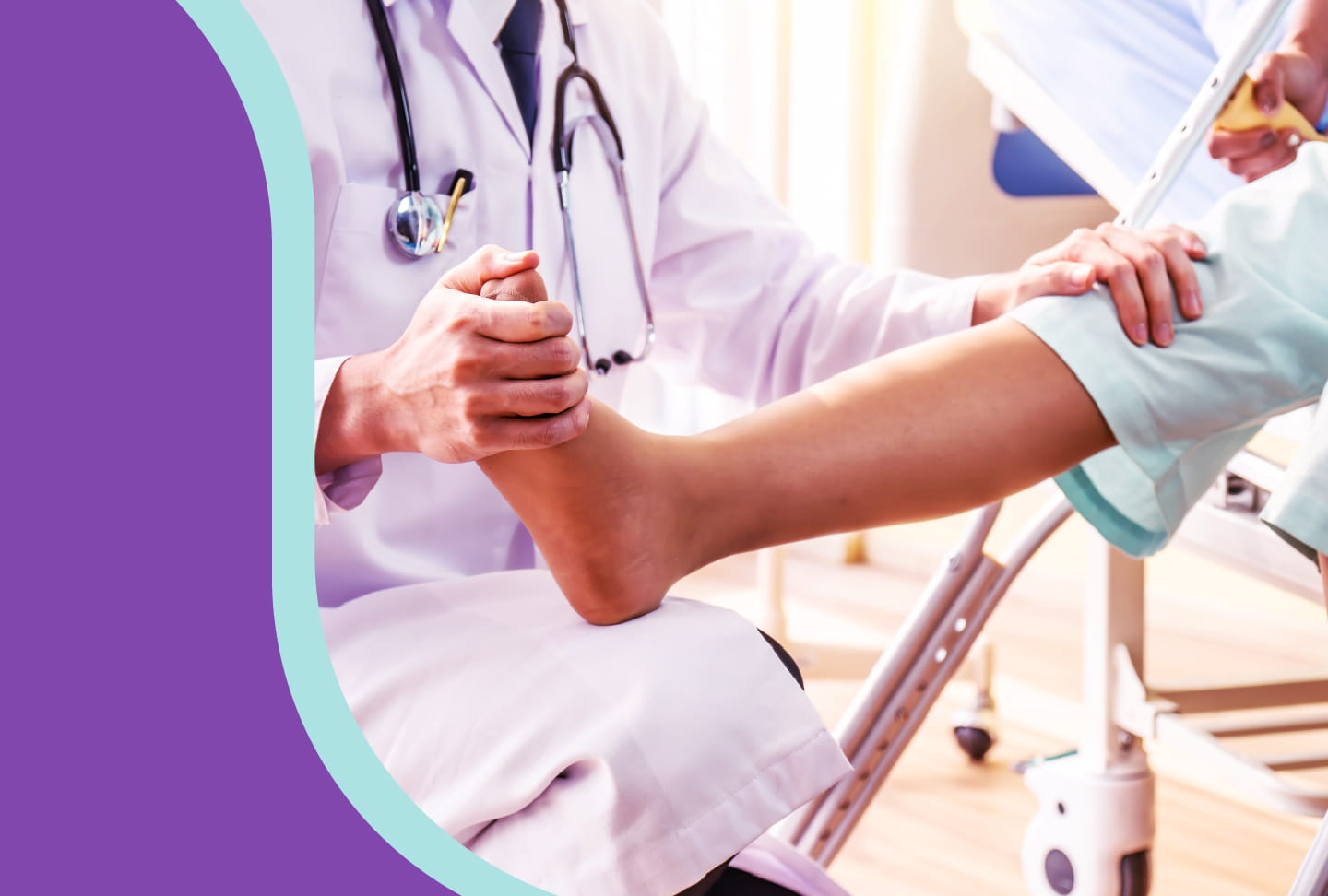
A friendly image of Limb Lengthening

The history of orthopedic surgery is mankind’s attempt to make straight that which is crooked. The advent of anesthesia made it possible to use surgery to break bones and re-align them without undue pain. But the art of correcting deformities caused by abnormal growth or trauma has taken hundreds of years to advance to its current form. The most important observation—made incidentally by multiple surgeons, but most famously by Gavrill Ilizarov during the 1950s in the Soviet Union—was that a broken bone, if pulled apart with appropriate timing and stress, can form new bone.

This discovery came with years of painstaking research and trial and error in order to effect techniques that would allow for gradual correction of limbs that were bent, short or otherwise deformed. Initially, external fixator apparatus were used to manually manipulate the bone with daily turns of a crank, which involved mathematical calculations and equations that lacked precision when applied to the individual case. Gradually, these methods evolved to incorporate automation, modern computing and more biologically friendly surgical techniques. Newer devices allowed for the distraction pressure to be applied inside the body rather than outside in select cases, making the process of correcting limb alignment problems less cumbersome to patients.

Limb lengthening and deformity correction has always been a powerful yet technically difficult procedure, making it a smaller and less-utilized area of orthopedics. But the ability to correct errors of genetics or nutrition or deformities from trauma or infection is nothing short of magical—and magic requires study, practice and dedication to perform correctly. Distraction osteogenesis techniques are often applied to problems that are intractable by other, more commonplace means. Practitioners of the art enjoy the unique challenges presented and the potential to affect patients’ lives for the better. It is not always easy or simple, but the reward of helping others is the driving force behind the effort.

Subspecialty training in the area of limb lengthening and deformity correction is now available in the United States at several centers. A subspecialty society, the Limb Lengthening and Reconstructive Society (LLRS) provides educational opportunities with meetings and traveling fellowships. Orthopedic surgeons who have taken advantage of the society’s training and membership are often those most committed to learning the art and science of limb deformity correction. The Orthopedic Trauma team at Wellstar Kennestone Regional Medical Center includes physicians who have undergone this training and enjoy being a resource for patients and the orthopedic surgery community at large when it comes to limb deformities, difficult malunions or nonunions, infections requiring bone transport and other complicated cases. At Wellstar, modern techniques using both external fixation and computer-assisted guidance allow limb deformity correction to occur with minimal patient discomfort or manipulation of complex apparatus. Internal techniques are also used, including lengthening nails that allow the limb to be lengthened or straightened, replacing the need for a cumbersome external fixator.

Complications from orthopedic surgery often require unique solutions. Infected joint replacements, infected bone that requires removal (osteomyelitis) and bone loss resulting from severe trauma are all conditions that can be treated with modern limb lengthening and deformity correction techniques. The physicians specializing in these techniques are happy to consult over the phone with other physicians who need assistance in these complex situations, as well as share their expertise with patients during in-person consultations. The desire to provide world-class healthcare defines the individuals who make up the Orthopedic Trauma division at Wellstar. There are few orthopedic problems that they are not eager to try to solve, and they are always willing to learn the newest techniques in order to improve the lives of those who believed their cause was lost.


Tags

Orthopedics Bone and Joint Care
Related Articles
Child holding basketball

Highlights

Help Your Student Athlete Kick Off the Season Strong

Wellstar is here to help young athletes feel and perform their best. From sports physicals to start the season strong to treating injuries, our care teams specialize in providing expert, kid-centered care for your child.

Kick off the season with a sports physical

Schedule your child’s sports physical before game day arrives. Their care team will check their heart, lungs and overall health so they can feel their best on and off the field.

“Sports physicals are important to screen for any underlying conditions that might put your child at increased risk versus some of their peers,” said Dr. Eric Berg, Wellstar Children’s of Georgia medical director of pediatric surgical services. “It's one of the easiest ways to catch potential issues before kids hit the field. A little preparation now can help prevent injuries later.”

Schedule a sports physical with your child’s pediatrician. You can also visit Wellstar Urgent Care, which takes walk-ins and offers online scheduling.

Take time for rest and hydration

For optimal performance in sports, young athletes need to fuel their bodies—and take breaks when needed.It’s recommended that student athletes consume up to 20 ounces of fluid one hour before an activity and 5 ounces every 15 minutes during the activity.

“Proper nutrition and hydration are critical for all students, but particularly for athletes who are more active and burning more calories,” said Dr. Lindsay Stephenson, Wellstar Children’s of Georgia pediatric orthopedic surgeon. “I recommend using the nutritional guide released by the Pediatric Orthopaedic Society of North America. This information makes it easier for students and their parents to understand the nutritional needs of the body to perform in the classroom and during competition.”

Read the nutritional guidelines.

Children also need to incorporate rest into their routine so they don’t overtrain. Kids often enjoy playing with family and friends, and they may not realize they need to take a break, according to Dr. Natalie Witte, Wellstar Children’s of Georgia sports medicine physician.

“They may be more sore than they are normally and not recovering,” Dr. Witte said. “If they’re not hungry after training, they might be so depleted that they’re nauseous or dizzy.”

If your child isn’t feeling well, your family’s pediatrician or sports medicine specialist can evaluate them for injury or illness so they can get back to their favorite activities sooner.

Keep reading
Group of people hiking

Highlights

Aging Gracefully: Knowing When It’s Time for a Joint Replacement

For many of us, the golden years are a time to look forward to—an opportunity to travel, spend time in the garden, play with grandchildren or finally perfect our golf swing. However, chronic joint pain can quickly turn these anticipated moments into daily struggles. When a stiff hip makes getting out of the car an ordeal or a throbbing knee turns a simple walk around the neighborhood into a painful chore, it significantly impacts your quality of life.

It’s a common misconception that severe joint pain is an inevitable part of getting older that must be endured. While wear-and-tear on our bodies is natural, living in constant discomfort is not. Fortunately, modern orthopedic advancements offer powerful solutions, including total hip and knee replacements, to help you reclaim your mobility and independence. But how do you know when it is time to move past temporary fixes and consider a joint replacement?

Recognizing the warning signs

In the early stages of joint degradation—often caused by osteoarthritis—minor lifestyle adjustments, over-the-counter pain relievers or occasional ice packs might keep the discomfort at bay. However, as the cartilage that cushions your joints wears away, the bone-on-bone friction can worsen.

It may be time to consult an orthopedic specialist if you experience any of the following:

  • Severe pain during everyday activities: If walking, bending down or climbing stairs causes significant distress, your joint health is actively limiting your daily life.
  • Pain that disrupts your sleep: Waking up in the night due to a throbbing hip or knee is a strong indicator that the inflammation has become severe.
  • Rest and medication no longer offer relief: If physical therapy, cortisone injections and anti-inflammatory medications are no longer moving the needle, the joint may be structurally compromised.
  • A noticeable loss of mobility or chronic stiffness: Finding it difficult to put on your shoes, cross your legs or fully straighten your knee suggests advanced joint deterioration.

Modern approach to care

Deciding to undergo a joint replacement is a significant milestone, but it is important to know that the procedure has evolved dramatically over the last decade. Today, hip and knee replacements are among the most reliable and successful surgeries performed in medicine.

Thanks to advancements in surgical techniques, specialized instrumentation and personalized digital planning, modern joint replacements are highly precise. Surgeons can precisely match the implant to your unique anatomy. For patients, this translates to less tissue disruption, reduced post-operative pain and a much smoother rehabilitation process.

The philosophy surrounding recovery has also shifted. We no longer expect patients to spend weeks confined to a hospital bed. In fact, most patients are up and walking with the assistance of physical therapy the very same day as their surgery. Many joint replacements are now performed on an outpatient basis, allowing patients to recover in the comfort of their own homes.

Reclaiming your active lifestyle

The ultimate goal of a hip or knee replacement is not just to alleviate pain, but to restore your freedom. Within a few months of dedicated physical therapy, the vast majority of patients find themselves doing things they haven’t been able to do comfortably in years. Whether that means returning to low-impact sports, traveling without worrying about the walk through the airport or simply playing on the floor with family, the transformation can be profound.

If chronic knee or hip pain is forcing you to sit on the sidelines of your own life, remember that you have options. Surgery is rarely the first step, but when conservative treatments fall short, a joint replacement can be the key to turning back the clock on your mobility.

You don't have to manage severe pain alone. Take the first step by speaking with an orthopedic specialist to evaluate your joints, discuss your goals and design a personalized treatment plan that helps you age gracefully, actively and on your own terms.

Find an orthopedic surgeon in your community.

Keep reading
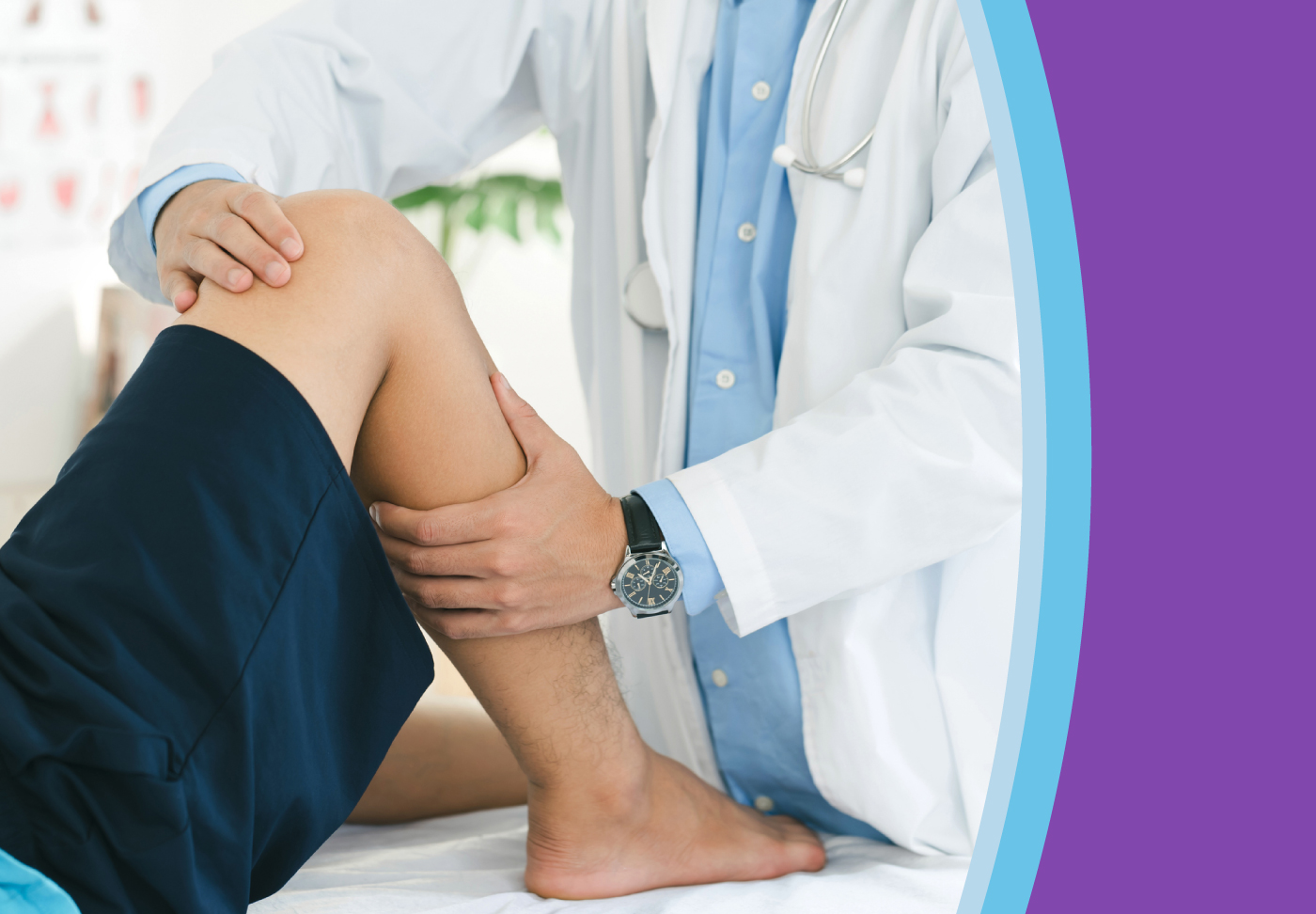
Orthopedic healthcare provider examines his patient's leg and knee

Highlights

Surgery, Physical Therapy or Injection? An Orthopedic Evaluation Helps Make the Call

A throbbing knee, a painful hand or an aching back are a few common musculoskeletal issues that make sufferers wonder: “Do I need surgery, physical therapy or a steroid shot?”

The answer isn’t always simple according to Dr. Joseph Burns, Wellstar chief musculoskeletal officer.

Many patients assume that the source of their pain is in the area where they feel it, and they may diagnose themselves or choose to “wait and see” what happens.

However, pain is a warning sign, not a GPS.

How do I know it’s time to see an orthopedist?

Your first stop for joint pain may be your primary care provider or an urgent care center. They may suggest rest, using ice or heat, or taking anti-inflammatory medications. They may also refer you to an orthopedic specialist.

It’s wise to see an orthopedic specialist when:

  • Rest or initial treatment isn’t lessening the pain
  • You feel numbness, tingling or weakness
  • You’ve been injured at work, in an accident or while playing a sport
  • Your ability to move is limited
  • You had a previous injury in the affected area
  • Pain has lasted more than a few weeks or is interfering with sleep

What to expect at an orthopedic exam

An orthopedic exam starts with a medical history, including medications, past surgeries and any health conditions. Your provider will then zero in on what’s causing your pain, asking questions such as:

  • When did the pain start?
  • Were you injured?
  • What activities make the pain worse?
  • What have you been doing to relieve the pain?


Next your provider will do a physical exam, checking for pain, tenderness, strength and range of motion, and may refer you for an imaging test, such as an X-ray or MRI. This helps determine whether the pain is from structural damage, such as a break or sprain, or from a condition like arthritis, bursitis or tendonitis.

With a diagnosis in hand, your provider will discuss a treatment plan with you. Sometimes patients assume a visit to an orthopedist will put them on the fast track to the operating room. Not so, said Dr. Burns.

Most orthopedic care starts with nonsurgical options, such as physical therapy, anti-inflammatory treatments and injections. Physical therapy can improve strength, flexibility and joint function, and in many cases, it can relieve pain without the need for surgical intervention. Surgery is a possible next step if those therapies fail or there is structural damage.

The risks of treating joint pain without an orthopedic evaluation

According to Dr. Burns it’s best not to put off getting an orthopedic evaluation and possibly second opinions. Misdiagnosis or starting the wrong treatment can delay healing and make underlying conditions worse.

Some patients who do their own research find a variety of options not supported by medical evidence. Those include cannabis-based (CBD) creams and stem cell treatments.

CBD can provide “a nice, moderate amount of relief,” said Dr. Burns. “Unfortunately, what we’ve seen is that those products help at first, but then less and less.”

Stem cells are in a class of biological treatments that are not FDA-approved for any orthopedic condition, such as arthritis or tendon injury. Treatments that are marketed as “stem cell therapy” typically use concentrated bone marrow aspirate, which contains very few true stem cells. Patients should ask their care team about stem cell therapies so that they can be properly educated and protect themselves before purchasing these expensive therapies.

Start with expert orthopedic care at Wellstar

Our orthopedic specialists deliver evidence-based care and personalized treatment plans. Wellstar patients have access to:

  • Orthopedic specialists
  • OrthoXpress for same-day urgent care
  • Physical therapy
  • State-of-the-art imaging
  • Total joint care


To make an appointment, find a location near you.

Keep reading
Back to Top
Branding illustration
Wellstar Logo
More than healthcare. PeopleCare.
Branding illustration
For Job Seekers & Team
Careers Diversity Equity Inclusion and Belonging Onboarding
For Students
Students Portal
Graduate Medical Education
Medical Residency Pharmacy Residency
For Business
Corporate Purchasing
For the Media
Media Room Community Health Needs Assessment
Help
Contact Us Pay Your Bill Policy & Privacy Information Hospital Transparency Information Price Transparency
For Job Seekers & Team
Careers Diversity Equity Inclusion and Belonging Onboarding
For Students
Students Portal

Graduate Medical Education
Medical Residency Pharmacy Residency
For Business
Corporate Purchasing
For the Media
Media Room Community Health Needs Assessment
Help
Contact Us Pay Your Bill Policy & Privacy Information Hospital Transparency Information Price Transparency

Copyright © 2026 Wellstar Health System. All Rights Reserved.

Wellstar does not discriminate on, exclude people or treat them differently on the basis of race, color, national origin, age, disability, sex, gender identity or expression or any other type of discrimination prohibited by law.

Cookie Preferences

We use cookies for booking and general analytics. Learn more about or internet privacy policy.