Skip Navigation
Book Now! Find care near you Find care near you Find care near you
wellstar-logo
Wellstar Go Back
Go to MyChart

Questions? We can help!

Call (770) 956-STAR (7827)

Monday - Friday, 7 AM - 4:30 PM

Contact Us
For Patients & Families For the Community For Providers About Us Careers
  • Start Your Care

  • Find a Doctor
  • Find a Location
  • Our Services
  • Virtual Visits
  • Planning

  • Accepted Insurance
  • Hospital Payment Planning
  • Financial Assistance
  • Pricing Information
  • Before Your Visit

  • Sign Up for MyChart
  • Visitation Guidelines
  • While You're Here

  • Support & Entertainment
  • Join an Event
  • After Your Visit

  • Pay Your Bill
  • Get Medical Records
  • Contact us
  • COVID-19 Support

  • COVID-19 Information
  • Vaccines
  • Testing Information
  • Foundation Relief
  • Community Care

  • In the Community
  • Health Highlights
  • Community Health Needs Assessment
  • Latest News
  • Center for Health Equity
  • Wellstar Find Help
  • Events & Programs

  • Events Calendar
  • On-Demand Classes
  • Support Groups
  • Give

  • Wellstar Foundation
  • Donate
  • Ways to Give
  • Thank a Caregiver
  • West Georgia
    Health Foundation
  • Volunteer

  • PeopleCare Advisory Council
  • For Adults
  • Care

  • Transfer a Patient
  • Cures Act
  • Refer a Patient
  • Lab Test Directory
  • Request to Conduct Research
  • Connect

  • Physician Relations
  • Request Imaging Services
  • Wellstar Clinical Partners
  • Wellstar Medical Group
  • Mayo Clinic Care Network
  • Medical Staff Services
  • Provider Recruitment
  • Log In

  • EpicCare Link
  • Lawson Connect
  • MyID Password Reset
  • Citrix Access
  • Leadership

  • Authority Board
  • Board Of Trustees
  • Foundation Board
  • Regional Health Boards
  • Executive Leadership
  • Awards, Recognition & Safety

  • Accreditation & Certifications
  • Awards & Recognition
  • Safety First Program
  • Nursing
  • Careers at Wellstar

  • Apply now
  • Upcoming virtual events
  • Why Wellstar?
  • Nursing Careers

  • Nursing (Direct Care)
  • Nursing Leadership
  • Nursing (Non-bedside)
  • Nursing Support
  • Physician, APP & Clinical Careers

  • Advanced Practice Providers (APPs)
  • Allied Health Professionals
  • Homecare & Hospice
  • Physicians
  • Support Team Careers

  • Administrative & Clerical
  • Coding, Compliance & HIM Systems
  • Facility, Environmental & Nutrition/Food Services
  • Information Technology & Systems
  • For Patients & Families
  • For the Community
  • For Providers
  • About Us
  • Careers
  • Search Search Search
  • MyChart MyChart MyChart

Start Your Care

Find a DoctorFind a LocationOur ServicesVirtual Visits

Planning

Accepted InsuranceHospital Payment PlanningFinancial AssistancePricing Information

Before Your Visit

Sign Up for MyChartVisitation Guidelines

While You're Here

Support & EntertainmentJoin an Event

After Your Visit

Pay Your BillGet Medical RecordsContact us

COVID-19 Support

COVID-19 InformationVaccinesTesting InformationFoundation Relief

Community Care

In the CommunityHealth HighlightsCommunity Health Needs AssessmentLatest NewsCenter for Health EquityWellstar Find Help

Events & Programs

Events CalendarOn-Demand ClassesSupport Groups

Give

Wellstar FoundationDonateWays to GiveThank a CaregiverWest Georgia
Health Foundation

Volunteer

PeopleCare Advisory CouncilFor Adults

Care

Transfer a PatientCures ActRefer a PatientLab Test DirectoryRequest to Conduct Research

Connect

Physician RelationsRequest Imaging ServicesWellstar Clinical PartnersWellstar Medical GroupMayo Clinic Care NetworkMedical Staff ServicesProvider Recruitment

Log In

EpicCare LinkLawson ConnectMyID Password ResetCitrix Access
About Wellstar

Our patients are the center of everything we do. We're nationally ranked and locally recognized for our high-quality care, inclusive culture, exceptional doctors and caregivers, and one of the largest and most integrated healthcare systems in Georgia.

About Us

Leadership

Authority BoardBoard Of TrusteesFoundation BoardRegional Health BoardsExecutive Leadership

Awards, Recognition & Safety

Accreditation & CertificationsAwards & RecognitionSafety First ProgramNursing

Careers at Wellstar

Apply nowUpcoming virtual eventsWhy Wellstar?

Nursing Careers

Nursing (Direct Care)Nursing LeadershipNursing (Non-bedside)Nursing Support

Physician, APP & Clinical Careers

Advanced Practice Providers (APPs)Allied Health ProfessionalsHomecare & HospicePhysicians

Support Team Careers

Administrative & ClericalCoding, Compliance & HIM SystemsFacility, Environmental & Nutrition/Food ServicesInformation Technology & Systems
Questions? We can help!

Call (770) 956-STAR (7827)

Monday - Friday, 7 AM - 4:30 PM

Contact Us
Close
  • Schedule With This Provider
  • Schedule At This Location
  • Schedule With This Provider
  • Schedule At This Location
  • Urgent Care
  • Primary Care
  • Virtual Care
  • Emergency Care
Close Close Close Book Now Menu
  • Schedule With This Provider
  • Schedule At This Location
  • Schedule With This Provider
  • Schedule At This Location
  • Urgent Care
  • Primary Care
  • Virtual Care
  • Emergency Care

Introducing

Wellstar Virtual Care

Access Wellstar healthcare providers
wherever you are.

Get started

Warning Warning Our "Book Now" feature should not be used for life threatening conditions such as heart attack, severe injury, poisoning, chest pain, or stroke. If you are experiencing such conditions, STOP and CALL 911 IMMEDIATELY or visit your nearest Emergency Department.

I Understand
  • Home
  • Articles
  • XanderCare
Article Category: PeopleCare

XanderCare

How Wellstar’s compassionate, expert care helped a resilient runner overcome a traumatic injury

Published on September 03, 2025

Last updated 01:35 PM September 03, 2025

Runners take their mark on the track. Text reads XanderCare.

Xander Garanzuay, a long-distance runner, never imagined his high school track meet would end with him being airlifted to the hospital. But when a discus struck him in the head, he suffered a depressed skull fracture and needed emergency surgery.

Thanks to the quick action and collaboration of Wellstar Kennestone Regional Medical Center's trauma and neurosurgery teams, Xander is now back to running. His story highlights the resilience of the human body, the strength of family and the impact of expert care.

A sudden accident

After finishing the 2-mile race at a track meet in Cartersville, Xander stayed to support his Woodstock High School teammates. When he was ready to go home, he texted his parents.

A few moments later, everything changed. While tossing a ball with his friend, Xander ran to retrieve it—just as a discus struck him in the head.

The discus hit Xander on the left side of his head with such force that he fell unconscious. Xander began seizing—his condition was critical. While his friend raced to notify their coaches, Kelly, Xander’s mom, had arrived to pick him up.

“I’m sitting out front texting Xander, ‘I’m here,’ when emergency vehicles start pulling up,” Kelly said. “Then my husband called—‘Xander’s been hit.’”

Kelly stayed with Xander as EMS evaluated him. “He was awake but not coherent,” she noted. They determined he would need to be airlifted to Wellstar Kennestone, a Level I Trauma Center.

Life-saving surgery

Xander was swiftly transported to Wellstar Kennestone, where the trauma team was ready to act. Upon arrival, Wellstar Neurosurgeon Dr. Phillip Parry assessed the severity of Xander’s injury: a depressed skull fracture causing seizures.

“The discus is a large weight—picture a five-pound Frisbee—that is flung through the air,” said Dr. Parry. “Thankfully, Xander’s skull protected his brain, but he essentially sustained a ballistic injury to the skull.”

The impact to the left side of Xander’s skull left him with a fixed-focus neurologic deficit. His right arm—his dominant arm—had no muscle strength, and his right leg was weak.

Dr. Parry performed an emergency craniotomy to remove the bone pressing on Xander’s brain. The surgery was successful, but the road ahead was uncertain.

“The biggest challenge wasn’t the surgery itself—this is something we do every day,” he said. “It was telling a 16-year-old and his mother that we didn’t know whether he would regain function in his dominant arm.”

Kelly had to trust in the care Xander was receiving. “You don’t know what you’re going to do in that situation. Nothing prepares you,” she said. “I had to have faith that he was in the right hands—and he truly was.”

Steady progress

The day after Xander’s surgery, Wellstar Kennestone’s physical and occupational therapy teams began working at his bedside to restore movement in his non-functioning arm and leg.

“You want to do everything you can to optimize the body’s ability to heal,” said Dr. Parry. “It was important that we provided that environment for him.”

Xander’s positive attitude and determination played a crucial role in regaining function. His dad, Xavier, was amazed by his son’s resilience.

“He was so proactive and driven to get better,” Xavier said. “It was inspiring to watch.”

Still, sometimes the reality of what happened sank in. “He woke up one night and said, ‘I could have died,’” his mom remembered. “I told him, ‘Yes, but you didn’t.’ He said, ‘God must have something really special planned for me.’”

Xander applied the same fortitude from running to each step of his healing. “Sometimes you can be your own worst enemy, but you can also be your biggest supporter,” he said. “If you don’t believe in yourself, how can anyone else believe in you?”

Care that made a difference

Xander spent six days at Wellstar Kennestone before being transferred to inpatient rehabilitation. The support from Wellstar’s care team made a lasting impact.

They were there for whatever we needed—compassionate and always listening to Xander’s needs,” Kelly said.

One night during his stay, Xander woke needing help to get to the restroom. When a nurse arrived, he suddenly began seizing. “I’ve never seen eight nurses in a room so quickly,” his mom recalled. “Everyone knew exactly what to do.”

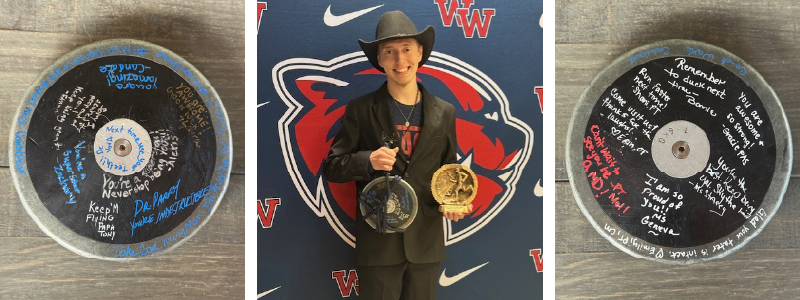
One poignant moment came when Xander’s family had the discus—now a symbol of victory over his injury—signed by his care team.

“It’s rewarding as a physician to know that I played a small part in restoring his ability to use his arm again,” Dr. Parry reflected. “As a parent, I know the anxiety that comes with the uncertainty of neurologic recovery. To see Xander move his arms and legs again, as if nothing happened, is a relief that’s indescribable.”

The power of community

Xander’s recovery was supported not only by his family and Wellstar care team, but also by his school and community. After the accident, his track team dedicated the next meet to him, with “Run for Xander” wristbands and signs. A teammate also started a GoFundMe campaign, which raised nearly $13,000 to help with the family’s medical expenses.

“People from all over came together for Xander,” Xavier said. “Posts on his team’s Facebook page were shared with running clubs from Canada to Miami. We were blown away.”

Xander was especially touched by the support. “This whole experience showed me how much my family loves me,” he said. “Seeing my friends, teachers and even family from Texas come to help—it meant so much.”

A bright future

After two and a half weeks of inpatient rehabilitation, Xander transitioned to outpatient rehab and continued regular follow-ups with Dr. Parry at the Wellstar Neurosurgery clinic. “At each phase, he received the best possible care,” explained Dr. Parry. “That’s why he had such a great outcome.”

Today, Xander is almost fully recovered and back doing what he loves most—running. “Physically and mentally, he’s doing phenomenal,” Kelly said. “He has his own training program. I am so proud of him.”

Xander’s progress wouldn’t have been possible without the trauma care network that supported him every step of the way. “The benefit of the trauma network can’t be overstated,” Dr. Parry said. “It ensures people get the best possible outcome even on their worst day.”

With expert care and determination, Xander is ready for whatever comes next.

Learn more about Trauma Services and Neuro Care at Wellstar.
XanderCare collage

Tags

Kennestone Regional Medical Center Phillip Vaughan Parry Sr PeopleCare
Neuro Care
Related Articles
Depicts Wellstar Kennestone Regional Medical Center Yellow Tower

Newsroom

Wellstar Kennestone Expands Care with New Tower

Communities across Cobb County and Metro Atlanta are growing quickly—and so is the need for world-class healthcare.

The new Yellow Tower at Wellstar Kennestone Regional Medical Center is helping meet that need. The nine-story, 235-bed patient tower expands hospital capacity, strengthens specialty care and enhances the patient experience through state-of-the-art technology and spaces that support healing.

Opening to patients April 15, 2026, the tower represents a $400 million investment in the future of healthcare for the region—helping ensure families across Georgia can access expert care when and where they need it.

Expanding capacity and advancing care

The approximately 300,000-square-foot tower increases acute care capacity and strengthens key service lines, including cardiology, neurology, oncology and surgery. Dedicated units for cardiac critical care, surgical care, neurological care and medical oncology allow care teams to deliver advanced treatment in environments built for each specialty.

The new tower also introduces a next-generation neonatal intensive care unit (NICU) and enhanced neonatal services, expanding care for our smallest patients. A dedicated Women’s & Children’s entrance improves access and reinforces family-centered care.

"This tower is more than a new building—it reflects our commitment to providing extraordinary care for people across the Southeast,” said Ketul J. Patel, Wellstar president and CEO. “Wellstar Kennestone has become a destination hospital, with a Level I Trauma Center and nationally recognized specialty programs, including one of the best heart programs in the country. This investment allows us to serve more patients, support families during life’s most important moments, and give our teams the space and tools they need to deliver safe, high-quality care to every person, every time. When someone needs advanced care, they can find it at Wellstar.”

Technology that supports care

Every element of the Yellow Tower was designed with patients, families and care teams in mind.

All adult patient rooms are private, offering greater comfort and functionality. Natural light, sound-reducing features and adjustable lighting and privacy controls create a calm, quiet setting. Durable antimicrobial materials support infection prevention and help maintain a clean, safe space.

Throughout the new tower, smart-room technology keeps patients and care teams connected. Interactive digital whiteboards in each patient room display real-time care information, including medications, care team details and daily treatment plans.

Smart technology also supports patient safety. Remote monitoring allows trained team members to observe patients who may be at risk of falls or other complications. Virtual nursing helps coordinate admissions, discharges and documentation so bedside nurses can focus on direct patient care.

Other advanced capabilities—including AI-assisted monitoring and virtual rounding—enhance the care experience by helping identify risks earlier, improving decision-making and extending access to expert providers.

These advancements are especially impactful in high-acuity areas like neurology and neurosurgery.

“Expanding our neuro beds allows us to bring advanced technology and specialized brain and spine care directly to more patients,” said Frances Van Beek, assistant vice president of neuroscience and trauma services at Wellstar. “Because many of these services aren’t widely available, this growth helps ensure patients across Georgia can access the expert care they need.”

Specialized care for newborns and families

The Yellow Tower includes a 49-bed next-generation NICU designed to care for infants who are premature or critically ill while supporting families during a challenging time.

The new unit emphasizes natural light, quiet healing spaces and advanced monitoring technology that promotes healthy growth and development.

A centralized Milk Lab prepares fortified human milk, donor milk and prescribed formulas to meet the unique nutritional needs of infants in the NICU. The unit also includes six couplet care rooms, allowing mothers and babies receiving specialized care to remain together—encouraging bonding during treatment.

This focus on family-centered care reflects Wellstar’s commitment to supporting people at every stage of life—ensuring families have access to compassionate, specialized care when they need it most.

Hospitality-inspired dining experience

Under the patient tower, a new 22,000-square-foot kitchen powers a hospital-wide in-room dining service that blends restaurant-quality meals with clinical nutrition.

Patients can order meals when they’re ready to eat during service hours, with breakfast favorites available throughout the day. This model gives people greater choice and flexibility during their stay.

“We designed this program to give patients more control over their dining experience—so they can order what they want, when they want it,” said Ben Behimer, director of nutrition and food services at Wellstar Kennestone. “Our goal is to create a more personalized, restaurant-style experience that reflects the same level of quality and care patients expect across our hospital.”

Visitors and team members can also enjoy retail dining, including Mountainside Bistro—which features seven food concepts—and Wellbean Coffee, along with expanded indoor and outdoor seating.

The new kitchen and dining areas are over 50% larger than the previous space and feature dual production lines, allowing teams to prepare fresh meals efficiently for everyone they serve.

Rapid access when minutes matter

Wellstar Kennestone plays a critical role in caring for patients with serious injuries and complex conditions across Georgia. The hospital is verified as a Level I Trauma Center by the American College of Surgeons and designated by the Georgia Department of Public Health—the highest level of trauma care available.

The new tower strengthens that capability. Expanded helipads and integrated flight paths connect the hospital directly with the Wellstar AirCare network, helping ensure patients can reach advanced care quickly.

Dual heavy-lift helipads support high-volume air medical operations, while overlook spaces within the tower provide views of the surrounding campus.

Wellstar AirCare operates a 24/7 air ambulance service with helicopters based in Augusta and south of Metro Atlanta. Care teams provide lifesaving care during transport, including whole blood transfusions for severe blood loss and support for patients requiring extracorporeal membrane oxygenation (ECMO).

Built for the future of care

The Yellow Tower was designed to adapt to evolving healthcare needs. Entire floors can be converted to negative pressure environments, allowing the hospital to respond quickly during infectious disease outbreaks or other public health emergencies.

The new tower also enhances Wellstar Kennestone’s ability to provide exceptional care every day—from welcoming babies to supporting people through cancer treatment and recovery. It ensures the hospital can continue caring for the community with the level of excellence people expect while preparing for what’s ahead.

Learn more at wellstar.org/kennestone.

Keep reading
Thanks to a team of heart failure doctors and the Optimizer Heart Mini, Pat's back to dancing the Carolina shag again.

PeopleCare

PatCare

Pat Gelisse has been dancing for 30 years. She even taught the Carolina shag for a while. It’s a partner dance, sometimes compared to Swing dancing to beach music.

But severe heart failure downgraded Pat’s dancing queen status for close to 10 years.

“I went from feeling happy to feeling like a nothing,” she remembered of that time in her life.

With a team of Wellstar heart specialists working together for her, Pat found hope and new life on the dance floor.

Heart failure masquerades as acid reflux

It started more than a decade ago when Pat lived in central Georgia. She scheduled a doctor’s appointment for what she thought was acid reflux. She popped in on a quick break from her marketing job, assuming it wouldn’t take long.

Blood work and an EKG got Pat a ticket straight to the hospital and a quadruple bypass. 

“My heart got worse; it wasn’t pumping blood,” Pat said.

She was in acute heart failure, a life-threatening condition where the heart doesn’t pump well enough to deliver the necessary amount of oxygen to her body. Pat’s ejection fraction (EF)—the percentage measurement of the blood that leaves the heart each time it pumps—was only 10%. The normal range is 50 to 70%.

It was a scary time, and with a family history of heart problems, Pat was worried. She’d lost both parents to heart failure, as well as other family members.

“I just knew for sure I was going to be next,” said Pat.

Doctors from various academic institutions discussed serious treatments ranging from LVAD to transplant, but because the pumping performance of her heart improved, she was no longer a candidate for those procedures. Instead, Pat spent close to nine years managing her heart failure with a pacemaker and various medications—treatments that failed to get her back on the dance floor.

Keep reading
Doing good CPR is critical to save someone from cardiac arrest.

PeopleCare

KevinCare

There aren’t many people out there who can say they survived cardiac arrest at 30. Kevin Miskewicz can.

According to the American Heart Association, more than 90% of people who experience an out-of-hospital cardiac arrest die. Those who survive often have permanent neurological disabilities. But Kevin’s story has an incredibly fortunate ending, thanks to the highly coordinated work of his medical experts at Wellstar.

Recovering from cardiac arrest is something Kevin will never forget. It lives forever as a piece of his health history—one that includes a dedicated healthcare team—and his wife, who was the first to save his life.

There aren’t many people out there who can say they survived cardiac arrest at 30. Kevin can.

CPR to the rescue

Kevin woke up on Labor Day 2017 at 5:30 AM to take the dog out. Pausing to adjust the thermostat as he came in, he fell, knocking over a lamp.

He was in cardiac arrest.

With no symptoms and no known pre-existing condition, this was unexpected, but that didn’t stop his wife, Andrea, from jumping into action.

“If it weren’t for me knocking over a lamp when I passed out,” said Kevin, “she would have never woken up and saved my life.”

In addition to calling 911 and unlocking the door for the paramedics, Andrea performed CPR for 10 minutes.

“Kevin’s wife doing good CPR was critical,” said Dr. Arthur Reitman, the interventional cardiologist who was a vital part of Kevin’s treatment team at Wellstar Kennestone Regional Medical Center. “More than five minutes of poor blood flow to the brain can result in permanent irreparable injury from which a patient is unable to recover.”

Coordinating multidisciplinary care to save a life

When paramedics arrived at Kevin’s home, he had no pulse and was not breathing. As the paramedics performed their lifesaving work, he technically died two times.

The ambulance took him to Wellstar North Fulton Medical Center, where he was initially assessed and treated by Dr. David Jacoboff. The interventional cardiologist implanted an intra-aortic balloon pump to stabilize him. Then, he transferred Kevin to Wellstar Kennestone for highly specialized heart care.

When Kevin arrived at Wellstar Kennestone by helicopter, his heart function wasn’t strong enough to support his body. Dr. Reitman and a team of doctors including a cardiologist, a pulmonologist and critical care doctors worked in tandem to put Kevin on an advanced life support system called veno-arterial extracorporeal membrane oxygenation. Better known as VA-ECMO, it took the heart “offline” so it could heal. The technology removed unoxygenated blood from his body, oxygenated it and pumped it back in for the next three days.

“Very few places in the state—only four or five hospitals—have the technology and specialized training to put a patient on ECMO,” Dr. Reitman explained.

Keep reading
Back to Top
Branding illustration
Wellstar Logo
More than healthcare. PeopleCare.
Branding illustration
For Job Seekers & Team
Careers Diversity Equity Inclusion and Belonging Onboarding
For Students
Students Portal
Graduate Medical Education
Medical Residency Pharmacy Residency
For Business
Corporate Purchasing
For the Media
Media Room Community Health Needs Assessment
Help
Contact Us Pay Your Bill Policy & Privacy Information Hospital Transparency Information Price Transparency
For Job Seekers & Team
Careers Diversity Equity Inclusion and Belonging Onboarding
For Students
Students Portal

Graduate Medical Education
Medical Residency Pharmacy Residency
For Business
Corporate Purchasing
For the Media
Media Room Community Health Needs Assessment
Help
Contact Us Pay Your Bill Policy & Privacy Information Hospital Transparency Information Price Transparency

Copyright © 2026 Wellstar Health System. All Rights Reserved.

Wellstar does not discriminate on, exclude people or treat them differently on the basis of race, color, national origin, age, disability, sex, gender identity or expression or any other type of discrimination prohibited by law.

Cookie Preferences

We use cookies for booking and general analytics. Learn more about or internet privacy policy.