SKIP NAVIGATION
MyChart Search
Wellstar Home
Wellstar Go Back
MyChart
  • Find a Doctor
  • Locations
  • Medical Services
    Popular Services
    • Emergency Care
    • Urgent Care
    • Virtual Care
    • Primary Care
    • Women's Health
    • Pediatric Care
    • Cancer Care
    • Heart Care
    • Neuro Care
    • Orthopedics
    • View All Medical Services
    Expanded Services
    • Lab Services
    • Imaging
    • ENT
    • Pulmonary
    • Gastroenterology
    • Urology
    • Physical Therapy
    • Behavioral Health
    • Pharmacies
    • View All Medical Services
    For Providers
    • Refer a Patient
    • Transfer a Patient
    • Physician Relations
    • Wellstar Clinical Partners
    • Provider Resources
  • Patient Resources
    Patient Portal
    • MyChart Login
    • Sign-Up for MyChart
    • Get Medical Records
    Visiting
    • Visitation Guidelines
    • Patient Guides
    • Find My Way
    Billing & Insurance
    • Accepted Insurance
    • Pay Your Bill
    • Financial Assistance
  • Wellstar for You
    Community
    • Classes and Events
    • Center for Health Equity
    • Support Groups
    • Community Outreach
    • Wellstar Find Help
    • Translation Services
    • Volunteer Opportunities
    Health Content
    • Articles
    • PeopleCare
  • Find a Doctor
  • Locations
  • Medical Services
  • Patient Resources
  • Wellstar for You

Popular Services

Emergency Care Urgent Care Virtual Care Primary Care Women's Health
Pediatric Care Cancer Care Heart Care Neuro Care Orthopedics

Expanded Services

Lab Services Imaging ENT Pulmonary Gastroenterology
Urology Physical Therapy Behavioral Health Pharmacies View All Medical Services

For Providers

Refer a Patient Transfer a Patient Physician Relations Wellstar Clinical Partners Provider Resources

Patient Portal

MyChart Login Sign-Up for MyChart Get Medical Records

Visiting

Visitation Guidelines Patient Guides Find My Way

Billing & Insurance

Accepted Insurance Pay Your Bill Financial Assistance

Community

Classes and Events Center for Health Equity Support Groups Community Outreach
Wellstar Find Help Translation Services Volunteer Opportunities

Health Content

Articles PeopleCare
  • Home
  • Articles
  • Robotic Surgeries Get Patients Back to Their Lives Sooner
Article Category: Highlights

Robotic Surgeries Get Patients Back to Their Lives Sooner

Quicker Recoveries

Published on July 01, 2019

Last updated 04:19 PM August 11, 2020

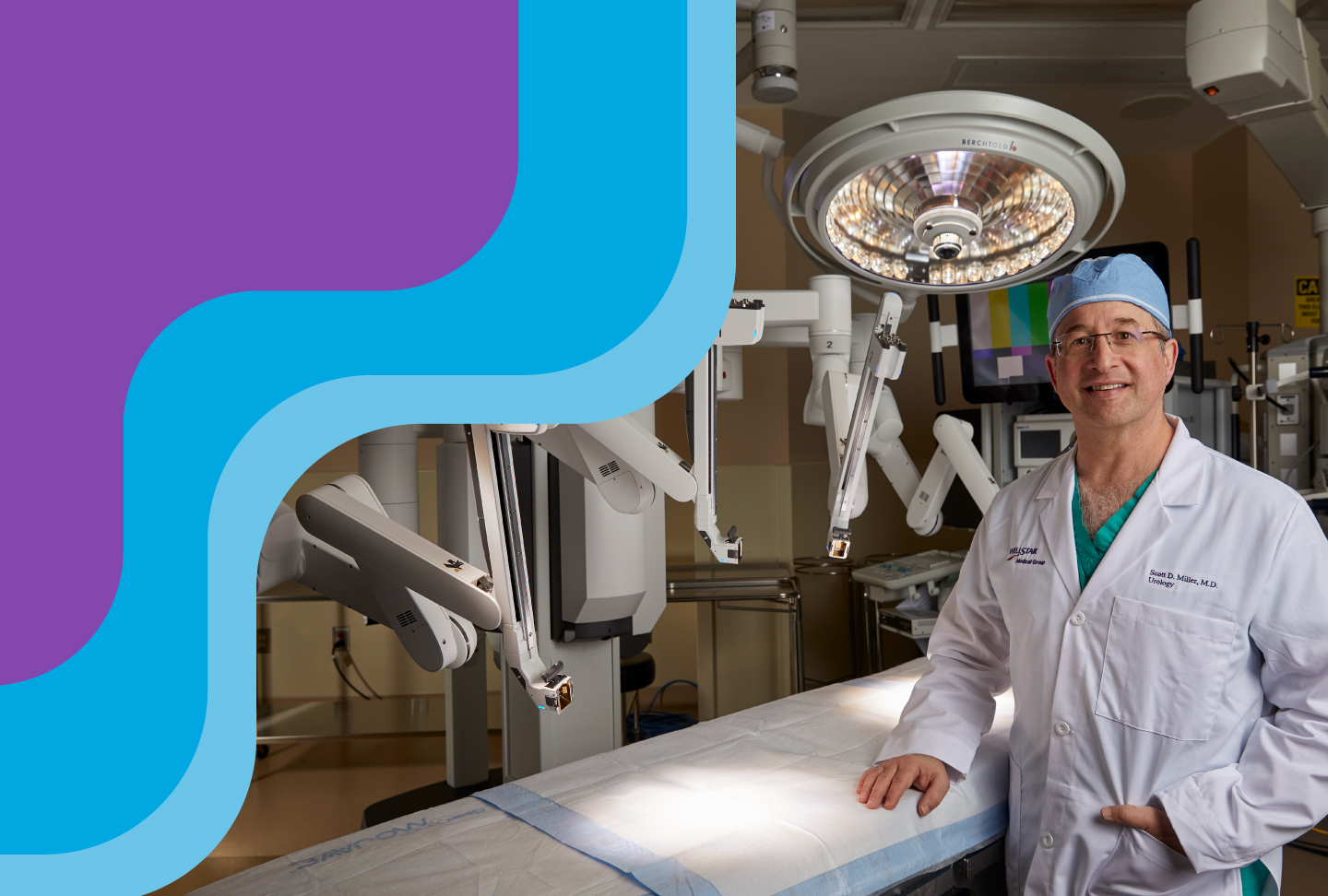
Dr. Scott Miller standing in a surgery room.

Robotic surgery specialties at Wellstar North Fulton Hospital include colorectal, general, gynecologic (oncologic and benign), thoracic, trauma and urologic. This type of surgery allows for less blood loss, less post-operative pain, less scarring, quicker recovery and a lower risk of complications.

No one wants surgery. But when it’s necessary, it makes sense to choose the least invasive, most highly advanced type, if possible. And for a wide variety of surgeries, it is possible. At Wellstar North Fulton Hospital, a team of highly skilled robotic surgeons is using the most advanced technology available to help patients get back to their lives sooner than ever.

“Our team of robotic physicians has collectively performed more than 6,000 surgeries,” said Scott Miller, MD, North Fulton Hospital’s medical director of robotic surgery. “And our specially trained anesthesia team has also provided care to thousands of patients. At North Fulton, we offer the highest level of robotic surgery expertise.”

Robotic surgery specialties at North Fulton Hospital include colorectal, general, gynecologic (oncologic and benign), thoracic, trauma and urologic. And the surgeries are performed by clinical leaders. Dr. Miller, a urologist, was the first surgeon in Georgia to robotically remove a prostate. Named to Atlanta Magazine’s list of Top Doctors for 10 consecutive years, he has also been recognized for the past decade as a “National Top Doctor” by established research firm Castle Connolly Medical Ltd. The list aims to identify the top one percent of specialists and sub-specialists in the US.

Dr. Miller explains that with robot-assisted surgery, the surgical system is operated by a physician sitting a few feet away from the patient. Using a high-powered camera, the surgeon guides the arms of the robot that holds surgical tools, which are inserted into the patient through small incisions. With robotic surgery, the surgeon’s movements are more precise, according to Dr. Miller.

“Robotics allow greater range of motion, and thanks to the magnified, three-dimensional image of the surgical field, we can see the patient’s anatomy in better detail,” he said. “It’s the difference between looking through a window and actually walking into a room.“

With the smaller incisions we make during robotic surgery, there’s less blood loss, less post-operative pain, less scarring, quicker recovery and a lower risk of complications,” adds Dr. Miller, who emphasizes another benefit unique to Wellstar North Fulton Hospital: personal, compassionate care.

“The surgeon you first meet with will be the physician who performs your surgery, and sees you postoperatively. We each personally care for our patients, from start to finish.”

Wellstar North Fulton Hospital's Robotic Surgeons

Gregory Coffman, MD General, Trauma and Colorectal
Shelley Dunson-Allen, MD Obstetrics & Gynecology
Caroline Gibbons, MD Gynecology
Scott Miller, MD Urology
Theolyn Price, MD Thoracic

Find out more about robotic surgery at Wellstar North Fulton Hospital

Call Now

Tags

North Fulton Medical Center Gregory Justin Coffman Scott David Miller
Theolyn Nan Price Cancer Care Heart Care Emergency Care Respiratory Care
Read related articles
Woman talks with her healthcare provider

Highlights

Q&A: Breast Cancer Specialist Answers Mammograms and Self Breast Exams Questions

According to the American Cancer Society, 1 in 8 women will get breast cancer in their lifetime. Breast cancer is the second leading cause of cancer death for women. However, when found in its earliest stages, breast cancer can be stopped from spreading, is more treatable and nearly 100% curable. Screening is the best way to find breast cancer early. Let’s talk about mammograms as well as the right way to perform a self breast exam.

Mammograms

When should I start getting mammograms?

Unless you have a new breast problem or need to start screenings earlier because of risk, most guidelines recommend starting screening mammography at age 40.
How often should I get a mammogram?

Guidelines differ somewhat but are consistent that if you are of average risk, you should have them at least every other year.  If you are at increased risk, including having dense breast tissue or a family history of breast cancer,  it is recommended that you get an annual mammography screening and possibly enhanced screenings with MRI, ultrasound or contrast enhanced mammography.

Is getting a mammogram dangerous to my health?

While there is a small radiation exposure with every mammogram, the benefit of early detection of small, curable cancers almost always outweighs that risk of exposure.

Does it hurt to get a mammogram?

Some women do find mammograms uncomfortable.  This is more common when having imaging just before your menstrual period when breast tissue can be swollen and more sensitive.  If you do have extra sensitivity, scheduling the exam after your cycle starts or taking an over-the-counter NSAID pain reliever* a few hours before the exam may minimize the discomfort.  Because positioning of the breast and taking each mammogram image is typically less than 30 seconds, the extent of discomfort during the exam is short-lived.

*NSAIDs are nonsteroidal anti-inflammatory drugs, like ibuprofen (Advil, Motrin), naproxen sodium (Aleve) and aspirin.

Breast self-exam options

What is the correct technique for a breast self-exam?

Any pattern for feeling all of your breast tissue is acceptable. The goal is to make sure you are feeling with varying pressure from your collar bone to cleavage, to the bottom of the breast out to past where your breast meets your chest wall, including your armpit.

How often should I do a breast self-exam?

Self-exams should not be done too often because it can make it difficult to tell if a lump is evolving over time. Think of how hard it is to tell if your appearance changes gradually as you get older because you see yourself every day, compared to more easily seeing changes in someone’s appearance after not seeing them for a long time. Typically, once a month is enough.

Is there a best time to do a breast self-exam?

 It is important to do your breast self-exam in approximately the same time in your cycle rather than a specific interval—especially since not all menstrual cycles are exactly 28 days apart.  Doing the exam at the same place in your cycle will give you consistency in how the tissue should feel in terms of lumpiness, texture and density. 
I encourage my patients to do their exam the day after their cycle starts as a consistent point in their hormonal cycle fluctuations.

What am I actually looking for during a breast self-exam?

Your breast self-exam should be a tool to familiarize yourself with the general “normal texture” of the tissue in each of your breasts so if you detect something that is different, you will be able to identify it as new or changed. 

Can a breast self-exam replace a mammogram?

Self-breast exams cannot replace mammograms because mammograms can detect subtle changes like densities or calcifications that are too small to feel. The goal with screening mammograms is to detect breast cancer before you can feel it because early detection leads to better overall outcomes.
Learn more about breast cancer screening and treatment at Wellstar. 

Keep reading
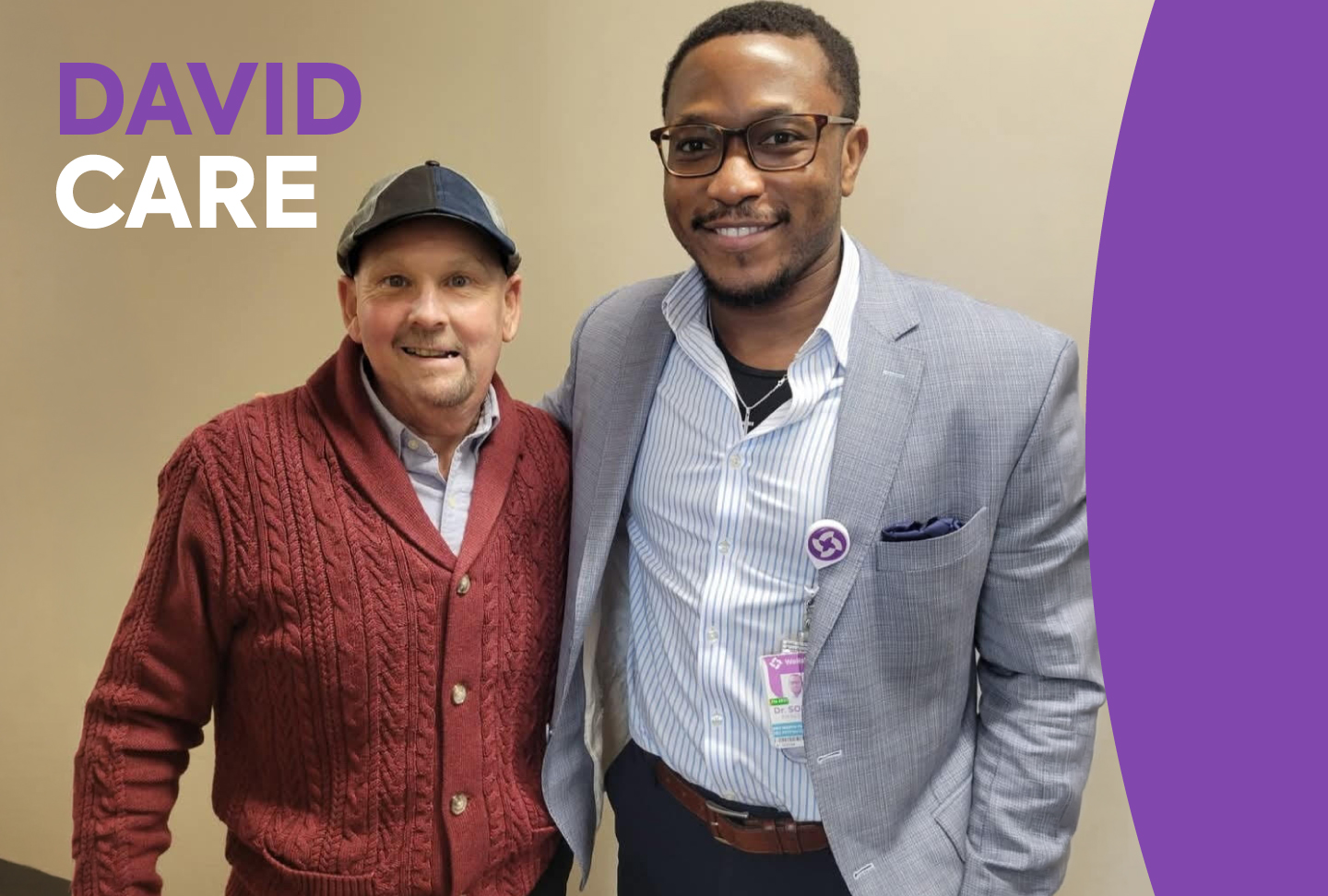
David Butler stands, smiling, with Dr. Fiyin Sokoya, a dual board-certified head and neck cancer specialist and facial plastic surgeon at Wellstar.

PeopleCare

Wellstar PeopleCare | Moving Fast, Working Together: Advanced Head & Neck Cancer Surgery Keeps David Smiling

David Butler's cancer journey took him through a rare jaw reconstruction, radiation and coordinated care from specialists across Wellstar. His care team collaborated to provide what he needed as quickly and efficiently as possible.

A bothersome mouth sore

Lean and energetic, David is quick with a joke and even quicker with a smile. A neatly trimmed mustache frames a grin that lights up his blue eyes, illuminating his trademark optimism and humor. They’re qualities he kept intact throughout cancer treatment and draws on today, when he encourages people who are newly diagnosed with cancer.

It started with a sore on his gum in the fall of 2023. He assumed it would heal on its own. Instead, it got worse. When he could hardly swallow a few months later, his dentist referred him to an oral surgeon for a biopsy. That’s when he got the life-changing news: it was cancer.

“You hear the big C and it scares you to death,” David said. “But there's light at the end of the tunnel. There's always hope.”

What followed was cancer treatment involving surgery, radiation, chemotherapy and support from a whole team of cancer specialists. Along the way, David said he leaned on his faith, the support of his wife, Jill, who he credits as his biggest advocate—and the expertise of Wellstar caregivers.


David Butler grins standing next to his wife Jill, who he credits as his biggest advocate throughout treatment.
Keep reading
Child with arm in sling

Highlights

When and Why to Visit the Pediatric Emergency Department

When your child experiences a medical emergency, you want them to have the care they need right away. At the five Wellstar Pediatric Emergency Departments (ED) at Wellstar Golisano Children’s Hospital of Georgia and Wellstar Cobb, Wellstar Douglas, Wellstar Kennestone and Wellstar Paulding Medical Centers, you’ll find expert treatment designed just for kids.

Why visit a Pediatric Emergency Department?

“We have a common saying in pediatric emergency medicine that ‘children aren’t just little adults.’ Children’s bodies and the health problems that affect them are very different from adults,” said Pediatric Emergency Physician Dr. Christopher Graves. “When you visit a pediatric ED, you can trust that your child is receiving age-appropriate evaluation and care.”

This can often mean finding a diagnosis through physical examinations and a thorough patient history with less reliance on invasive testing. When testing is needed, rest assured that your child’s care team has training in pediatric medicine and knows what tests and medications are needed to keep your child safe.

When should you go to the pediatric ED?

“If you feel your child is experiencing a life-threatening symptom such as trouble breathing, loss of consciousness, severe allergic reaction or bleeding that's hard to control, you should go to the ED or call 911. Remember to talk with your child's provider during your visits about when you should worry,” said Wellstar Pediatrician Dr. Sandra Rodriguez-Sfeir. “Some things are age-specific—like a temperature at 100.4 degrees Fahrenheit or above in a baby under 2 months absolutely needs to go to the ED. Don't wait to see your pediatrician in the morning.”

There may also be urgent care centers in your area. Urgent care can be a great option for non-life-threatening conditions such as common colds, mild flu-like symptoms or earaches. Read more about where to go when your child isn’t feeling well.

“Some families struggle to decide whether they should go to an ED or urgent care. I have always told families—you are never wrong to come to a pediatric ED,” Dr. Graves said. “If you are worried about the life or safety of your child, you’ve come to the right place.”

Introducing your pediatric ED team

When you come to a pediatric ED, you will meet healthcare providers who have chosen to make children their focus. Our care teams know that children have unique needs based on their social and emotional development. Pediatric ED doctors, nurses and advanced practice providers have years of experience working with children, and they have learned how to approach children in a way that reduces their anxiety and fear. Acts as simple as examining a stuffed animal or blowing up a glove into a balloon can turn a crying child into a smiling child. 

Doctors are only one part of the team. Pediatric ED nurses have expertise in administering medications, placing IVs and performing other bedside procedures. When these types of interventions are needed, you can trust that the nurses, medics and ED techs who help with these processes have abundant experience. 

“Children are special and should be treated by nurses that specialize in their care. Emergency rooms can be a scary place for children and families,” said Jacqueline Rimer, a Wellstar pediatric emergency department nurse. “Wellstar pediatric nurses combine compassion and expertise to create an environment that reduces fear and anxiety while also providing quality, specialized care children and families deserve.”

Our child life specialists are trained to work directly with children and families to offer education, emotional support and distraction during procedures. Coming to the pediatric ED is tough for many kids, but having the right team can make things a little easier. That makes all the difference.

Find a Pediatric Emergency Department near you.

Keep reading

COMMUNITY CARE

Community Care
In the Community Health Highlights Events & Classes
For Business
Corporate Purchasing Community Health Needs Assesment
Give
Wellstar Foundation Donate Ways to Give Volunteer

ABOUT US

About Wellstar Diversity Equity Inclusion & Belonging Leadership Wellstar Board of Trustees Healthcare Innovation Safety First Commitment Wellstar Research Institute Latest News

CAREERS & EDUCATION

Careers at Wellstar Graduate Medical Education Pharmacy Residency

PATIENT RESOURCES

Pay Your Bill Accepted Insurance

HELP

Contact Us Hospital Transparency Information Price Transparency Policy and Privacy Information

MEDIA

Media Room

Copyright © 2026 Wellstar Health System. All Rights Reserved.

Wellstar does not discriminate on, exclude people or treat them differently on the basis of race, color, national origin, age, disability, sex, gender identity or expression or any other type of discrimination prohibited by law.

  • Internet Privacy Policy
Cookie Preferences

We use cookies for booking and general analytics. Learn more about or internet privacy policy.