Article Category: Newsroom
Wellstar Spalding Medical Center Opens Cancer Center in Griffin
New facility doubles treatment capacity and strengthens specialty services
Published on March 20, 2026
Last updated 03:58 PM March 20, 2026
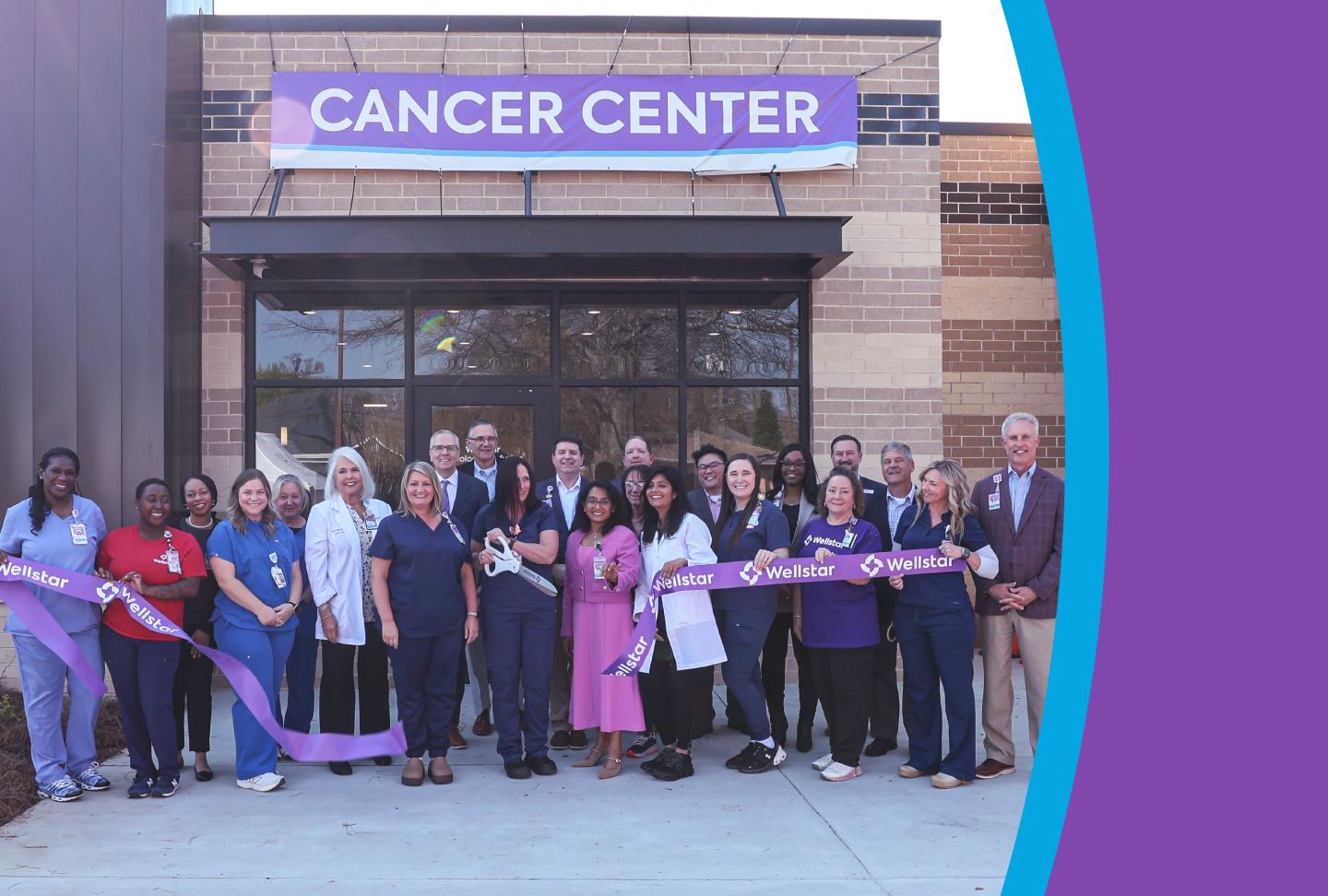
GRIFFIN, Ga. — Community leaders joined hospital executives Thursday as
Wellstar Spalding Medical Center
held a ribbon-cutting ceremony to officially open its new cancer center, improving access to oncology and infusion services for patients in Spalding County and the surrounding region.
The 6,475-square-foot expansion nearly doubles the hospital’s cancer treatment space and includes eight exam rooms, 14 infusion chairs, two blood draw stations, a dedicated lab, triage room, waiting area and administrative offices. An on-site infusion pharmacy will support chemotherapy, immunotherapy, targeted therapies and other outpatient treatments.
Care at the
Wellstar Spalding Cancer Center
is provided in partnership with Northwest Georgia Oncology Centers (NGOC), with additional support from an oncology nurse navigator who coordinates care and guides patients through treatment.
“People should be able to receive high-quality cancer care close to home,” said Kevin Smith, president of Wellstar Spalding. “By expanding both our cancer services and the specialties that support early detection and treatment, we’re making it more convenient for our patients to get the care they need.”
NGOC oncologist
Dr. Dhivya Prabhakar
has joined the Wellstar Spalding Cancer Center, further enhancing access to oncology care. She will be joined by a second oncologist this summer.
“What matters most to patients is feeling supported and understood throughout their cancer journey,” Dr. Prabhakar said. “With this expansion, people can stay in their community surrounded by a care team that knows them, listens to them and helps them navigate every step with clarity, compassion and hope. Our goal is to meet people where they are and partner with them in their care so they never feel alone in the process.”
Hospital leaders also highlighted growth in related services since the project began. Wellstar Spalding now offers endocrinology, which plays a key role in identifying endocrine-related cancers such as thyroid, adrenal and some pancreatic tumors. The hospital has also added a general surgeon specializing in breast surgery, expanding local options for evaluation and surgical care.
Read related articles

Highlights
Health Equity Is Good for Healthcare Business—And Better Care for Everyone
As healthcare evolves, hospital systems prioritize not only the level of care they provide, but also how well they respond to the needs of the people they serve.
This is true with programs like Anthem Blue Cross and Blue Shield’s Quality-In-Sights: Hospital Incentive Program (Q-HIP), which scores organizations’ health equity efforts.
When we invest in equitable care, our patients receive better treatment, our team members feel supported and we have additional resources that we can use to improve care.
Why do programs rewarding health equity matter?
Programs like Q-HIP recognize healthcare organizations for delivering high-quality, patient-centered care. Rather than focusing on how many patients are seen, these models score performance across quality, safety, outcomes and experience.
Programs like Q-HIP align with Wellstar's mission to enhance the health and well-being of every person we serve.
Health equity’s role in Anthem’s Q-HIP program
Q-HIP has recognized Wellstar with a reimbursement bonus point for health equity, acknowledging our efforts to reach underserved patients and tailor our care to the communities and people we serve.
“Programs like Q-HIP make it clear that equity work isn’t separate from performance—it’s part of how we deliver quality and earn the resources we reinvest back into patient care,” said Mindy St. George, Wellstar assistant vice president of managed care.
The Q-HIP health equity assessment evaluates whether health systems:
- Commit to advance health equity
- Collect and analyze demographic and social needs data
- Look at quality measures to identify disparities
- Work to improve disparities and gaps in care
- Involve leadership in equity efforts
To provide high-quality care, you need to address inequities.
Wellstar’s approach: Equity as responsiveness
At Wellstar, health equity is part of everything we do. Through Wellstar Community Health and Center for Health Equity, equity is embedded into how we design care, improve quality, engage leadership across the system and analyze data.
We focus on understanding who we serve, identifying barriers to care and continuously improving how services are delivered.
“Health equity is not an add-on to our work—it’s how we deliver better care,” said Elise Lockamy-Kassim, Wellstar assistant vice president of community health and Center for Health Equity. “When healthcare systems are responsive to people’s needs, outcomes improve, care becomes more efficient and everyone benefits.”
Why equity investments benefit everyone
When patients can access care more easily and feel like their clinicians care about them, they’re more likely to get the preventative care they need. This helps them manage chronic conditions like diabetes, stay ahead of disease and avoid unnecessary hospitalizations.
Equity-driven improvements also support Wellstar team members by improving workflows and enabling us to invest resources in our people.
“When we focus on health equity, we’re strengthening the entire system,” said Dr. Earl Stewart, Wellstar medical director of health equity. “Better data and better responsiveness lead to better care—for every patient, every time.”
Why continued investment matters
Programs like Q-HIP make it clear: Equity performance is quality performance and quality performance is rewarded.
For Wellstar, continued investment in health equity means:
- Stronger performance in programs like Q-HIP
- Resources to reinvest in team members and care
- Better outcomes for patients across all communities
- A healthcare system that is responsive, resilient and sustainable

Highlights
Q&A: Breast Cancer Specialist Answers Mammograms and Self Breast Exams Questions
According to the American Cancer Society, 1 in 8 women will get breast cancer in their lifetime. Breast cancer is the second leading cause of cancer death for women. However, when found in its earliest stages, breast cancer can be stopped from spreading, is more treatable and nearly 100% curable. Screening is the best way to find breast cancer early. Let’s talk about mammograms as well as the right way to perform a self breast exam.
Mammograms
When should I start getting mammograms?
Unless you have a new breast problem or need to start screenings earlier because of risk, most guidelines recommend starting screening mammography at age 40.
How often should I get a mammogram?
Guidelines differ somewhat but are consistent that if you are of average risk, you should have them at least every other year. If you are at increased risk, including having dense breast tissue or a family history of breast cancer, it is recommended that you get an annual mammography screening and possibly enhanced screenings with MRI, ultrasound or contrast enhanced mammography.
Is getting a mammogram dangerous to my health?
While there is a small radiation exposure with every mammogram, the benefit of early detection of small, curable cancers almost always outweighs that risk of exposure.
Does it hurt to get a mammogram?
Some women do find mammograms uncomfortable. This is more common when having imaging just before your menstrual period when breast tissue can be swollen and more sensitive. If you do have extra sensitivity, scheduling the exam after your cycle starts or taking an over-the-counter NSAID pain reliever* a few hours before the exam may minimize the discomfort. Because positioning of the breast and taking each mammogram image is typically less than 30 seconds, the extent of discomfort during the exam is short-lived.
*NSAIDs are nonsteroidal anti-inflammatory drugs, like ibuprofen (Advil, Motrin), naproxen sodium (Aleve) and aspirin.
Breast self-exam options
Any pattern for feeling all of your breast tissue is acceptable. The goal is to make sure you are feeling with varying pressure from your collar bone to cleavage, to the bottom of the breast out to past where your breast meets your chest wall, including your armpit.
How often should I do a breast self-exam?
Self-exams should not be done too often because it can make it difficult to tell if a lump is evolving over time. Think of how hard it is to tell if your appearance changes gradually as you get older because you see yourself every day, compared to more easily seeing changes in someone’s appearance after not seeing them for a long time. Typically, once a month is enough.
Is there a best time to do a breast self-exam?
It is important to do your breast self-exam in approximately the same time in your cycle rather than a specific interval—especially since not all menstrual cycles are exactly 28 days apart. Doing the exam at the same place in your cycle will give you consistency in how the tissue should feel in terms of lumpiness, texture and density.
I encourage my patients to do their exam the day after their cycle starts as a consistent point in their hormonal cycle fluctuations.
What am I actually looking for during a breast self-exam?
Your breast self-exam should be a tool to familiarize yourself with the general “normal texture” of the tissue in each of your breasts so if you detect something that is different, you will be able to identify it as new or changed.
Can a breast self-exam replace a mammogram?
Self-breast exams cannot replace mammograms because mammograms can detect subtle changes like densities or calcifications that are too small to feel. The goal with screening mammograms is to detect breast cancer before you can feel it because early detection leads to better overall outcomes.
Learn more about breast cancer screening and treatment at Wellstar.
PeopleCare
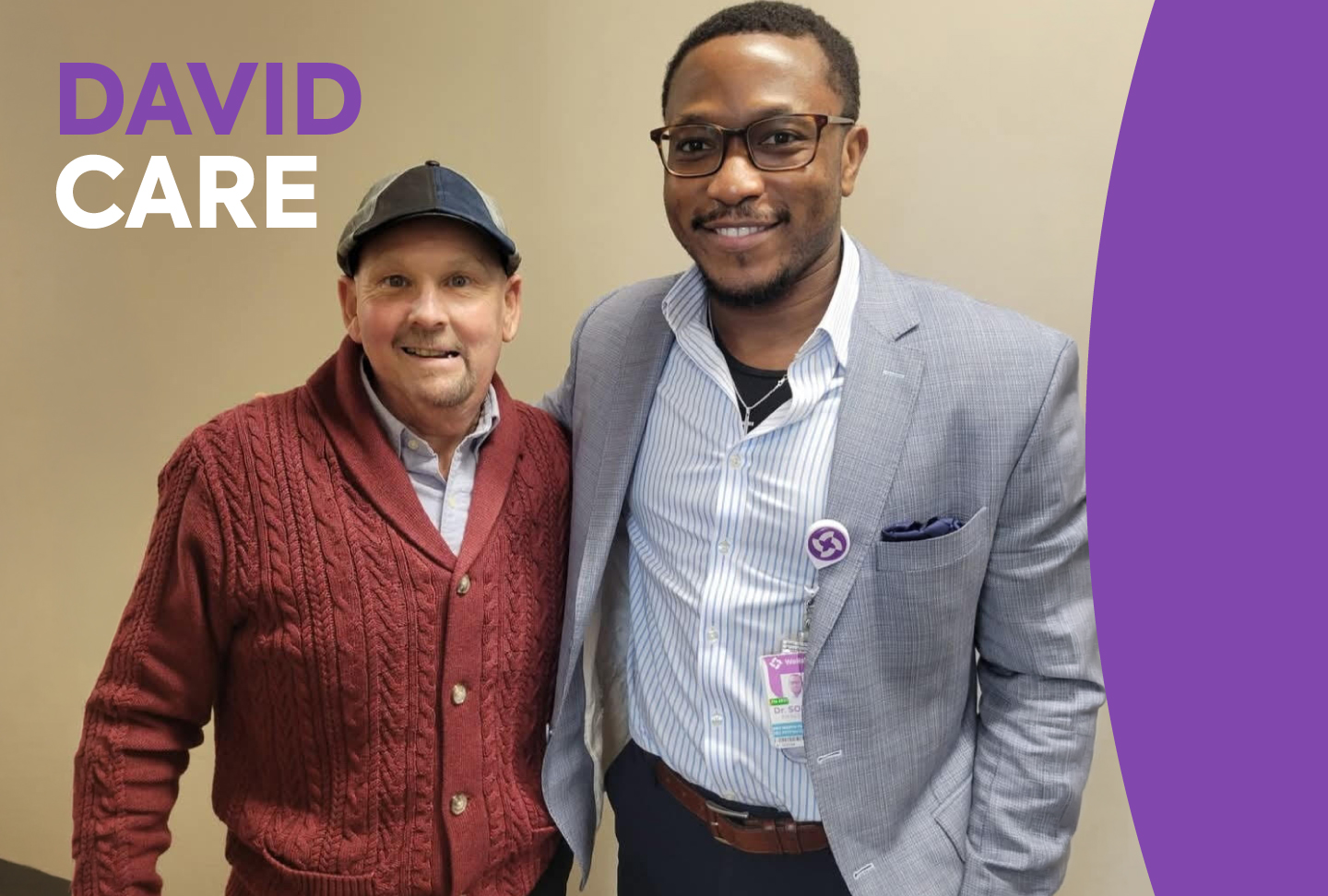
Wellstar PeopleCare | Moving Fast, Working Together: Advanced Head & Neck Cancer Surgery Keeps David Smiling
David Butler's cancer journey took him through a rare jaw reconstruction, radiation and coordinated care from specialists across Wellstar. His care team collaborated to provide what he needed as quickly and efficiently as possible.
A bothersome mouth sore
Lean and energetic, David is quick with a joke and even quicker with a smile. A neatly trimmed mustache frames a grin that lights up his blue eyes, illuminating his trademark optimism and humor. They’re qualities he kept intact throughout cancer treatment and draws on today, when he encourages people who are newly diagnosed with cancer.
It started with a sore on his gum in the fall of 2023. He assumed it would heal on its own. Instead, it got worse. When he could hardly swallow a few months later, his dentist referred him to an oral surgeon for a biopsy. That’s when he got the life-changing news: it was cancer.
“You hear the big C and it scares you to death,” David said. “But there's light at the end of the tunnel. There's always hope.”
What followed was cancer treatment involving surgery, radiation, chemotherapy and support from a whole team of cancer specialists. Along the way, David said he leaned on his faith, the support of his wife, Jill, who he credits as his biggest advocate—and the expertise of Wellstar caregivers.