Article Category: Highlights
6 Weight Loss Questions Answered by Our Experts
Published on September 26, 2025
Last updated 01:19 PM September 26, 2025

People who want to lose weight have more options than ever before. However, deciding which one to pursue can be a challenge. Should you go for lifestyle changes alone? Consider weight loss surgery? Or look into injectable weight loss drugs like Ozempic and Wegovy?
We asked two Wellstar physicians to weigh in on this popular topic—and their answers might surprise you.
Dr. Lisa Hilton
is director of minimally invasive and
bariatric surgery
at Wellstar MCG Health Medical Center and director of the Center of Obesity and Metabolism at Augusta University.
Dr. Mitzi Rubin
is a family medicine physician and director of the
Wellstar Center for Best Health.
Here’s what these two experts have to say about obesity, treatment options and the importance of a comprehensive approach to weight loss.
Related Articles

Highlights
Wellstar Opens New Locations in Dallas
To serve our community’s growing healthcare needs, Wellstar opened new urgent care, primary care and pediatric cardiology locations at 76 East Paulding Drive in Dallas.
Primary care & mental wellness
People in Paulding County can now receive high-quality, evidence-based whole person care at the new Wellstar GME Internal Medicine—which also serves as a teaching center for doctors completing their residency. This practice offers typical primary care as well as mental and emotional health services.
Services include wellness exams, vaccinations, treatment for illnesses like the flu, management of chronic conditions such as diabetes and mental health support.
Schedule an appointment at our new primary care location in Dallas by calling (943) 202-9020.
Urgent care
If you’re dealing with a minor injury or illness or need care after your physician’s regular office hours, going to urgent care is often the right choice. Wellstar Urgent Care centers provide quick, convenient care for non-emergency medical conditions such as coughs, colds, sprains, broken bones and minor bites, burns and cuts.
Check in at our new urgent care location in Dallas or call (943) 202-9000.
Pediatric heart care
Our pediatric cardiology experts can evaluate and create comprehensive treatment plans for children and teenagers with congenital heart defects, arrhythmias (heart rhythm disorders), chest pain, heart palpitations, high blood pressure/cholesterol, fainting, cardiomyopathies and heart failure as well as fetal (prenatal) cardiology. Wellstar Children's of Georgia pediatric cardiology specialists provide comprehensive, coordinated care with a multidisciplinary team, which may include pediatric heart surgeons and electrophysiologists (heart rhythm specialists), as well as medical geneticists, pediatric nurses and dietitians.
Schedule an appointment at our new pediatric cardiology location in Dallas or call (470) 956-9171.

Highlights
Wellstar Expands Primary Care in Lovejoy
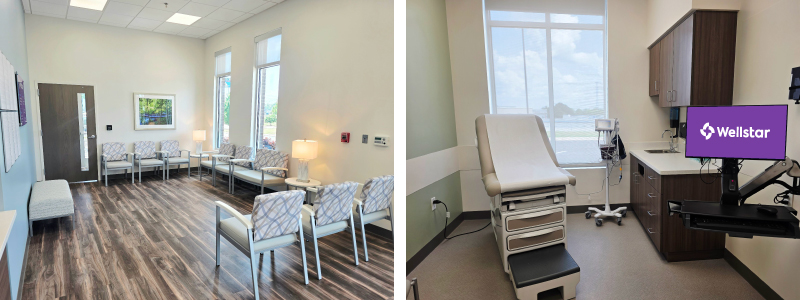
To serve our community’s growing healthcare needs, Wellstar has opened a new location in Lovejoy with primary care services.
Primary care is ongoing, comprehensive care and preventative medicine that helps you live a full, healthy life. Visit Wellstar Primary Care for:
- Non-emergent health concerns
- Chronic conditions
- Routine checkups and annual wellness exams
- New or worsening symptoms
- Immunizations
Hampton
11400 Tara Blvd.
(943) 202-8800
Benefits of a primary care clinician
The main role of a primary care clinician is to keep you healthy at every age and stage of life. To keep you feeling your best, these experts are trained to:
- Get to know and understand your unique health needs. Your primary care team can keep you on track with your individual wellness goals, whether you are planning to start a family, need help managing a chronic illness or want to maintain a healthy weight.
- Coordinate care and provide referrals for specialists. Your primary care team can quickly and seamlessly get you in touch with the robust network of medical experts, such as cardiologists, oncologists, neurologists and more at Wellstar.
- Keep you up-to-date on immunizations and vaccinations. You can build up your body’s immunity to common diseases and protect your health with the latest vaccines, all ordered by your primary care clinician.
- Order appropriate health screenings, diagnostic tests and follow-up care. If your wellness check-up reveals certain risk factors, chronic conditions or new diagnoses, your primary care clinician can help you get the right treatment fast.
- Treat you for acute illnesses, such as colds or the flu. When you feel under the weather, your established primary care clinician can often get you an appointment sooner so you can feel better.
Learn more about primary care at Wellstar.

Highlights
Find Comprehensive Breast Care with Wellstar
Breast health is an important part of every woman’s overall wellness. Routine breast cancer screening and timely evaluation of breast concerns can lead to earlier detection, more treatment options and improved outcomes. At Wellstar, we are committed to helping women feel informed and empowered throughout every stage of their breast health journey.
Catch cancer early
Regular screening mammograms remain one of the most effective tools for detecting breast cancer early, often before symptoms develop. If you’re at average risk of developing breast cancer, you should start annual mammograms at age 40. However, if you have a family history of breast cancer or other risk factors, your care team may recommend starting earlier and will help you create a screening plan.
In addition to annual screening, our team helps women understand their individual breast cancer risk and personal screening recommendations. Whether you are coming in for a routine screening, evaluation of a breast symptom or guidance regarding elevated cancer risk, our goal is to provide compassionate, expert care.
Care for benign conditions and cancer
Our breast health specialists provide evaluation and treatment for a range of breast conditions, from common benign concerns to newly diagnosed breast cancer. We understand that any breast abnormality can create anxiety, and we work closely with you to provide clear communication and individualized care plans.
We treat many benign breast conditions, including:
- Breast cysts
- Fibroadenomas
- Breast pain
- Dense breasts
- Nipple discharge
- Breast infections and abscesses
- High-risk and atypical breast lesions
If you’ve been diagnosed with breast cancer, we provide comprehensive, multidisciplinary care and guide you through each step of diagnosis, treatment and beyond. We also care for women who are considered high-risk for breast cancer, including those with significant family histories, prior high-risk breast lesions or inherited genetic mutations such as BRCA and other hereditary cancer syndromes. Our team works closely with you to develop personalized surveillance and risk-reduction strategies tailored to your individual needs.
Advanced breast surgical care
At Wellstar, women have access to advanced breast surgical care delivered with a focus on precision, safety and cosmetic outcomes whenever possible. We offer procedures to diagnose and treat breast conditions using evidence-based surgical techniques.
Our surgical services include:
- In-office ultrasound-guided breast biopsies
- Excisional breast biopsies
- Duct excisions
- Partial mastectomies (lumpectomies)
- Sentinel lymph node biopsies and targeted axillary dissections
- Mastectomies with flat aesthetic closures
- Skin-sparing and nipple-sparing mastectomies
- Breast reconstruction in collaboration with plastic surgery specialists
We aim to streamline care and reduce delays in diagnosis and treatment. If you require breast cancer surgery, our surgeons utilize best-in-class techniques designed to achieve excellent oncologic outcomes while also preserving appearance and quality of life.
Patient-centered approach to breast care
We believe exceptional breast care goes beyond medical treatment alone. Everyone deserves compassionate, personalized care in a supportive environment where questions are encouraged and concerns are heard.
From the first consultation through follow-up care, our team is dedicated to helping you feel comfortable, informed and confident in your care plan. We recognize that navigating breast concerns or a cancer diagnosis can feel overwhelming. We strive to make the process as seamless as possible through coordinated care, patient education and ongoing support.