SKIP NAVIGATION
MyChart Search
Wellstar Go Back
MyChart
  • Find a Doctor
  • Locations
  • Medical Services
    Popular Services
    • Emergency Care
    • Urgent Care
    • Virtual Care
    • Primary Care
    • Women's Health
    • Pediatric Care
    • Cancer Care
    • Heart Care
    • Neuro Care
    • Orthopedics
    • View All Medical Services
    Expanded Services
    • Lab Services
    • Imaging
    • ENT
    • Pulmonary
    • Gastroenterology
    • Urology
    • Physical Therapy
    • Behavioral Health
    • Pharmacies
    • View All Medical Services
    For Providers
    • Refer a Patient
    • Transfer a Patient
    • Physician Relations
    • Wellstar Clinical Partners
    • Provider Resources
  • Patient Resources
    Patient Portal
    • MyChart Login
    • Sign-Up for MyChart
    • Get Medical Records
    Visiting
    • Visitation Guidelines
    • Patient Guides
    • Find My Way
    Billing & Insurance
    • Accepted Insurance
    • Pay Your Bill
    • Financial Assistance
  • Wellstar for You
    Community
    • Classes and Events
    • Center for Health Equity
    • Support Groups
    • Community Outreach
    • Wellstar Find Help
    • Translation Services
    • Volunteer Opportunities
    Health Content
    • Articles
    • PeopleCare
  • Find a Doctor
  • Locations
  • Medical Services
  • Patient Resources
  • Wellstar for You

Popular Services

Emergency Care Urgent Care Virtual Care Primary Care Women's Health
Pediatric Care Cancer Care Heart Care Neuro Care Orthopedics

Expanded Services

Lab Services Imaging ENT Pulmonary Gastroenterology
Urology Physical Therapy Behavioral Health Pharmacies View All Medical Services

For Providers

Refer a Patient Transfer a Patient Physician Relations Wellstar Clinical Partners Provider Resources

Patient Portal

MyChart Login Sign-Up for MyChart Get Medical Records

Visiting

Visitation Guidelines Patient Guides Find My Way

Billing & Insurance

Accepted Insurance Pay Your Bill Financial Assistance

Community

Classes and Events Center for Health Equity Support Groups Community Outreach
Wellstar Find Help Translation Services Volunteer Opportunities

Health Content

Articles PeopleCare
  • Home
  • Articles
  • When Community Meets Care: Why Resources Matter and How Wellstar Find Help is Changing Lives
Article Category: Highlights

When Community Meets Care: Why Resources Matter and How Wellstar Find Help is Changing Lives

Published on January 20, 2026

Last updated 01:39 PM June 03, 2026

Clinician speaking with patient

“Jane” sits quietly in the exam room, clutching the discharge papers the doctor has just handed her. Her blood pressure has improved, but she is still overwhelmed with worry—not because of the diagnosis, but because of what awaits her outside the hospital. 

She has a new prescription in her hand, but no reliable transportation to pick it up, and a diet plan to follow, but an empty fridge at home. She has advice to rest, but a job that didn’t offer paid time off, which will mean no way to pay her utilities or her rent. 

Her doctor has done everything right medically—yet Jane still is not set up completely for a positive health outcome.  

This is the moment where health systems face a truth we cannot ignore: Health doesn't begin in the exam room, and it doesn’t end there either. It lives in kitchens, workplaces, neighborhoods, families and within our communities. It is shaped by whether someone can afford groceries, find safe housing or get to their appointments. 

These everyday circumstances—known as social determinants of health or non-medical drivers of health—affect nearly every outcome. They determine whether treatment plans succeed, whether chronic conditions worsenand whether families thrive or struggle. In fact, research shows that up to 80% of health outcomes are tied to social determinants, not clinical treatment alone. 

And for too long, patients like Jane have been left to navigate these challenges alone. 

A Shift in Healthcare: PeopleCare

Imagine if every healthcare visit didn’t only diagnose health needs, but also understood life needs: 

  • “Do you have access to healthy food?” 
  • “Are you worried about housing or utilities?” 
  • “Do you need transportation to follow-up appointments?” 

This is the movement taking place today: healthcare shifting beyond treating illness to supporting everyday well-being. Medicine can lower blood pressure, and community support can keep it down. 

Enter Wellstar Find Help: Support at Your Fingertips 

To bring this vision to life, Wellstar has introduced Wellstar Find Help—a tool that connects individuals with thousands of community resources including: 

  • Food assistance
  • Housing and utilities 
  • Transportation 
  • Employment support 
  • Mental health services 
  • Senior and caregiver programs 

It’s a pathway, a bridge and a lifeline. All resources can be found very easily by entering the ZIP code for the person in need within the community. Refer your friend, a family member, a fellow church member or even yourself if you need it.  

Here’s what makes it truly powerful. Anyone can use it—anytime, anywhere, from home or phone, and it’s built directly into Wellstar’s medical record system. The tool is publicly available and can be used anonymously—no account or medical record is required. When someone is sitting in a room like Jane was—overwhelmed, uncertain, quietly carrying life burdens—the care team doesn’t just send them home with instructions. 

They can help them right there, in the moment by connecting them to real support before they walk out the door. 

Healing happens in community 

When community resources meet medical care, everything changes. A father on dialysis doesn’t miss treatment because a ride fell through. A mom recovering from surgery has healthy meals for her family. A senior gets help with housing instead of silently struggling. People don’t just survive. They thrive because sometimes the strongest medicine is hope. 

Sometimes hope looks like a bus pass, a food pantry referral or a team member who says, “You don’t have to figure this out alone.”

Wellstar Find Help will assist us in figuring it out together or at least give us a place to start. Wellstar Find Help is more than a website. It’s a community initiative that suggests care doesn’t end when the hospital doors close, that supports every person's right to dignity, access and opportunity and acknowledges that healthcare isn’t just about treating bodies—it’s about overall well-being. For patients like Jane, that can make all the difference. 

Community health challenge: working together to change lives 

For community partners 

You are the backbone of healthcare beyond the medical building walls. Our community’s food banks, housing organizations, transportation services, senior programs and faith-based organizations provide stability and opportunities for patients to heal as a whole.  We invite you to:  

  • Claim your organization: share your programs, capacity and preferred referral pathways.
  • Help us lift barriers proactively rather than reactively. 
  • Stay connected.

Healthcare needs you, and our communities thrive when we all work together. Together we can create and sustain a network of support that meets people where they are and then lifts them where they deserve to be.

Visit wellstar.findhelp.com to learn more and find resources.

Tags

Community Health
Related Articles
Care provider shows compassion for a patient with a gentle shoulder touch and the patient returns a genuine smile.

Highlights

Health Equity Is Good for Healthcare Business—And Better Care for Everyone

As healthcare evolves, hospital systems prioritize not only the level of care they provide, but also how well they respond to the needs of the people they serve.

This is true with programs like Anthem Blue Cross and Blue Shield’s Quality-In-Sights: Hospital Incentive Program (Q-HIP), which scores organizations’ health equity efforts.

When we invest in equitable care, our patients receive better treatment, our team members feel supported and we have additional resources that we can use to improve care.

Why do programs rewarding health equity matter?

Programs like Q-HIP recognize healthcare organizations for delivering high-quality, patient-centered care. Rather than focusing on how many patients are seen, these models score performance across quality, safety, outcomes and experience.

Programs like Q-HIP align with Wellstar's mission to enhance the health and well-being of every person we serve.

Health equity’s role in Anthem’s Q-HIP program

Q-HIP has recognized Wellstar with a reimbursement bonus point for health equity, acknowledging our efforts to reach underserved patients and tailor our care to the communities and people we serve.

“Programs like Q-HIP make it clear that equity work isn’t separate from performance—it’s part of how we deliver quality and earn the resources we reinvest back into patient care,” said Mindy St. George, Wellstar assistant vice president of managed care.

The Q-HIP health equity assessment evaluates whether health systems:

  • Commit to advance health equity
  • Collect and analyze demographic and social needs data
  • Look at quality measures to identify disparities
  • Work to improve disparities and gaps in care
  • Involve leadership in equity efforts

To provide high-quality care, you need to address inequities.

Wellstar’s approach: Equity as responsiveness

At Wellstar, health equity is part of everything we do. Through Wellstar Community Health and Center for Health Equity, equity is embedded into how we design care, improve quality, engage leadership across the system and analyze data.

We focus on understanding who we serve, identifying barriers to care and continuously improving how services are delivered.

“Health equity is not an add-on to our work—it’s how we deliver better care,” said Elise Lockamy-Kassim, Wellstar assistant vice president of community health and Center for Health Equity. “When healthcare systems are responsive to people’s needs, outcomes improve, care becomes more efficient and everyone benefits.”

Why equity investments benefit everyone

When patients can access care more easily and feel like their clinicians care about them, they’re more likely to get the preventative care they need. This helps them manage chronic conditions like diabetes, stay ahead of disease and avoid unnecessary hospitalizations.

Equity-driven improvements also support Wellstar team members by improving workflows and enabling us to invest resources in our people.

“When we focus on health equity, we’re strengthening the entire system,” said Dr. Earl Stewart, Wellstar medical director of health equity. “Better data and better responsiveness lead to better care—for every patient, every time.”

Why continued investment matters

Programs like Q-HIP make it clear: Equity performance is quality performance and quality performance is rewarded.

For Wellstar, continued investment in health equity means:

  • Stronger performance in programs like Q-HIP
  • Resources to reinvest in team members and care
  • Better outcomes for patients across all communities
  • A healthcare system that is responsive, resilient and sustainable

Learn more about health equity at Wellstar.

Keep reading
Person checking blood pressure

Highlights

Know Your Numbers: A Community‑Powered Approach to Heart Health

High blood pressure is often called the “silent killer”—not because it’s rare, but because so many people are living with it without knowing their numbers. Across Cobb and Douglas counties, a new, community‑centered effort expands access to blood pressure monitoring and education.

Through a partnership between Wellstar Community Health, Wellstar Foundation, American Heart Association and Cobb & Douglas Public Health, the Know Your Numbers initiative is helping residents take an active role in their heart health—one reading at a time.

Meeting people where they are

At its core, Know Your Numbers is built on a simple yet powerful belief: Awareness is key to better health outcomes. Many people—especially those who are unable to get the healthcare they need—do not have easy access to blood pressure monitoring tools or clear information about what their numbers mean.

Know Your Numbers addresses that gap by placing easy‑to‑use blood pressure monitoring stations directly inside community and faith‑based spaces. These are places where people already feel safe, welcomed and supported. By placing these tools into trusted environments, the program reduces barriers and normalizes conversations about heart health.

More than a reading: education, empowerment and connection to care

Each blood pressure station is paired with an interactive education session led in partnership with the American Heart Association. Participants learn:

  • How to properly take a blood pressure reading
  • What the numbers mean for their health
  • When and how to seek follow‑up care

This approach helps ensure that people don’t just know their blood pressure numbers—they know how to take action to stay healthy.

Advancing public health priorities together

Know Your Numbers is funded through the 2025–2026 Community Health Improvement Plan (CHIP) Partnership Grant awarded by Cobb & Douglas Public Health. The initiative directly advances CHIP priorities focused on access to care, chronic disease prevention and culturally responsive health education across Cobb and Douglas counties.

Through this grant period, the partnership is working toward meaningful outcomes, including:

  • Installing blood pressure monitoring stations in community settings
  • Delivering tailored education sessions on heart health
  • Expanding access to individual blood pressure kits
  • Increasing self‑reported blood pressure monitoring among participants
  • Strengthening connections to primary care and social care resources

These efforts are committed to long-term engagement and results, not just a one-time blood pressure check.

A collective commitment to heart health equity

No single organization can address high blood pressure alone. What makes Know Your Numbers powerful is the strength of the partnership behind it. The Wellstar Foundation plays a critical role in grant funding and supporting the program, while community partners bring local insight and trust. Together with American Heart Association and Cobb & Douglas Public Health, the initiative demonstrates what is possible when clinical expertise, public health strategy and community voice come together.

Looking ahead: strengthening health through trusted community partnerships

As Know Your Numbers continues to grow, the heart of the initiative remains its partnership with local churches and faith‑based organizations that open their doors, lend their leadership and serve as trusted anchors for health in their communities. These congregations are not simply host sites—they are active partners in promoting prevention, wellness and connection to care.

A special thank you to our Congregational Health Network partners supporting this work by hosting blood pressure monitoring stations:

  • Christ Anglican Church
  • Douglasville First United Methodist Church
  • Golden Memorial United Methodist Church
  • New Mountain Top Baptist Church
Keep reading
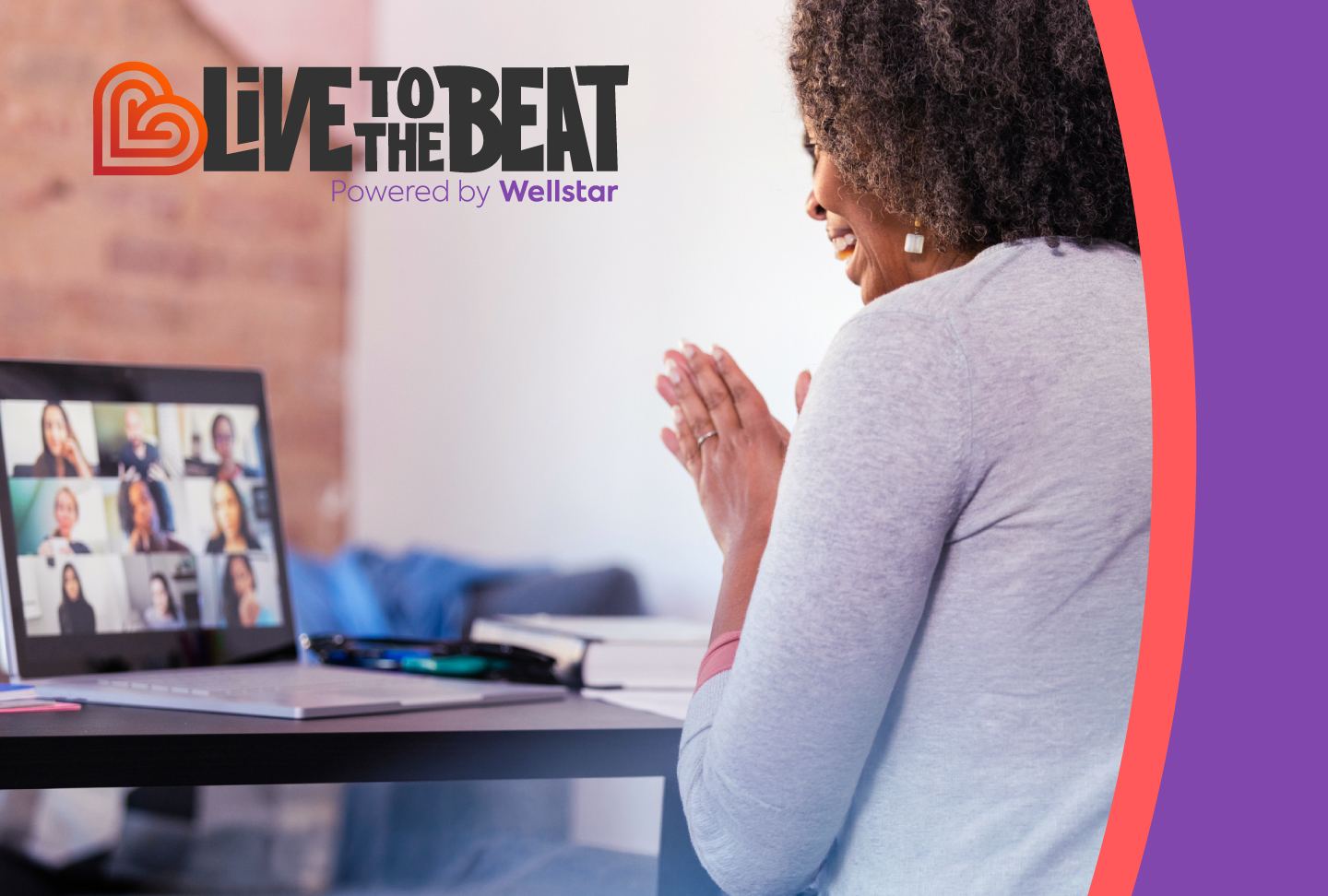
Person in virtual meeting with clinician

Highlights

Small Steps. Real Change. Supporting Heart Health Where Life Happens

The CDC Foundation is launching Live to the Beat Virtual Coaching, a free program to help women take small steps toward better heart health. This flexible, virtual program offers practical guidance meant to support and encourage—never overwhelm.

Live to the Beat Virtual Coaching focuses on everyday habits that matter most for heart health. Women will learn how to manage blood pressure, reduce stress, improve sleep and build health routines. The program helps participants understand their numbers and learn the right questions to ask so they can be active partners in their care.

Through our partnership with the CDC Foundation, Wellstar provides support for the virtual coaching program. This includes Dr. Karla Booker, a Wellstar primary care physician and public health advocate. Dr. Booker helps participants to better understand their health, prepare for medical visits and work with their care team to manage their well-being.

"I want my patients to know that I am their dream weaver. Whatever life they envision for themselves is possible," Dr. Booker said. "I want to empower them to communicate openly with me to make their dreams come true."

Participants may choose to attend all five sessions or choose sessions that fit their needs. Each session offers practical tools, real‑world insights and clear next steps that can be applied immediately. Following the live sessions, instructional videos are available for download. Partners and community organizations can also use a facilitator guide (by request) and session worksheet to can help educate the community.

Learn more and register at livetothebeat.org/coaching. 

Keep reading

COMMUNITY CARE

Community Care
In the Community Health Highlights Events & Classes
For Business
Corporate Purchasing Community Health Needs Assesment
Give
Wellstar Foundation Donate Ways to Give Volunteer

ABOUT US

About Wellstar Diversity Equity Inclusion & Belonging Leadership Wellstar Board of Trustees Healthcare Innovation Safety First Commitment Wellstar Research Institute Latest News

CAREERS & EDUCATION

Careers at Wellstar Graduate Medical Education Pharmacy Residency

PATIENT RESOURCES

Pay Your Bill Accepted Insurance

HELP

Contact Us Hospital Transparency Information Price Transparency Policy and Privacy Information

MEDIA

Media Room

Copyright © 2026 Wellstar Health System. All Rights Reserved.

Wellstar does not discriminate on, exclude people or treat them differently on the basis of race, color, national origin, age, disability, sex, gender identity or expression or any other type of discrimination prohibited by law.

  • Internet Privacy Policy
Cookie Preferences

We use cookies for booking and general analytics. Learn more about or internet privacy policy.