Skip Navigation
Book Now! Find care near you Find care near you Find care near you
wellstar-logo
Wellstar Go Back
Go to MyChart

Questions? We can help!

Call (770) 956-STAR (7827)

Monday - Friday, 7 AM - 4:30 PM

Contact Us
For Patients & Families For the Community For Providers About Us Careers
  • Start Your Care

  • Find a Doctor
  • Find a Location
  • Our Services
  • Virtual Visits
  • Planning

  • Accepted Insurance
  • Hospital Payment Planning
  • Financial Assistance
  • Pricing Information
  • Before Your Visit

  • Sign Up for MyChart
  • Visitation Guidelines
  • While You're Here

  • Support & Entertainment
  • Join an Event
  • After Your Visit

  • Pay Your Bill
  • Get Medical Records
  • Contact us
  • COVID-19 Support

  • COVID-19 Information
  • Vaccines
  • Testing Information
  • Foundation Relief
  • Community Care

  • In the Community
  • Health Highlights
  • Community Health Needs Assessment
  • Latest News
  • Center for Health Equity
  • Wellstar Find Help
  • Events & Programs

  • Events Calendar
  • On-Demand Classes
  • Support Groups
  • Give

  • Wellstar Foundation
  • Donate
  • Ways to Give
  • Thank a Caregiver
  • West Georgia
    Health Foundation
  • Volunteer

  • PeopleCare Advisory Council
  • For Adults
  • Care

  • Transfer a Patient
  • Cures Act
  • Refer a Patient
  • Lab Test Directory
  • Request to Conduct Research
  • Connect

  • Physician Relations
  • Request Imaging Services
  • Wellstar Clinical Partners
  • Wellstar Medical Group
  • Mayo Clinic Care Network
  • Medical Staff Services
  • Provider Recruitment
  • Log In

  • EpicCare Link
  • Lawson Connect
  • MyID Password Reset
  • Citrix Access
  • Leadership

  • Authority Board
  • Board Of Trustees
  • Foundation Board
  • Regional Health Boards
  • Executive Leadership
  • Awards, Recognition & Safety

  • Accreditation & Certifications
  • Awards & Recognition
  • Safety First Program
  • Nursing
  • Careers at Wellstar

  • Apply now
  • Upcoming virtual events
  • Why Wellstar?
  • Nursing Careers

  • Nursing (Direct Care)
  • Nursing Leadership
  • Nursing (Non-bedside)
  • Nursing Support
  • Physician, APP & Clinical Careers

  • Advanced Practice Providers (APPs)
  • Allied Health Professionals
  • Homecare & Hospice
  • Physicians
  • Support Team Careers

  • Administrative & Clerical
  • Coding, Compliance & HIM Systems
  • Facility, Environmental & Nutrition/Food Services
  • Information Technology & Systems
  • For Patients & Families
  • For the Community
  • For Providers
  • About Us
  • Careers
  • Search Search Search
  • MyChart MyChart MyChart

Start Your Care

Find a DoctorFind a LocationOur ServicesVirtual Visits

Planning

Accepted InsuranceHospital Payment PlanningFinancial AssistancePricing Information

Before Your Visit

Sign Up for MyChartVisitation Guidelines

While You're Here

Support & EntertainmentJoin an Event

After Your Visit

Pay Your BillGet Medical RecordsContact us

COVID-19 Support

COVID-19 InformationVaccinesTesting InformationFoundation Relief

Community Care

In the CommunityHealth HighlightsCommunity Health Needs AssessmentLatest NewsCenter for Health EquityWellstar Find Help

Events & Programs

Events CalendarOn-Demand ClassesSupport Groups

Give

Wellstar FoundationDonateWays to GiveThank a CaregiverWest Georgia
Health Foundation

Volunteer

PeopleCare Advisory CouncilFor Adults

Care

Transfer a PatientCures ActRefer a PatientLab Test DirectoryRequest to Conduct Research

Connect

Physician RelationsRequest Imaging ServicesWellstar Clinical PartnersWellstar Medical GroupMayo Clinic Care NetworkMedical Staff ServicesProvider Recruitment

Log In

EpicCare LinkLawson ConnectMyID Password ResetCitrix Access
About Wellstar

Our patients are the center of everything we do. We're nationally ranked and locally recognized for our high-quality care, inclusive culture, exceptional doctors and caregivers, and one of the largest and most integrated healthcare systems in Georgia.

About Us

Leadership

Authority BoardBoard Of TrusteesFoundation BoardRegional Health BoardsExecutive Leadership

Awards, Recognition & Safety

Accreditation & CertificationsAwards & RecognitionSafety First ProgramNursing

Careers at Wellstar

Apply nowUpcoming virtual eventsWhy Wellstar?

Nursing Careers

Nursing (Direct Care)Nursing LeadershipNursing (Non-bedside)Nursing Support

Physician, APP & Clinical Careers

Advanced Practice Providers (APPs)Allied Health ProfessionalsHomecare & HospicePhysicians

Support Team Careers

Administrative & ClericalCoding, Compliance & HIM SystemsFacility, Environmental & Nutrition/Food ServicesInformation Technology & Systems
Questions? We can help!

Call (770) 956-STAR (7827)

Monday - Friday, 7 AM - 4:30 PM

Contact Us
Close
  • Schedule With This Provider
  • Schedule At This Location
  • Schedule With This Provider
  • Schedule At This Location
  • Urgent Care
  • Primary Care
  • Virtual Care
  • Emergency Care
Close Close Close Book Now Menu
  • Schedule With This Provider
  • Schedule At This Location
  • Schedule With This Provider
  • Schedule At This Location
  • Urgent Care
  • Primary Care
  • Virtual Care
  • Emergency Care

Introducing

Wellstar Virtual Care

Access Wellstar healthcare providers
wherever you are.

Get started

Warning Warning Our "Book Now" feature should not be used for life threatening conditions such as heart attack, severe injury, poisoning, chest pain, or stroke. If you are experiencing such conditions, STOP and CALL 911 IMMEDIATELY or visit your nearest Emergency Department.

I Understand
  • Home
  • Articles
  • Primary Care Opens Doors to Behavioral Health at Wellstar
Article Category: Highlights

Primary Care Opens Doors to Behavioral Health at Wellstar

Published on December 04, 2025

Last updated 03:14 PM December 04, 2025

A healthcare professional listens carefully to her patient

What started as a research study has grown into a systemwide commitment at Wellstar to improve access to mental and emotional healthcare. By embedding licensed mental health practitioners in the primary care settings, Wellstar is making it easier for patients to receive behavioral health services alongside their routine medical care. 

Today, licensed clinical social workers (LCSW) work alongside primary care providers and pediatricians in more than a dozen Wellstar practices. And there are plans to grow that number.

“With social workers just steps away from an exam room, primary care physicians can make ‘warm handoffs’ for immediate behavioral health support,” said Dr. Jeffrey Tharp, chief medicine division officer for Wellstar.

“It helps lower barriers to mental health and substance use disorder treatment. And it removes some of the stigma some people associate with mental healthcare.”

Dr. Sophie Arkin, a psychologist in Wellstar’s Suicide Prevention department, said, “This is a great way to reach people who might otherwise fall through the cracks. It gives them a real opportunity to live a different life.”

Primary care clinicians connect adults to behavioral health specialists

Nearly 10 years ago, Wellstar was one of several health systems nationally that participated in a study of the effects of placing behavioral health clinicians in primary care.

The need is significant. Mental illness and substance use disorders are prevalent throughout the U.S. According to the 2024 State of Mental Health in America report, 22.5% of adults in Georgia had a mental illness in the past year. The report also said that 17% had a substance use disorder.

Primary care physicians at Wellstar routinely screen patients for depression, suicidal thoughts and alcohol or drug use. In other cases, they learn from conversations that patients may have:

  • Anxiety or panic disorders
  • Sleep disturbances
  • Stress related to work, family life or finances
  • Grief or unresolved trauma

Introducing the behavioral health clinician

When behavioral concerns emerge, the primary care team introduces the on-site clinical social worker. This specialist conducts an in-depth assessment to determine the next best steps for the patient. This is typically a short-term series of sessions that may lead to referrals to psychiatrists, psychologists or Wellstar’s suicide prevention team.

“One of the biggest strengths of this model is credibility,” Dr. Tharp said. “If a physician or nurse practitioner you trust says, ‘We have a counselor here I’d like you to meet,’ the patient is more likely to follow through.”

This model has proven especially effective for patients who are less likely to seek mental health support, such as men, seniors and caregivers.

Where primary and behavioral health cross paths

People with chronic conditions like diabetes, digestive disorders and kidney disease sometimes have or develop mental health conditions like depression and anxiety. As a result, patients may find it harder to:

  • Get the follow-up testing and care they need
  • Follow nutrition and exercise instructions
  • Take medications according to their doctor’s instructions

Not treating behavioral health issues can contribute to patients’ worsening physical health and higher medical costs.

Conversely, many patients may go to their primary care physician because they’re having trouble breathing, their heart is pounding or they have frequent headaches. Or they’re sweating or feel faint, dizzy or nauseated.

Those can be signs of a medical problem. They can also be symptoms of an emotional or mental health issue. In that case, a behavioral health clinician is around the office corner.

“We know that stress and anxiety show up in lots of different ways in the body. Understanding that allows people to adopt a new philosophy about how to take care of themselves,” Dr. Arkin said.

Pediatricians screen and refer children for behavioral health

Childhood and adolescence are critical periods in development. Mental health issues can affect a child’s ability to learn, grow and develop healthy relationships both now and as an adult.

Pediatricians routinely screen children for behavioral health concerns. They ask questions about social, emotional and behavioral development. Screenings for autism risk begin in early childhood and depression screenings begin at age 12.

At Wellstar KenMar Pediatrics in Marietta and Kennesaw, pediatricians turn to their in-house behavioral health partner, Dr. Kayla Fitch. Common reasons to refer include:

  • Behavior challenges
  • Feeding disorders, such as extreme picky eating
  • Mental health issues among children with chronic or acute illnesses
  • Requests for attention deficit hyperactivity disorder (ADHD) evaluations
  • Severe social or separation anxiety

While under her care, Dr. Fitch screens patients for anxiety and suicide risk.

“One of the things I’m the most passionate about is early anxiety treatment for kids. We can help kids when they’re 4, 5, 6 years old,” Dr. Fitch said. “I teach parents basic concepts around how to expose their children to anxiety-producing situations to decrease their anxiety.”

She helps children learn “coping strategies, like deep breathing and muscle relaxation. These are things kids can benefit from if we teach them creatively.”

Growing commitment to integrated care

Wellstar’s primary care model continues to evolve to meet the behavioral health needs of patients throughout their life. Time will bring even more collaboration and improved outcomes.

“It serves everyone—patients, families and doctors—to create these seamless connections between primary and behavioral health practitioners,” Dr. Tharp said. “We see the benefits every single day in our patients’ health and their outlooks.”

Learn more about behavioral health at Wellstar.

Tags

Jeffrey Lanier Tharp Sophie Claudia Arkin Kayla Dare Fitch
Behavioral Health Primary Care
Related Articles
Clinician looking through microscope

Highlights

Genetic Testing: A Critical Tool in Cancer Treatment

It's been over three decades since genetic testing was first introduced as a tool for patients at risk of hereditary cancer syndromes. In its early days, genetic testing was expensive and time-consuming (often taking up to eight weeks for results). Fast forward to today and genetic testing is now a routine part of cancer care. It’s more accessible, comprehensive and, perhaps most importantly, significantly impactful for patients and their families.

Physicians help identify patients who could benefit from genetic testing, especially when someone has a personal or family history of cancer. Genetic testing can improve treatment outcomes, guide preventive care and provide vital information for the patient's family.

Benefits of genetic testing

1. Understanding the cause of cancer

One of the most common questions from patients newly diagnosed with cancer is, "Why did this happen to me?" While many cancers are the result of environmental factors, aging and sporadic mutations, genetic testing can offer a more definitive answer. For patients with hereditary cancer, knowing their cancer is genetically driven can help ease feelings of uncertainty and guilt. 

For many, this knowledge brings a sense of empowerment, as they now have the opportunity to make informed decisions regarding their treatment and potential preventive measures for the future. This hereditary cancer risk was present since birth, and there was very little if anything the patient could have done differently throughout their life to prevent their diagnosis.

2. Personalized treatment options

For patients with cancers like breast, ovarian, pancreatic and prostate, identifying genetic mutations (like BRCA mutations) can open the door to personalized therapies. The earlier in the diagnostic process the genetic test is ordered, the quicker the patient can be matched with appropriate treatments.

Knowledge of genetic mutations can also guide surgical decisions. Patients with BRCA-positive breast cancer may be candidates for risk-reducing mastectomy or salpingo-oophorectomy—both of which can lower the risk of future cancers. These decisions are most effective when genetic results are available before surgery.

3. Identification of additional cancer risks

Cancer does not always occur in isolation, especially in patients with hereditary cancer syndromes. For instance, patients with Lynch syndrome, a leading cause of colorectal cancer, are also at increased risk for uterine cancer—up to 60%. If identified before a colon resection, this knowledge could allow a hysterectomy at the same time if necessary, minimizing the risk of a second cancer and optimizing care.

Beyond immediate cancer treatment, genetic testing can also lead to additional screenings that might otherwise be missed. For example, the ATM gene is a known contributor to prostate and breast cancer.  But patients with an ATM gene mutation are also at elevated risk for pancreatic cancer. While general population screening is not typically recommended, high-risk patients should begin annual imaging and/or endoscopic ultrasounds as early as age 50 or 10 years before the earliest known pancreatic cancer in their family.

4. Informed decisions for family members

A cancer diagnosis doesn’t only affect the patient—it impacts their entire family. Once a genetic mutation is identified, relatives can undergo testing to assess their own cancer risk and talk to their care teams about screenings. 

Testing the affected patient first is the most informative strategy for relatives. Patients with negative genetic test results can be reassured that relatives are not at significant risk for the same diagnosis. 

The role of genetic counseling in cancer care

Genetic counselors provide the expertise necessary to interpret complex genetic results, discuss the implications for patients and their families, and offer psychological support throughout the process. Genetic counseling not only helps patients make sense of their genetic test results, but also provides them with the tools to make informed decisions about their health.

Counseling also helps address the emotional and psychological aspects of genetic testing, from potential feelings of anxiety to guilt and even empowerment. Research shows that genetic counseling has a positive impact on patient knowledge, reduces anxiety and can improve overall psychological well-being during a cancer journey.

Learn more about genetic counseling at Wellstar. 

Keep reading
Group of people talking

Highlights

Soul Support 2025: A Year of Healing, Hope & Community Impact

Faith communities and Wellstar Health System came together across Georgia with a shared mission: to strengthen mental health, build meaningful connections and bring healing spaces directly into our communities.

The 2025 Soul Support Impact Reports highlight incredible stories of empowerment, compassion and growth—made possible through collaboration, training and care.

What we achieved together

Across churches and faith centers—big and small—Soul Support helped communities access emotional wellness tools, support groups and life-changing conversations.

United Church in Atlanta

  • 78 touchpoints of support
  • Biweekly support groups focused on emotional expression
  • Safe spaces where participants learned to process even the toughest emotions
  • 39 volunteer hours fueling community care

Impact Church in Atlanta

  • 1,000+ touchpoints
  • 40 mental health events
  • Weekly support groups and Healing the Wounds of Trauma sessions
  • 20 community members trained in mental health first aid
  • 60+ engagement hours

Greater Young Zion Baptist Church in Augusta

  • 291 community touchpoints
  • Mental health awareness events drawing 150+ participants
  • Webinars, grief workshops and suicide prevention training
  • 40+ wellness kits distributed
  • 50+ event hours given back

The Gathering, International in Griffin

  • 756 touchpoints
  • Mental health support groups and pastoral counseling
  • 80% of participants reported helpful, life applicable insights
  • Powerful testimonies emphasizing belonging and finding strength in community

Seekers of His Face International Prayer Center in Augusta

  • 685 touchpoints
  • 224 mental health care kits distributed
  • Weekly support groups and wellness workshops
  • Youth and men’s mental health initiatives supporting 75+ individuals
  • 60 volunteer hours encouraging healing and growth

Why this work matters

Across every partner site, a message echoed loud and clear: Community heals. Connection transforms. Support saves lives.

Together, churches, clinicians, volunteers and community leaders created supportive environments where people felt seen, safe and understood. These spaces helped reduce stigma, elevate mental health literacy and offer practical tools for emotional wellness.

Thanking our partners

Pastors, administrators, coordinators and volunteers—from Atlanta to Griffin to Augusta—poured in time, compassion and leadership to make Soul Support a lifeline for many. Your dedication is transforming communities one conversation at a time.

Looking forward

As we continue this journey, we celebrate every person who showed up, spoke up or lifted someone up. The impact of Soul Support is more than numbers—it’s the lives changed through hope, faith and connection.Together, we are building mentally healthier, spiritually grounded and beautifully resilient communities.

Learn more about Wellstar’s community health programs.

Keep reading
Clinician speaking with patient

Highlights

Wellstar Expands Care in West Georgia

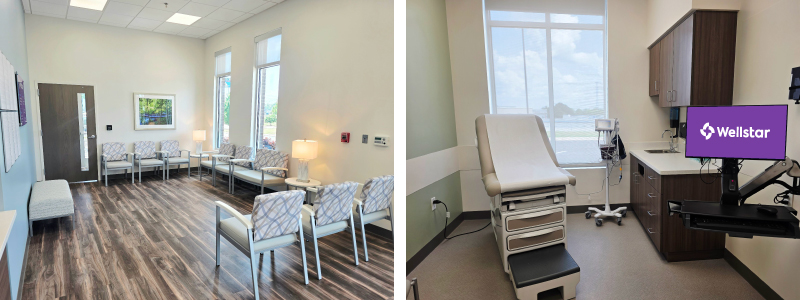
To serve our community’s growing healthcare needs, Wellstar has opened a new location in LaGrange with urgent care and primary care services.

“With urgent care and primary care together in one place, we’re making it easier for patients to access the appropriate level of care close to home while strengthening the overall health of LaGrange and the surrounding communities we serve,” said Coleman Foss, president of Wellstar West Georgia Medical Center.

Urgent Care 

Wellstar opened its first urgent care center in LaGrange to help meet the needs of West Georgia. Wellstar Urgent Care provides:

  • Care for minor illnesses and injuries, such as coughs, colds, sprains and broken bones
  • Treatment for medical issues like bites, burns and cuts
  • Flu care
  • Rapid COVID-19 testing for all ages
  • Labs and X-rays
  • Sports physicals
  • Worker’s compensation services

Walk-ins are always welcome, but you also have the option to book a visit online at the time that works best for you. Booking online can help reduce your wait time once you arrive.

Wellstar Urgent Care

2220 Vernon Street

LaGrange, GA 30240

(762) 888-1490


Check in at this location 

Primary Care

Primary care is ongoing, comprehensive care and preventative medicine that helps you live a full, healthy life. Visit Wellstar Primary Care for:

  • Non-emergent health concerns 
  • Chronic conditions 
  • Routine checkups and annual wellness exams
  • New or worsening symptoms 
  • Immunizations

Wellstar Primary Care

2220 Vernon Street

LaGrange, GA 30240

(762) 888-1510

Schedule at this location


Keep reading
Back to Top
Branding illustration
Wellstar Logo
More than healthcare. PeopleCare.
Branding illustration
For Job Seekers & Team
Careers Diversity Equity Inclusion and Belonging Onboarding
For Students
Students Portal
Graduate Medical Education
Medical Residency Pharmacy Residency
For Business
Corporate Purchasing
For the Media
Media Room Community Health Needs Assessment
Help
Contact Us Pay Your Bill Policy & Privacy Information Hospital Transparency Information Price Transparency
For Job Seekers & Team
Careers Diversity Equity Inclusion and Belonging Onboarding
For Students
Students Portal

Graduate Medical Education
Medical Residency Pharmacy Residency
For Business
Corporate Purchasing
For the Media
Media Room Community Health Needs Assessment
Help
Contact Us Pay Your Bill Policy & Privacy Information Hospital Transparency Information Price Transparency

Copyright © 2026 Wellstar Health System. All Rights Reserved.

Wellstar does not discriminate on, exclude people or treat them differently on the basis of race, color, national origin, age, disability, sex, gender identity or expression or any other type of discrimination prohibited by law.

Cookie Preferences

We use cookies for booking and general analytics. Learn more about or internet privacy policy.